If you’re shopping for a canister vacuum — the style where a motorized floor head connects by a flexible hose to a separate rolling canister body — you will quickly land on one fork in the road: bagged or bagless. A bagged model traps dirt inside a disposable paper or synthetic bag that you pull out and toss; a bagless model collects dust in a transparent plastic bin that you empty directly into the trash. The choice sounds trivial until you live with it for six months. Then, if the pattern across long-run owner reviews is any guide, you develop a strong opinion — and it almost always traces back to two things: how hygienic emptying feels, and whether your home is mostly hard floors, mostly carpet, or a messy mix of both.
This article synthesizes what owners actually report after extended use — not what the box promises — and builds a decision frame you can apply to whichever model is currently in your cart or under consideration.
| EDITOR'S PICKMiele Classic C1 Turbo Team Bag… | Mid-tierKenmore 81214 200 Series Pet Fr… | Budget pickBissell Zing Lightweight | |
|---|---|---|---|
| Motor Power | — | 2 Motor | — |
| HEPA Filter | — | ✓ | — |
| Tools Included | — | 3 | — |
| Pet Friendly | — | ✓ | — |
| Color | Tech Blue | Orange | Purple |
| Price | $369.99 | $194.99 | $89.99 |
| See on Amazon → | See on Amazon → | See on Amazon → |
Why Owners Change Their Minds After the Honeymoon Period
Short-term reviews and unboxing impressions consistently overrate convenience features. After six months, the calculus shifts. Owners start measuring the machine against their actual cleaning routine, their household’s allergy load, and the cumulative cost of consumables.
The hygiene pivot is real. Kenmore 600 Series reviewers are a useful data set here: across aggregated long-run reviews, a recurring pattern emerges of owners who switched back to bags after trying a bagless canister. The description they reach for is strikingly consistent — emptying the dustbin feels “dirtier.” That’s not squeamishness. When you invert a bagless bin over a trash can, a fine cloud of particulate — pet dander, skin cells, dust-mite debris — goes briefly airborne before settling. In a household with allergy sufferers, that moment undoes some of what you just vacuumed. A sealed bag, by contrast, contains that material until the whole unit goes into the trash. Consumer Reports’ Vacuum Cleaner Reliability and Satisfaction Survey (2024) noted that allergy and asthma households skew toward bagged models at a statistically meaningful rate — the containment story is not marketing copy.
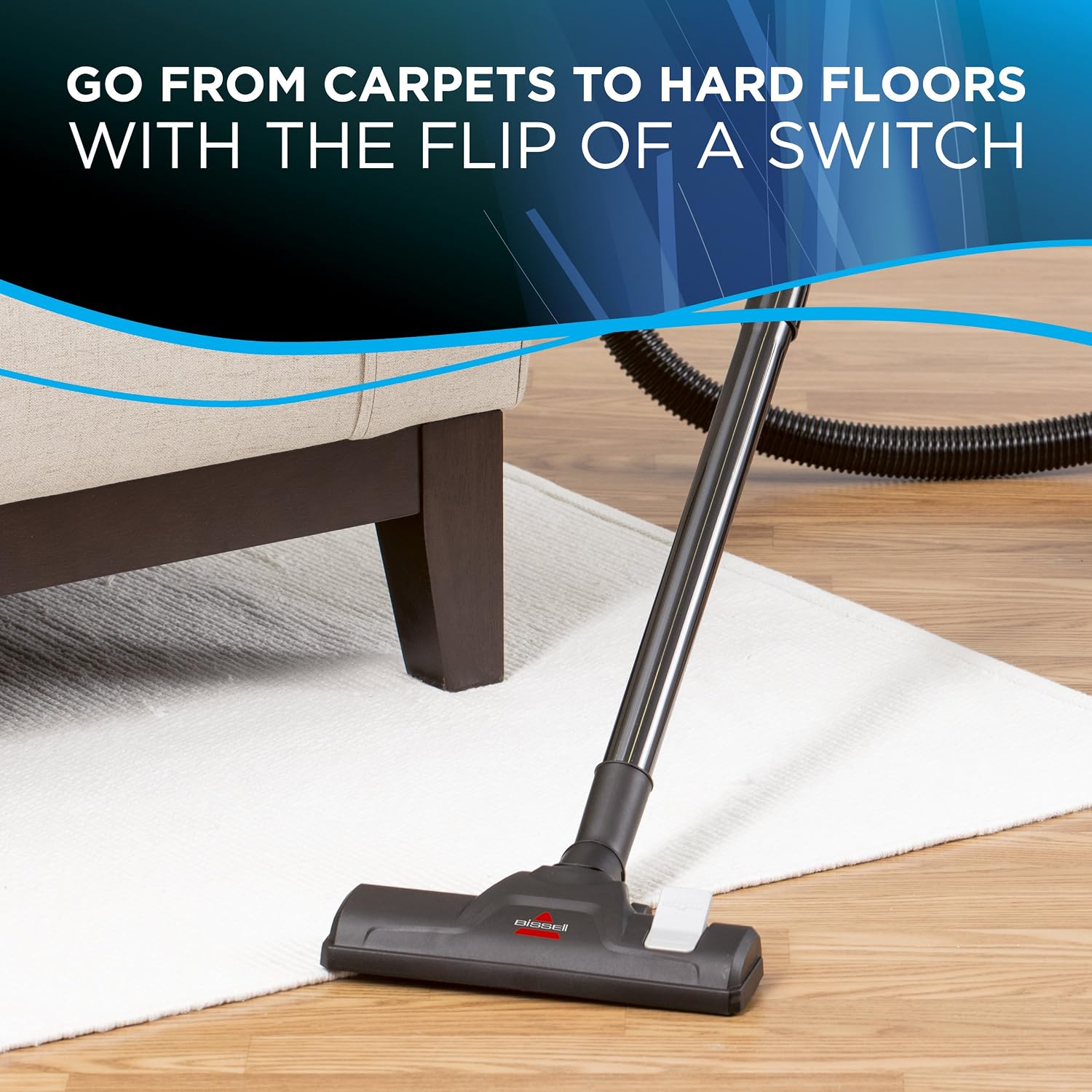
Bagless wins on hard floors with light debris loads. Bissell Zing owners paint a different picture. Reviewers in pet households with predominantly hard floors consistently praise its retractable cord, one-hand maneuverability, and the ability to see exactly how much dog hair has been collected without guessing when to empty. For that specific use case — hard floors, heavy shedding, quick daily passes — the Zing earns genuine enthusiasm. The same owners, however, are candid that the machine struggles when the home is mostly carpet. Suction architecture that is optimized for hard surfaces loses the battle against deep-pile fibers, and owners who switched from a carpet-heavy home to the Zing report disappointment within the first few months.
The Three Tiers of Canister Vacuum Ownership
Understanding where each model fits is easier when you organize options by the household situation they actually solve — budget/light-use, mid-tier mixed-surface, and premium long-haul. The comparisons below follow that structure.
Budget Pick: Bagless for Hard-Floor Apartments
The Eureka WhirlWind earns a consistent following among apartment dwellers for two reasons: compact footprint and hard-floor suction that owners describe as punching above its price class. Apartment Therapy’s “Best Vacuums for Small Apartments” (2024 edition) highlighted it as a practical choice for studio and one-bedroom layouts where storage is a constraint. The limitations are equally consistent in the reviews: a single suction speed is a genuine functional ceiling. Owners who try it on area rugs — not just bare hardwood — note that the fixed speed can’t compensate for the variable resistance of woven fibers, and lighter rugs shift underfoot instead of getting cleaned. It’s not that the Eureka WhirlWind fails; it’s that it succeeds in a narrow use case, and owners who expand outside that case hit the wall quickly.
Bissell
$89.99
In stock on Amazon
Check price on AmazonMid-Tier Pick: Bagless Canister for Pet Hair on Hard Floors
The Bissell Zing is the mid-tier reference point for hard-floor, pet-hair households. Reviewers who use it daily for dog hair on hardwood or tile consistently praise its lightweight body, visible dustbin, and the cost advantage of a washable filter with no ongoing consumable spend. The tradeoff is direct: bring the Zing into a carpet-heavy home and the satisfaction story inverts. Owners who love it in hard-floor contexts and then move to a home with substantial carpet almost universally report the same experience — the machine works hard, makes noise, and doesn’t deliver the embedded-dirt extraction that carpet cleaning demands. Bagless canisters optimized for hard floors have airflow paths designed for debris that sits on a surface, not for pulling material out of fiber pile. If your home is more than 40–50% carpet by square footage, the bagged side of the comparison almost certainly serves you better.
Kenmore
$194.99
In stock on Amazon
Check price on AmazonPremium Pick: Bagged Canister for Allergy Households and Long-Run Value
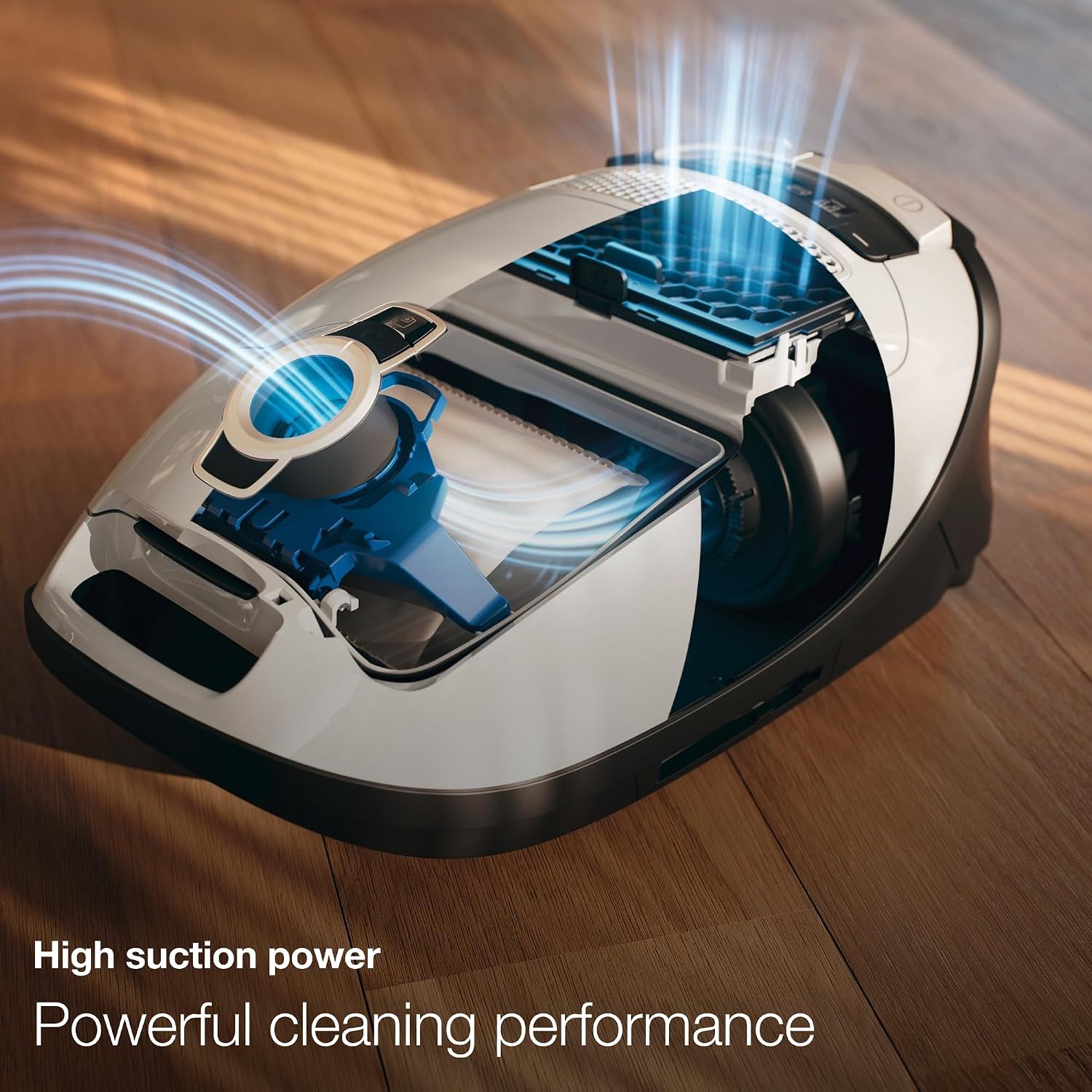
No bagged canister generates more multi-year owner testimony than the Miele Classic C1 Pure Suction. Wirecutter has cited it across multiple update cycles as a top bagged canister recommendation, and the Good Housekeeping Institute’s “Best Canister Vacuums of 2025” testing notes flag its sealed filtration system as one of the stronger dust-containment implementations in the sub-$300 price tier. But the owner reviews that matter most are the two- and three-year accounts, because that’s where the value proposition either survives or collapses.
What long-run owners keep saying: The machine doesn’t degrade the way lower-cost alternatives do. A pattern that surfaces repeatedly in aggregated reviews is the professional cleaner who replaced a budget canister annually — hose cracks, motor-head failures, brush-roll degradation — and then reframed the Miele’s higher upfront cost as a cost-per-year win. If a budget-tier replacement cycle runs $150–$180 annually and a Miele Classic C1 runs approximately $250–$280 and lasts five or more years with normal maintenance, the math favors the Miele even before you account for the time cost of researching, ordering, and setting up a replacement unit every twelve months.
Carpet vs. hard floors on the Classic C1: The “Pure Suction” variant ships without a powered brush roll — it uses a basic floorhead that moves air through a floor nozzle rather than agitating carpet fibers mechanically. On hard floors, bare-floor suction is excellent; owners consistently describe it as near-silent at lower settings while still moving fine dust efficiently. On low-to-medium pile carpet, the Pure Suction performs adequately for light maintenance. On high-pile or heavily soiled carpet, owners are direct: you want the Classic C1 Turbo Team or a step up to the Miele Compact C2 or Classic C3 with an electro-powered brush head. The Pure Suction’s name is literal — it’s built for a floor plan where hard surfaces dominate.
Miele
$369.99
In stock on Amazon
Check price on AmazonBy the Numbers
| Model | Type | Best Floor Type | Filtration | Avg. Consumable Cost |
|---|---|---|---|---|
| Miele Classic C1 Pure Suction | Bagged | Hard floors / low-pile carpet | Multi-layer AirClean bag + filter | ~$12–$16 per bag set (3–4 bags) |
| Kenmore 600 Series | Bagged | Mixed / carpet | HEPA media bag option | ~$10–$14 per 3-pack |
| Bissell Zing | Bagless | Hard floors | Washable filter | $0 ongoing (filter rinse) |
| Eureka WhirlWind | Bagless | Hard floors | Washable HEPA-style filter | $0 ongoing (filter rinse) |
Consumable costs based on manufacturer specification documentation and aggregated retail pricing as of mid-2026. Bag longevity varies by household debris load — see FAQ below.
The Decision Frame: If X, Then Y
You’ve been in this category long enough to know the features. Here’s the honest fork in the road:
If your household includes allergy or asthma sufferers, or you have pets with heavy dander loads: The sealed-bag architecture — especially Miele’s AirClean bag system — is doing measurable work at the containment stage that a bagless dustbin simply cannot replicate. The emptying moment is genuinely cleaner. Consumer Reports’ Vacuum Cleaner Reliability and Satisfaction Survey (2024) documents that allergy-sensitive households disproportionately favor bagged designs; this is not a marginal difference if respiratory health is a factor. Go bagged. The Miele Classic C1 Pure Suction is the anchor recommendation for hard-floor-primary homes; step to a powered brush head variant if carpet is significant.
If your home is primarily hard floors, you own a heavy-shedding dog, and you clean frequently in short bursts: The Bissell Zing’s maneuverability and visible dustbin make daily maintenance faster and more intuitive. The bagless convenience story is real here — you’re not managing consumable costs, you can see when to empty, and the machine is genuinely lightweight. Accept that it will not excel on carpet.
If you’re an apartment dweller with a compact space and mixed surfaces but no significant allergy concern: The Eureka WhirlWind is a defensible choice with honest limitations. Know going in that area rugs will test its single-speed ceiling, as consistent with what Apartment Therapy’s small-space vacuum coverage describes.
If you’re a professional cleaner or independent operator calculating cost-per-year across multiple machines: The long-run review pattern on Miele longevity versus budget-tier replacement cycles is a legitimate input to your equipment budget. A machine that runs cleanly for five or six years with bag and filter replacement as the only consumable cost is a different financial animal than one requiring annual replacement — even if the line-item purchase price looks unfavorable at first glance.
Frequently Asked Questions
Is a bagged canister vacuum actually cleaner to empty than a bagless? Based on how the two systems work and what allergy-household owners consistently report: yes, meaningfully so. A sealed bag retains fine particulate — dust-mite debris, pet dander, mold spores — until the whole bag is discarded. Emptying a bagless bin involves a brief moment where fine dust goes airborne. Consumer Reports’ Vacuum Cleaner Reliability and Satisfaction Survey (2024) shows allergy-sensitive households disproportionately favor bagged designs for exactly this reason.
How does the Miele Classic C1 Pure Suction perform on carpet versus hard floors? Owners are consistent: excellent on hard floors and low-pile carpet, adequate on medium pile, and underpowered on high-pile or heavily soiled carpet. The “Pure Suction” designation means no powered brush roll — it moves air, it doesn’t agitate fibers. For carpet-primary homes, Miele’s own lineup offers the Turbo Team and powered-head variants that address this gap directly.
Will the Bissell Zing handle a heavy-shedding dog in a mostly carpeted home? Probably not to your satisfaction. Owners with hard-floor-dominant homes consistently praise it for exactly this task. Owners who attempt the same on mostly carpet report that suction architecture optimized for hard surfaces doesn’t translate. If carpet is the primary surface, a bagged canister with a powered brush roll is the more honest recommendation.
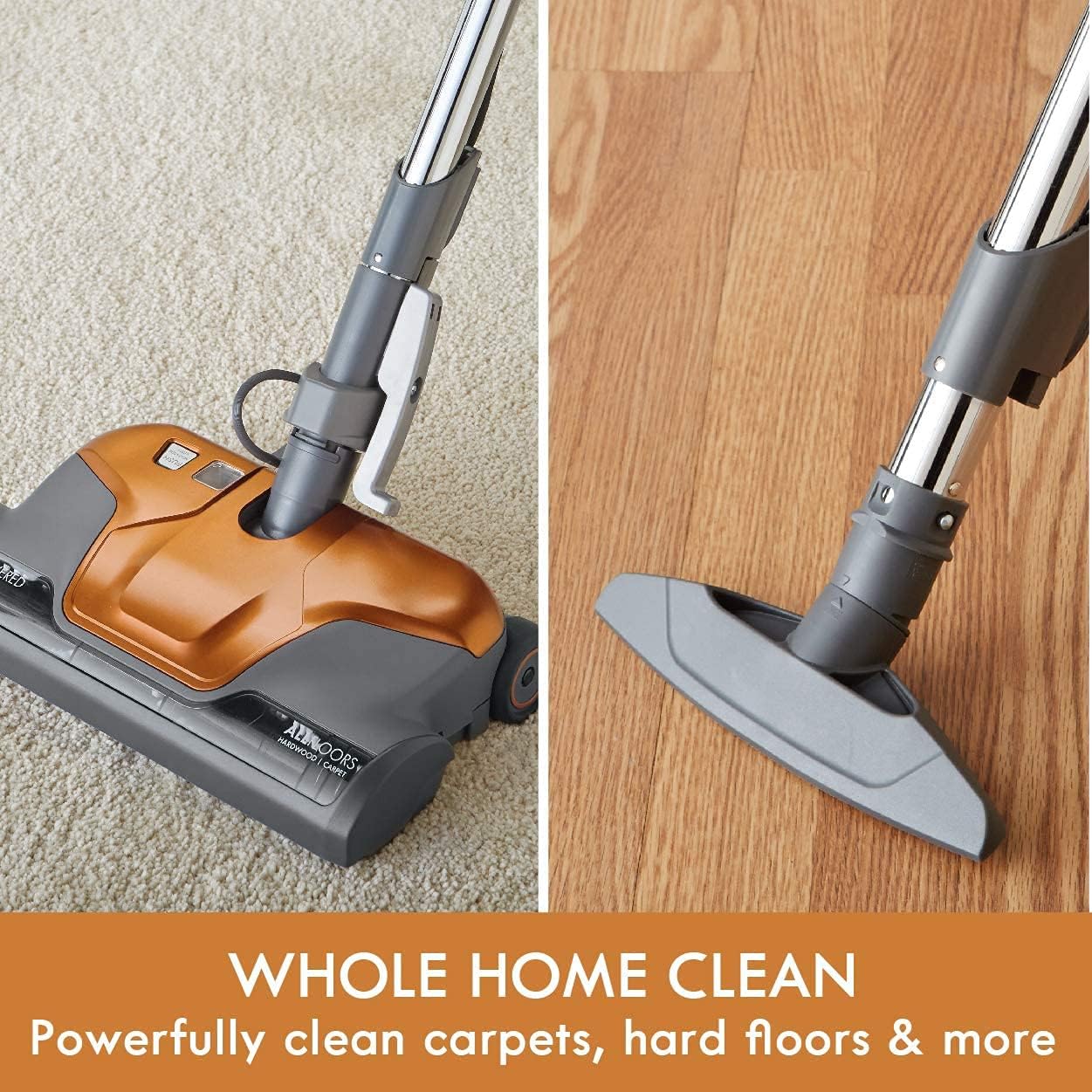
What does the Kenmore 600 Series do differently from the 200 Series? The 600 Series offers HEPA media bag compatibility, a more powerful motor rating, and typically a wider accessory bundle including an upholstery tool and crevice extensions. The 200 Series is lighter and lower-priced but lacks the filtration upgrade path. Owners who cited switching back to bags specifically mentioned the 600 Series — the HEPA bag option appears to be a meaningful driver of that satisfaction.
How long do Miele bags last before needing replacement? Manufacturer guidance and owner reports both suggest approximately one to two months under normal residential use, or roughly one bag per room-by-room full-home cleaning session in a medium-sized home with pets. In lighter use — studio or one-bedroom, no pets — owners report three months or more per bag. Miele bags have a self-sealing collar that closes when you remove them, which reinforces the containment benefit at disposal.
Does the Eureka WhirlWind work on area rugs or only bare floors? Reviewers flag this directly: thin, low-pile area rugs are manageable, but the machine’s single suction speed becomes a real limitation on anything with texture or pile. Lightweight rugs tend to shift or bunch rather than getting cleaned. Apartment Therapy’s “Best Vacuums for Small Apartments” (2024 edition) positions it as a hard-floor tool with light-rug capability — that framing matches what long-run owners actually report.