A cordless vacuum is exactly what it sounds like: a battery-powered vacuum with no power cord to manage. Instead of being tethered to an outlet, you grab it off its charging dock and sweep a room in two minutes flat. The number you’ll see most in this price band — 40 to 55 kilopascals (kPa) — is a suction pressure rating, essentially how hard the machine pulls air (and with it, debris) through the nozzle. For context, a standard plug-in canister vacuum might run 15–20 kPa of actual working suction at the floor, while premium cordless machines from brands like Dyson advertise considerably higher figures. Budget cordless vacuums in the $60–$180 range have flooded the market since 2023, and the question every buyer is actually asking is: does the suction number on the box translate to a clean floor, six months from now? This article synthesizes what real owners of LEVOIT, KARDV, CHEBIO, and TechRise cordless vacuums report after extended use — so you can decide whether the Dyson price tag is solving a real problem you have, or one you don’t.
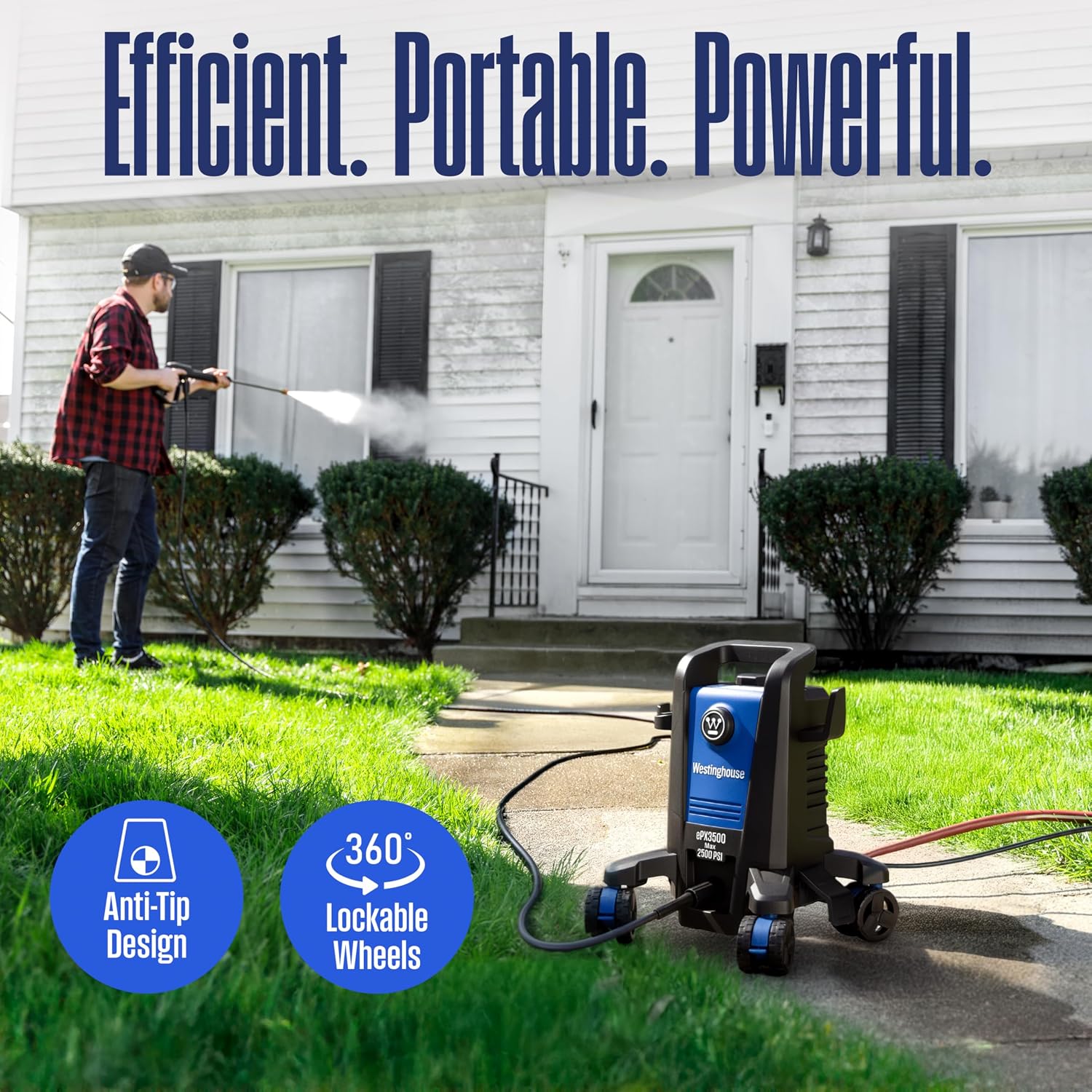
| EDITOR'S PICKWestinghouse ePX3500 Electric P… | Mid-tierCHEBIO Lightweight Cordless Vac… | Budget pickTikom V500 Cordless Vacuum Clea… | |
|---|---|---|---|
| Type | Pressure washer | Cordless vacuum | Cordless vacuum |
| Suction | — | 45kPa | 40,000Pa |
| Max PSI | 2500 PSI | — | — |
| Max GPM | 1.76 GPM | — | — |
| Run time | — | 45 min | — |
| Power | — | — | 450W |
| Price | $169.00 | $99.99 | $79.96 |
| See on Amazon → | See on Amazon → | See on Amazon → |
The “You Don’t Actually Need a Dyson” Pattern — and When It’s True
One LEVOIT owner titled their verified review “You Don’t Actually Need a Dyson” and framed it explicitly as a social-conditioning critique: the assumption that spending $400–$600 is necessary to get a clean floor is, for certain use cases, simply wrong. A KARDV owner made a direct Dyson V7 comparison and rated the KARDV a favorable fraction-of-the-cost alternative for their home.
This is the single most important pattern in the budget cordless category right now, and it deserves a precise reading — not a cheerleading one.
When the pattern holds:
- Hard floors (LVP, tile, hardwood) with routine daily or every-other-day passes
- Homes under roughly 1,500 sq ft where a single charge covers the full floor plan
- Light-to-moderate debris loads: crumbs, dust, pet dander on hard surfaces, light tracked-in dirt
- One or two low-shedding to moderate-shedding pets
One LEVOIT owner reports two full years of use across a 1,200 sq ft home with no performance degradation and no mechanical failures. That’s thin data — it’s one owner — but it’s the kind of long-horizon signal worth noting, because most budget vacuum reviews are written at the 30-day mark.
When the pattern breaks down:
- Wall-to-wall carpet, especially medium or high pile
- Heavy pet shedding from double-coat breeds (more on TechRise and German Shepherds below)
- Multi-story homes where runtime-per-charge becomes a hard constraint
- Facilities or light commercial use where runtime and motor longevity face real duty cycles
The Wirecutter’s cordless vacuum guide (New York Times, updated 2025) consistently places Dyson and Shark in the top tier precisely because of carpet performance, filtration class, and long-run motor reliability — categories where published specs and owner longevity data diverge sharply from the budget field.
What Six-Month Owners Actually Report, by Model Pattern
LEVOIT: Durability Signal and the 1,200 Sq Ft Benchmark
The LEVOIT model in this category draws consistent praise for two things: easy canister emptying and runtime adequate for small-to-mid apartments. Owners who have struggled with older bagless designs — the kind where you half-empty the bin onto your hand while the debris cloud drifts back onto the floor — specifically single out the one-click bottom-release bin as a quality-of-life win.
The two-year durability report is meaningful because Consumer Reports’ 2025 reliability survey data on budget cordless vacuums as a category shows elevated failure rates in year two, particularly motor and battery degradation. A no-failure report at 24 months from a single owner doesn’t contradict that pattern, but it does suggest the LEVOIT is at minimum not among the worst performers.
KARDV: The Fraction-of-Cost Framing
The KARDV owner who compared it favorably to a Dyson V7 is doing something analytically useful: the Dyson V7 is a known quantity with published suction figures and a large owner base, so using it as a benchmark rather than claiming the KARDV “beats” premium machines is honest framing. The V7 is an older Dyson platform; current flagship Dyson cordless models (V10, V15) perform at a different level entirely.
The practical read: if your needs align with what a V7 could handle — hard floors, light carpet, medium debris loads — then a well-reviewed budget model at $80–$150 solves the same problem for less capital outlay.
CHEBIO: The Stair Use Case
CHEBIO generates the most consistent stair-vacuuming praise in this category, and the mechanism is simple: it’s lightweight. Owners describe carrying it one-handed up and down flights without fatigue. This matters more than it might seem. Most cordless vacuums are marketed as stair-capable, but a machine that weighs 6.5 lbs vs. one at 4.5 lbs creates meaningfully different experiences on a 15-step run, especially for users who vacuum stairs more than once a week. Good Housekeeping’s cordless vacuum evaluations consistently list weight as a top-three practical differentiator, and the owner reviews here validate that.
TechRise: The Most Honest Limitation Disclosure
The TechRise owner with a German Shepherd’s double coat provides what is genuinely the most useful framing in this entire review set: the brush is overwhelmed by the dog’s shedding, and the owner attributes this to the dog, not the vacuum. That’s not defensive — it’s accurate. A German Shepherd’s double coat produces fur volumes that challenge $500 vacuums. Anti-tangle brush roll technology in this price tier is designed for long human hair on hard floors, not for the density and volume of undercoat blown during a seasonal shed cycle.
The honest decision rule it implies: if you have a heavy double-coat shedder, the question isn’t which $150 vacuum handles it best. The question is whether you need a vacuum in this category at all, or whether you need a corded upright or canister with a dedicated pet tool and a more powerful motor.
The Numbers That Actually Matter
| Metric | Budget 40–55 kPa (this category) | Dyson V8 | Dyson V10 |
|---|---|---|---|
| Suction (manufacturer-rated) | 40–55 kPa | ~115 AW (airwatts)* | ~150 AW (airwatts)* |
| Typical runtime (max mode) | 15–25 min | 40 min | 60 min |
| Weight (stick config) | 3.5–5.5 lbs | 5.6 lbs | 5.9 lbs |
| Filter class (typical) | HEPA-style, varies | HEPA | HEPA |
| Street price (May 2026) | $60–$180 | $280–$350 (refurb/sale) | $380–$499 |
*Airwatts (AW) and kPa measure suction differently. Airwatts account for airflow volume plus pressure; kPa measures pressure only. A 55 kPa budget vacuum is not comparable to 150 AW — the scales don’t convert cleanly, which is why budget brands often advertise kPa while Dyson advertises airwatts. Wirecutter’s vacuum guides explain this distinction clearly in their methodology notes.
Frequently Asked Questions
Does anti-tangle brush technology actually work for long human hair and pet fur, or do you still need to cut tangles manually?
For long human hair on hard floors, owners across LEVOIT and KARDV reviews report meaningful improvement over traditional brush rolls — hair wraps less, and when it does wrap, it’s easier to pull free. For pet fur from low-to-moderate shedders, the technology performs reasonably well between cleans. For heavy shedders with dense coats (the TechRise/German Shepherd scenario), anti-tangle brush rolls in this price tier still require manual clearing, just less frequently. The honest answer: anti-tangle works, but “works” means “reduces the frequency of manual cutting” rather than “eliminates it.”
How does 40–55 kPa suction compare to a Dyson V8 or V10 in practical floor cleaning?
On bare hard floors with normal debris loads, the gap is smaller than the price difference implies — owners consistently report satisfactory results on LVP, tile, and hardwood. On carpet, especially medium-pile, the gap becomes significant: Dyson’s higher airwatt figures translate to meaningfully deeper debris extraction, which is why Consumer Reports and Wirecutter both show premium cordless machines outperforming budget options on carpet benchmarks. The 40–55 kPa category is optimized for hard floor households.
Can these vacuums handle area rugs or do they only work well on hard floors?
Low-pile area rugs (under ¼ inch pile height): owners report generally acceptable performance, though pickup on the rug’s surface is slower than on bare floor. Medium-to-high pile area rugs: owners consistently note that the vacuum bogs down, loses suction contact with the pile, or struggles to move across the rug. If area rugs represent more than 30% of your floor surface, the budget cordless category will frustrate you.
How often do HEPA filters need cleaning and does performance degrade noticeably between cleanings?
Most owner manuals for this category call for filter cleaning every 30 days under normal use. Owners who own pets or live in dusty environments report visible suction degradation at the 3–4 week mark if filters aren’t cleaned. The pattern across reviews: performance at week six without cleaning is noticeably worse than week one, but a 10-minute rinse-and-dry cycle restores most of it. Keep a second filter on hand if you can source one — more on parts availability below.
Is wall-mount charging dock better than floor-standing charging for long-term battery health?
Wall mounts keep the battery in a fixed orientation, off the floor, and at consistent ambient temperature — minor but real advantages for lithium-ion cell longevity. Floor stands and leaning chargers work fine but introduce more handling cycles (picking up and setting down the machine), which is where connector pins wear over time. Neither configuration is dramatically better, but owners in long-run reviews who report sustained battery health tend to use wall mounts. Installation is a five-minute drill job on most models.
What is the realistic replacement parts availability for no-name brands if the brush roll or filter fails?
This is the sharpest long-term risk in the category. LEVOIT has established enough North American distribution that filters and brush rolls are findable through major online retailers. KARDV and CHEBIO have thinner parts ecosystems — owners report sourcing filters through the manufacturer’s direct storefront or third-party compatible listings, with mixed success. TechRise parts availability is inconsistent. The practical rule: before you buy, search the model name plus “replacement filter” and “replacement brush roll” on the retailer where you’d shop. If you can’t find parts listed for sale independently of the vacuum bundle, assume you cannot replace worn consumables when they fail.
The Decision Frame: If X, Then Y
If your home is primarily hard floors under 1,500 sq ft and you vacuum at least twice a week: A 40–55 kPa cordless from LEVOIT or KARDV solves the problem. The LEVOIT two-year durability signal and the anti-tangle brush roll make it the pick for households with long human hair or light-shedding pets.
If stairs are a primary use case: CHEBIO’s lightweight design is the differentiator worth paying for. Stair vacuuming frequency drives this decision more than suction figures do.
If you have a heavy double-coat shedding dog: Budget cordless vacuums are a secondary tool, not a primary one. Use this category for between-session maintenance on hard floors; budget separately for a corded option with a dedicated pet nozzle.
If you have significant carpet footage: The 40–55 kPa category will frustrate you within 90 days. The Dyson comparison reviews are honest — but they’re being made by owners whose homes skew hard-floor. The “you don’t need a Dyson” conclusion only holds if your floors match theirs.
If parts availability matters to you: LEVOIT is the safest bet in this category. Verify filter and brush roll availability for any other brand before purchase, not after.
The social-conditioning critique embedded in those owner reviews is fair: many buyers do over-spec for their actual use case. But the flip side is also true — some buyers under-spec and then blame the category rather than the mismatch. Know your floors, your pets, and your square footage. The math is simple once you have those three numbers.