If you’ve ever stood in the cleaning aisle squinting at phrases like “plant-derived surfactants” and “biodegradable formula,” wondering whether any of this actually matters when your toddler is about to lick the coffee table and your cat is walking across the freshly mopped floor — this article is for you. A concentrate is simply a cleaning formula sold in a small, strong bottle that you dilute with water before use; instead of buying a pre-mixed spray, you mix your own at the ratio the label specifies. That single habit cuts plastic waste, lowers cost per use, and reduces the volume of synthetic chemicals cycling through your home. Four concentrates dominate the conversation right now for households with kids and pets: Mrs. Meyer’s Clean Day, Simple Green All-Purpose Cleaner, Puracy Natural Multi-Surface Cleaner, and Dr. Bronner’s Sal Suds. What follows is a sourced comparison grounded in published program records, institutional testing guidance, and aggregated owner experience — not independent lab testing conducted by this publication.
Why “Eco” Labels Aren’t All Created Equal
The word “eco” on a cleaning bottle is not regulated the same way “organic” is on food. That gap matters most when the stakes are highest — crawling babies, cats grooming paws off freshly cleaned tile, dogs licking baseboards. So before comparing these four products on performance, it is worth understanding the third-party signals that separate verified safety from marketing copy.
The EPA’s Safer Choice Program (formerly Design for the Environment) is the most rigorous publicly available standard in this space. Per the EPA’s Safer Choice Standard documentation published by the U.S. Environmental Protection Agency, a product earning that label must disclose every ingredient to EPA reviewers, who evaluate each one against toxicity, environmental persistence, and bioaccumulation data. Simple Green All-Purpose Cleaner carries EPA Safer Choice certification, confirmed on the EPA Safer Choice Certified Products List published by the U.S. Environmental Protection Agency.
Puracy formulas are built around a disclosed, plant-based ingredient list and have pursued third-party fragrance safety verification aligned with IFRA (the International Fragrance Association) standards. Dr. Bronner’s Sal Suds is not EPA Safer Choice certified but publishes a full ingredient list and carries non-GMO and fair-trade certifications through third-party auditors. Mrs. Meyer’s is the most complex case: the brand markets heavily on plant-derived ingredients and essential-oil scents, but as noted in Consumer Reports’ all-purpose cleaner ratings and ingredient safety guidance, some Mrs. Meyer’s formulas include synthetic fragrance components not fully disclosed under current labeling rules — a relevant data point for households with fragrance-sensitive family members.
The practical decision frame: If EPA certification is your non-negotiable signal, Simple Green All-Purpose is the clearest answer. If full ingredient transparency without necessarily carrying that EPA badge matters more, Puracy and Sal Suds both publish detailed ingredient lists. Mrs. Meyer’s wins on scent and lifestyle branding but requires the most trust-by-reputation.
Performance by Surface Type: Four Products, Four Roles
The four concentrates in this comparison do not occupy the same niche. Understanding which one earns its place in your cabinet depends on matching the product’s verified strengths to your household’s actual surfaces and priorities. The subsections below work through each product in turn.
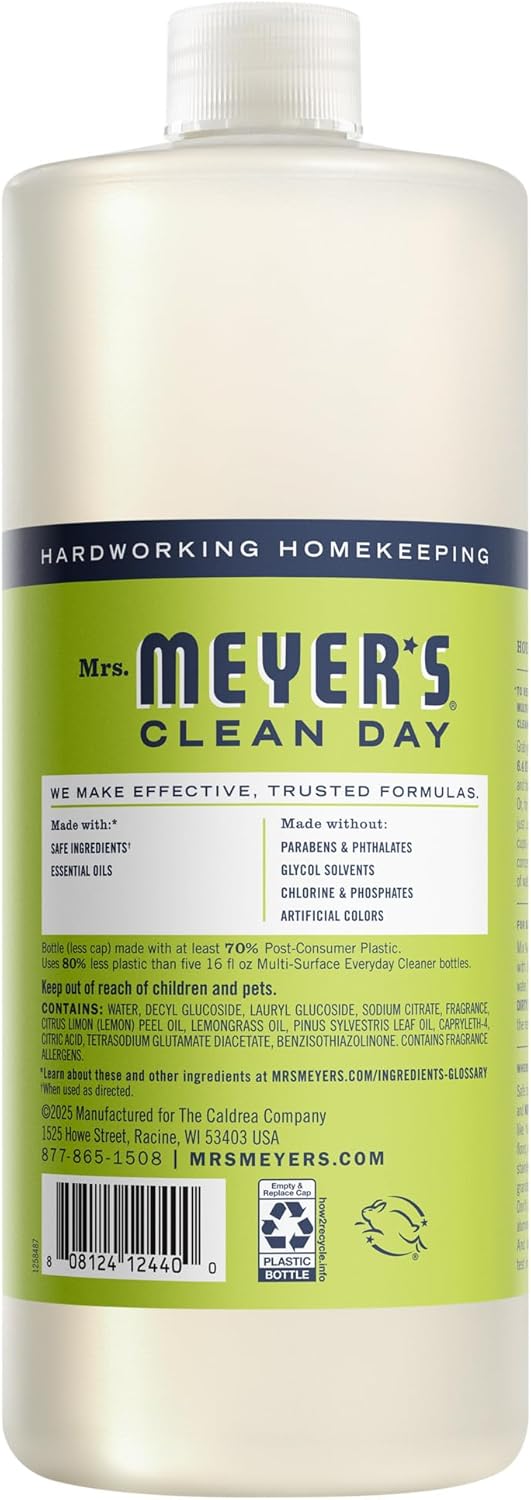
Mrs. Meyer’s Clean Day Concentrate — Kitchens and Guest-Facing Spaces
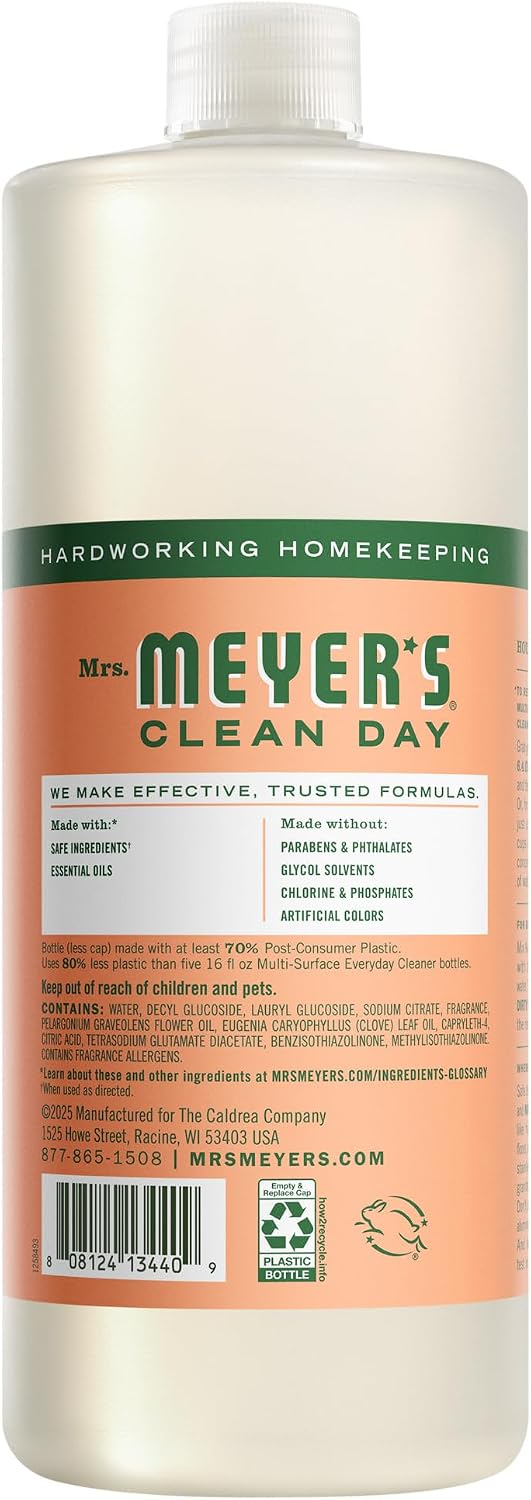
Mrs. Meyer’s earns its strongest reviews in kitchens, particularly on non-porous counters — laminate, quartz, and sealed stone. Owners consistently describe using it at a spray-bottle dilution of roughly 1 oz per 16 oz of water and getting a streak-free clean with a fragrance payoff that makes the task feel less like a chore. The cross-room versatility is notable: multiple owners describe adding the concentrate directly to laundry as a pretreater, which reflects a confidence in the formula that goes beyond the brand’s primary marketing.
The important caveat, surfaced in Consumer Reports’ all-purpose cleaner ratings and ingredient safety guidance, is that Mrs. Meyer’s does not carry EPA Safer Choice certification and some formulas include synthetic fragrance not fully itemized on the label. For households with cats — who are far more sensitive to certain surfactants and essential oils than dogs or humans — this is worth factoring into the choice. Mrs. Meyer’s is meaningfully safer than conventional chlorine bleach-based cleaners, but it is not the most defensible choice for a multi-cat household where fragrance sensitivity is a real concern.
On greasy kitchen surfaces — stovetops, range hoods, backsplash tile — plant-based concentrates as a category require more dwell time than conventional alkaline degreasers. The Good Housekeeping Institute’s Cleaning Lab, which evaluates cleaning products through controlled performance testing, consistently finds that plant-derived surfactants benefit from 30–60 seconds of contact time to emulsify heavy cooking grease. The practical fix is spray-and-walk-away for a minute before wiping, a habit change that makes Mrs. Meyer’s fully competitive for everyday kitchen grease.
SMP13005
$9.98
In stock on Amazon
Check price on AmazonSimple Green All-Purpose Cleaner — The EPA-Verified Default for Pet Households
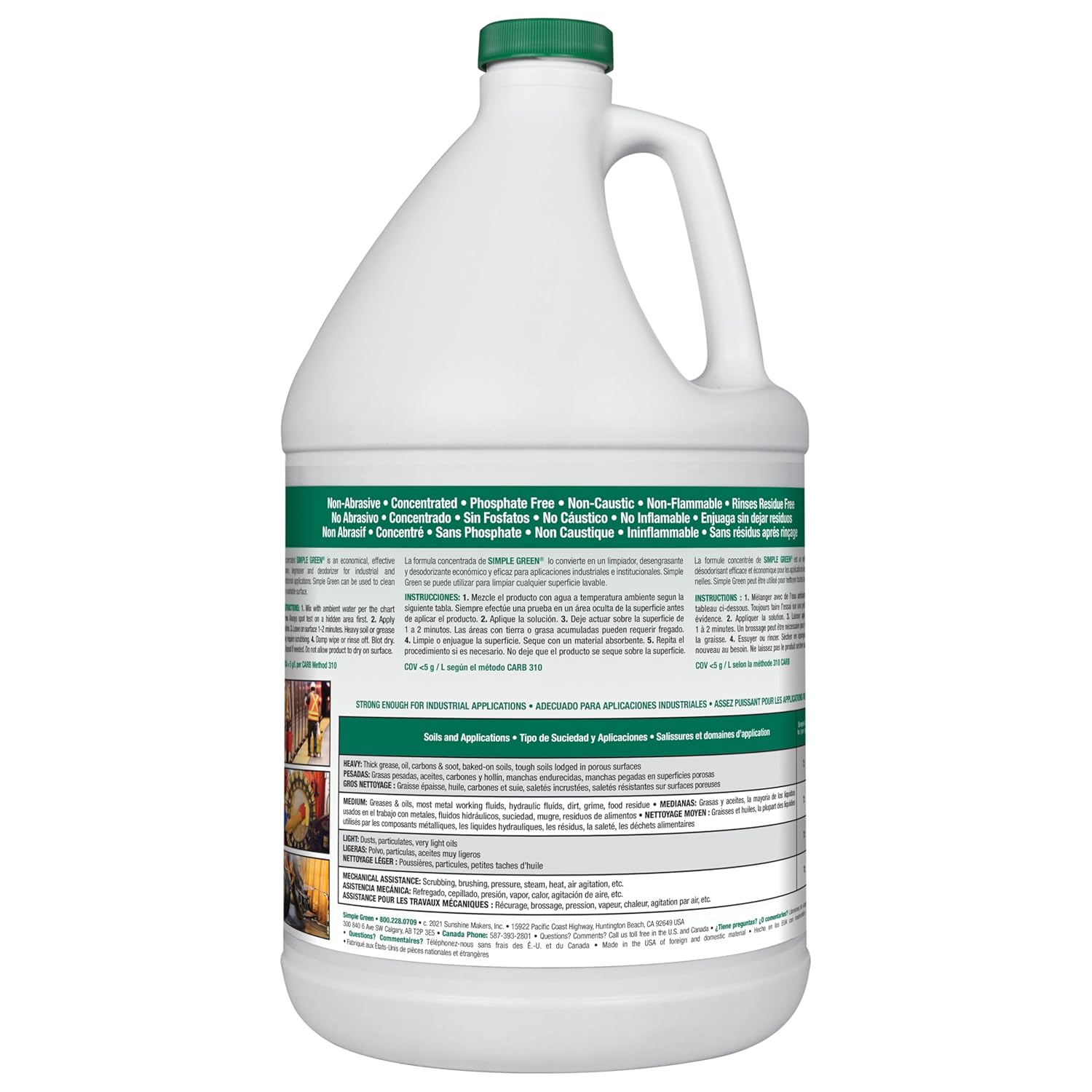
Simple Green All-Purpose Cleaner is the clearest answer when third-party-verified safety is the primary filter. Its EPA Safer Choice certification — confirmed on the EPA Safer Choice Certified Products List published by the U.S. Environmental Protection Agency — means every ingredient has been reviewed against toxicity, environmental persistence, and bioaccumulation data, not just taken on the brand’s word. Owners in multi-pet households specifically and repeatedly cite this certification as the reason Simple Green is their locked-in choice.
At floor-mopping dilution — approximately 1 oz per gallon per Simple Green’s published dilution guide — the formula performs well on hard-surface floors including tile and vinyl. Where Simple Green underperforms in living spaces is scent: the original formula has a detergent smell that some owners find off-putting, though it dissipates quickly after surfaces dry. A fragrance-free option is available for households where any added scent is a concern.
For extreme grease buildup or surfaces that overlap with garage and outdoor use, Simple Green Pro HD — a step up from the standard formula — is specifically noted in owner accounts for being aluminum-safe, a relevant distinction for range-hood surfaces and automotive-adjacent cleaning tasks. According to ISSA sustainability guidance on dilution-control chemistry published by the International Sanitary Supply Association, concentrate formats reduce packaging waste by 50–80% versus equivalent ready-to-use volume — a real environmental benefit rather than marketing copy.
MRS.
$7.67
In stock on Amazon
Check price on AmazonDr. Bronner’s Sal Suds — The Power-User Pick for Floors and Whole-Home Use
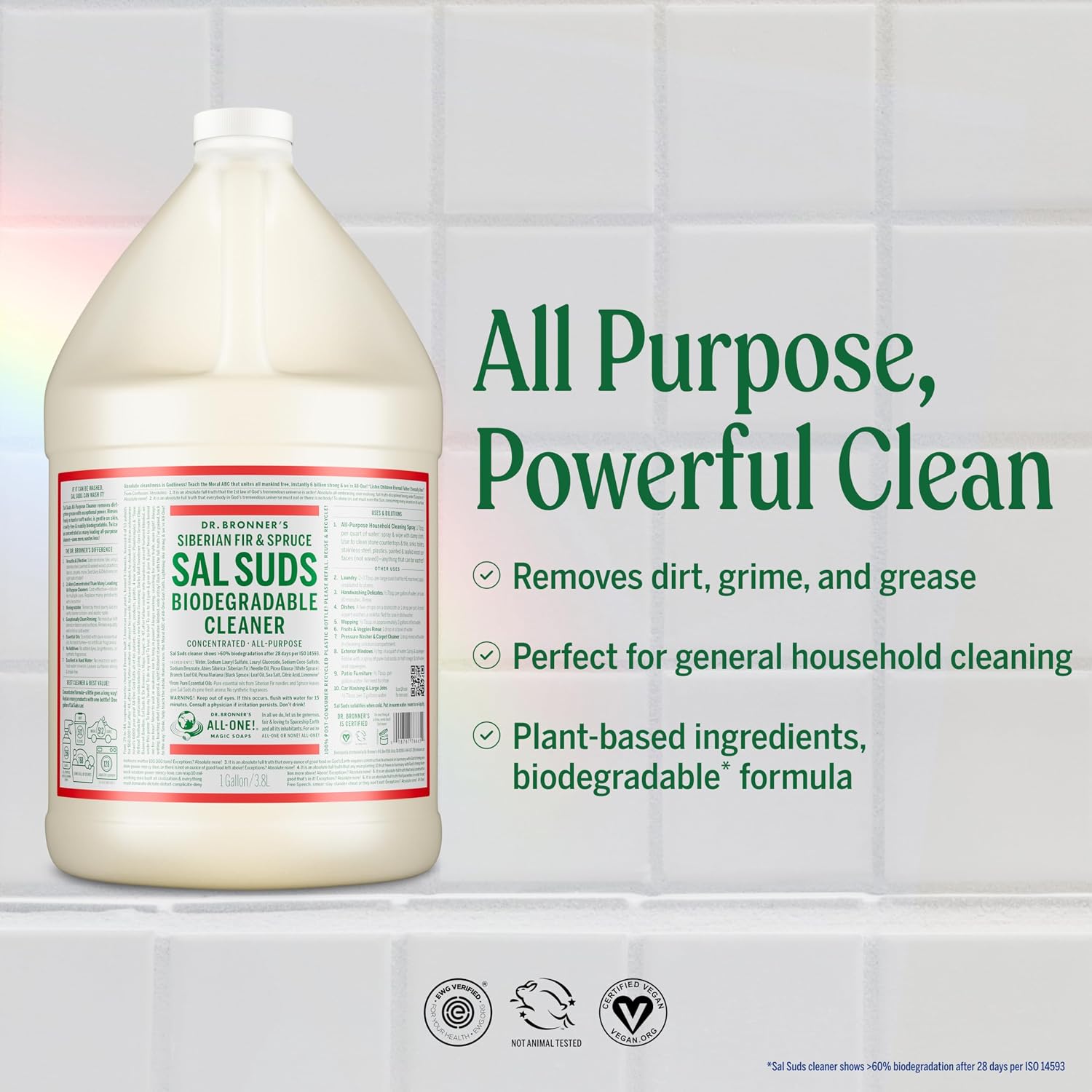
Dr. Bronner’s Sal Suds generates the most consistent praise from owners cleaning sealed hardwood and luxury vinyl plank (LVP). At the correct dilution — the manufacturer recommends approximately 1 tablespoon per gallon of water for floor mopping — owners and professional cleaning operators report no finish damage, no residue, and no clouding of polyurethane finishes. The key phrase is correct dilution. Sal Suds is notably concentrated; used undiluted or at a 1:1 ratio, owners report streaking and, over repeated use, potential finish degradation.
Sal Suds is not EPA Safer Choice certified, but Dr. Bronner’s publishes a complete ingredient list and the formula carries non-GMO and fair-trade certifications through third-party auditors. For owners who prioritize ingredient transparency over EPA badge status, this is the lowest cost-per-use option in this comparison — see the cost table in the following section. The formula is also compatible with pressure washer soap tanks at very low dilution, though its high-sudsing character means owners should confirm compatibility with their specific injector system before use.
MRS.
$7.67
In stock on Amazon
Check price on AmazonPuracy Natural Multi-Surface Cleaner — The Fragrance-Forward Choice for Entertaining Households
Puracy occupies a distinct niche in this comparison: it is the only concentrate here where owners consistently report receiving unsolicited compliments from guests on how their home smells after cleaning. The brand’s IFRA-compliant fragrance blends produce a subtle, clean scent profile that reads as “well-maintained home” rather than “cleaning products in use.” For owners who run short-term rentals or entertain frequently, this is a meaningful differentiator that the other three products in this set simply do not replicate.
From a safety standpoint, Puracy publishes a fully disclosed ingredient list and aligns its fragrance formulation with IFRA standards — a more rigorous position than Mrs. Meyer’s on fragrance transparency, though Puracy does not carry EPA Safer Choice certification. At standard dilution, Puracy concentrate delivers ready-to-use solution at a meaningfully lower cost per ounce than pre-mixed sprays; see the cost-per-use table below for the full breakdown.
Dr.
$54.99
In stock on Amazon
Check price on AmazonCost-Per-Use Math: Is the Concentrate Premium Worth It?
The economics of concentrates favor the buyer significantly over pre-mixed sprays. The benchmark for comparison is a standard 32 oz ready-to-use spray, which retails at roughly $5–$8 from any of these brands — approximately $0.16–$0.25 per ready-to-use ounce.
| Product | Concentrate size | Approx. RTU yield | Est. cost per RTU oz |
|---|---|---|---|
| Mrs. Meyer’s concentrate | 32 oz | ~512 oz at 1:15 dilution | ~$0.04 |
| Simple Green All-Purpose | 32 oz | ~512 oz at 1:15 dilution | ~$0.03 |
| Puracy concentrate | 16 oz | ~256 oz at 1:15 dilution | ~$0.05 |
| Dr. Bronner’s Sal Suds | 32 oz | ~1,024 oz at 1:31 dilution | ~$0.02 |
Even the most expensive concentrate in this set — Puracy at approximately $0.05 per ready-to-use ounce — delivers solution at roughly one-fifth the cost of a pre-mixed spray. According to ISSA sustainability guidance on dilution-control chemistry published by the International Sanitary Supply Association, concentrate formats reduce packaging waste by 50–80% versus equivalent ready-to-use volume. The math and the environmental case both point the same direction: for any household doing regular cleaning, the concentrate format is the correct economic and environmental choice.
Frequently Asked Questions
Are Mrs. Meyer’s concentrates actually safe for pets and toddlers or just marketed that way? Safer than conventional cleaners in most cases, but the brand lacks EPA Safer Choice certification and some formulas include synthetic fragrance not fully disclosed on labels. Per Consumer Reports’ all-purpose cleaner ratings and ingredient safety guidance, this is the key gap between Mrs. Meyer’s marketing and its verified safety profile. For fragrance-sensitive pets — especially cats — or toddlers with skin sensitivities, Simple Green All-Purpose (EPA Safer Choice certified, per the EPA Safer Choice Certified Products List) or Puracy (IFRA-verified fragrance) are the more defensible choices.
Can Sal Suds be used on sealed hardwood and LVP without damaging the finish? Yes, at the correct dilution. Manufacturer guidance and consistent owner reports both support approximately 1 tablespoon per gallon of water for mopping. At that ratio, no finish damage or residue is reported. Higher concentrations risk streaking and, over repeated use, can degrade polyurethane finishes. Dilution discipline is non-negotiable with Sal Suds.
What is the correct dilution ratio for Simple Green on floors versus counters versus outdoor surfaces? Per Simple Green’s published dilution guide: approximately 1 oz per gallon (1:128) for light floor mopping; 2 oz per 24 oz spray bottle (roughly 1:11) for countertops and general surfaces; full-strength or 1:1 for heavy-duty outdoor surfaces and concrete. Simple Green Pro HD at a stronger dilution is the recommended option for engine degreasing or aluminum-safe automotive use.
How do plant-based concentrates perform on greasy kitchen surfaces compared to conventional cleaners? Effective, but slower. The Good Housekeeping Institute’s Cleaning Lab, which conducts controlled performance evaluations of cleaning products, finds that plant-derived surfactants benefit from 30–60 seconds of dwell time to emulsify heavy cooking grease, where conventional alkaline degreasers typically work in 10–15 seconds. Spraying and waiting 60 seconds before wiping closes most of that performance gap for everyday household grease. For extreme grease buildup, Simple Green Pro HD at a stronger dilution is the best option in this set.
Can any of these concentrates be used in a pressure washer’s soap tank? Simple Green is the clearest yes — the brand explicitly markets pressure washer compatibility and publishes dilution ratios for downstream injector systems. Sal Suds can be used in a pressure washer soap tank at very low dilution, but its high-sudsing formula can overwhelm some injector systems. Mrs. Meyer’s and Puracy are not formulated or rated for pressure washer use; using them risks excessive foam in the pump and potential equipment damage.
The Decision Rule
Third-party-verified safety for a multi-pet household: Simple Green All-Purpose is the defensible default. EPA Safer Choice certified per the EPA Safer Choice Certified Products List, broadly surface-compatible, and explicitly trusted by multi-pet households in long-run owner accounts.
Scent and cross-room versatility: Mrs. Meyer’s earns that role — understanding that you’re extending trust to the brand rather than to a third-party certification, as Consumer Reports’ all-purpose cleaner ingredient safety guidance makes clear.
Lowest cost-per-use with the broadest surface compatibility including hardwood: Dr. Bronner’s Sal Suds is the power-user pick, contingent on maintaining dilution discipline.
Guest impressions and fragrance as a priority: Puracy generates a social proof signal — unprompted guest compliments on how a home smells — that the others in this set simply do not replicate.