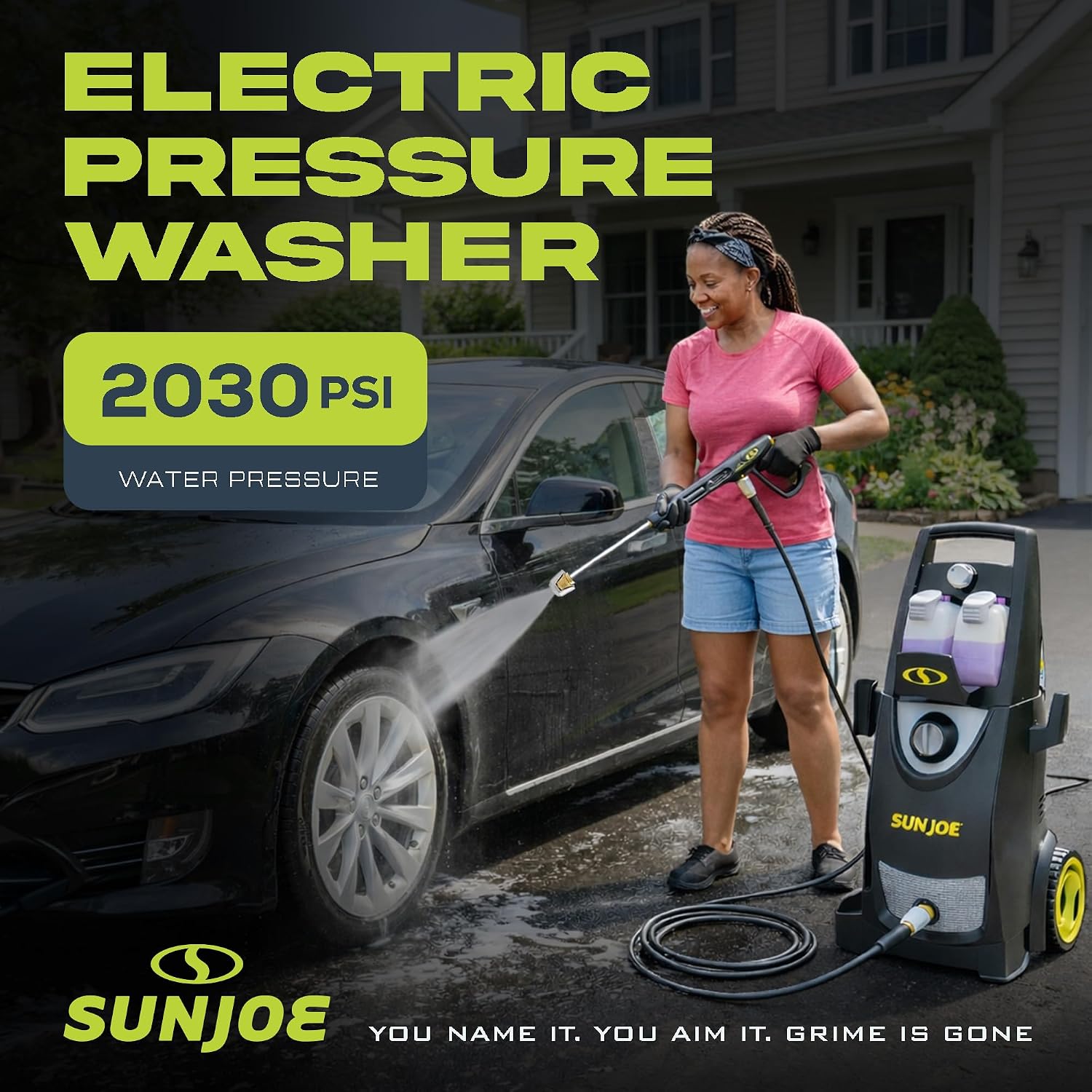
A pressure washer is exactly what it sounds like: a machine that forces water through a narrow nozzle at high pressure, turning a garden hose’s trickle into a focused stream powerful enough to strip grime from concrete, wood, siding, or vehicles. Pressure is measured in PSI (pounds per square inch — how hard the water hits), and flow is measured in GPM (gallons per minute — how much water moves through). Gas models run on a combustion engine and typically deliver 2,500–4,000 PSI; electric models plug into a standard outlet and typically land between 1,600–2,300 PSI, though newer prosumer units push past 3,000. For years the conventional wisdom was simple: gas for serious jobs, electric for casual rinsing. That calculus is changing fast, and the most interesting evidence comes not from spec sheets but from owners who made the switch — and who overwhelmingly report not missing the gas unit. This guide unpacks why that’s happening, where the limits still are, and how to make the call for your actual situation.
| EDITOR'S PICKWestinghouse WPX3400 Gas Pressu… | Mid-tierSun Joe Pressure Washer | Budget pickWestinghouse ePX3100 Electric P… | |
|---|---|---|---|
| PSI | 3400 | 2500 max | 2300 max |
| GPM | 2.6 | — | 1.76 max |
| Power source | Gas | Electric | Electric |
| Soap tank | ✓ | — | ✓ |
| Nozzle set | 5 | — | 5 |
| Wand type | Spray wand | — | Steel wand |
| Price | $349.00 | $169.00 | $139.00 |
| See on Amazon → | See on Amazon → | See on Amazon → |
Why Owners Are Abandoning the Annual Gas Rental
The pattern is consistent enough to be meaningful: homeowners who rented a gas unit once a year for the driveway are buying an electric model, doing the same job, and canceling the rental. That’s not marketing copy — it’s the dominant narrative across aggregated owner reviews of models like the Sun Joe SPX3000 and Westinghouse’s electric lineup.
The Sun Joe SPX3000 case is particularly telling. One owner specifically documented using it on a cinder block foundation for paint removal — a task most people would assume requires a gas unit — and described the results as equivalent to their prior gas rental experience. That’s a meaningful data point. Paint removal on porous masonry is near the top of what residential electric units are asked to do. Wirecutter’s Best Pressure Washers guide (updated 2025) similarly notes that for the majority of residential cleaning tasks — driveways, patios, wood fencing, siding — electric models in the 1,800–2,300 PSI range perform comparably to entry-level gas rentals when technique is consistent.
What’s actually driving the switch isn’t just power parity — it’s friction reduction.
Gas units require:
- Seasonal engine maintenance (oil changes, spark plug checks, carburetor draining if stored)
- Outdoor-only operation (exhaust)
- Pull-start reliability that degrades without regular use
- Fuel storage and stabilizer management
Electric units require a standard 120V outlet. That’s it. Owners consistently report that the zero-maintenance overhead means they actually use the machine — which compounds cleaning quality over time rather than letting grime accumulate for the annual rental event.
The Westinghouse Electric Lineup: What Owners Actually Praise (and Complain About)
Westinghouse’s electric pressure washer line — spanning the ePX3050, ePX3100, ePX3500, and WPX3000e — shows up repeatedly in owner reviews, and the feedback clusters around two things that no spec sheet will tell you.
The quick-disconnect system. Owners coming from older electric units consistently call out Westinghouse’s accessory connection system as a differentiator. The practical upshot: nozzle and hose swaps happen in seconds, which matters when you’re moving from a 25-degree fan tip (for flat concrete) to a soap nozzle to a 0-degree turbo tip across a single cleaning session. This sounds like a minor ergonomic detail; owners treat it as a significant quality-of-life upgrade.
The hose. This is the consistent complaint, and it’s worth naming directly: electric pressure washer hoses are stiffer than gas unit hoses, and the problem is worst in cooler temperatures. Owners across multiple Westinghouse models flag this as a daily-use annoyance. No spec sheet lists “hose flexibility,” which is precisely why owner reviews are the right source for this detail. The fix most owners land on: a third-party kink-resistant polyurethane replacement hose rated for the unit’s PSI (check the manufacturer’s max PSI and match or exceed it on the replacement). It’s a $20–$40 aftermarket solve that meaningfully changes the working experience.
By the numbers — Westinghouse ePX3500 vs. a typical gas rental:
| Westinghouse ePX3500 (electric) | Typical big-box gas rental (weekend) | |
|---|---|---|
| Rated PSI | 3,500 | 3,000–3,500 |
| Setup time | ~5 min | Pickup/return logistics |
| Annual cost (1 use/yr) | amortized ~$40–$60/yr over 5 yrs | $60–$90/weekend |
| Maintenance | None | Oil, fuel, stabilizer |
| Storage | Compact, vertical | Larger footprint, fuel concerns |
Where Gas Still Wins — And Who Should Stay There
Honest spec-based comparison still puts gas units ahead in three scenarios, and if you’re in any of them, the switch math doesn’t work.
1. Sustained commercial-volume work. If you’re running a pressure washing route — houses per day, fleet vehicles, commercial concrete — electric units hit thermal limits. Gas engines are designed for continuous duty cycles that residential and prosumer electric motors aren’t rated for. Facilities managers and cleaning contractors sourcing through Grainger or Zoro should be looking at hot-water gas units or commercial electric units with dedicated duty-cycle ratings, not residential electric crossovers.
2. Remote jobsites without reliable power. No outlet, no electric unit. Gas wins by default when you’re working on rural properties, agricultural facilities, or construction sites without temporary power.
3. Stripping heavy industrial contamination. Grease-baked commercial kitchen exhaust hoods, heavy calcium scale on industrial equipment, oil-saturated concrete in a fleet garage — these applications often benefit from the combination of higher sustained GPM (gas units typically deliver 2.5–4 GPM vs. electric’s 1.2–2.2 GPM) and the option to run hot water. GPM matters more than PSI once PSI is sufficient — it’s the volume of water that flushes contamination away. Per Consumer Reports’ pressure washer buying guide (2025 edition), GPM is the frequently underweighted spec in residential purchase decisions.
The Westinghouse WPX3400 buyer story is instructive here. Owners of this gas Westinghouse model describe going through the gas-vs-electric decision explicitly before purchase — and landing on gas specifically because of planned use on large surfaces requiring sustained runtime, not because they doubted electric’s PSI. That’s the right decision framework: it’s not about peak pressure, it’s about duty cycle and session length.
The Rent-vs-Buy Math: When Buying Pays Off
This is a decision operators and homeowners both need to run, and the numbers are simpler than most people expect.
Annual rental cost at a big-box home center in 2026 runs $60–$90 for a weekend gas unit, not counting fuel or the time cost of pickup and return. Call it $80/year as a working number.
Electric unit purchase: A capable residential electric unit (Sun Joe SPX3000 tier) runs $150–$200. A prosumer unit like the Westinghouse ePX3500 runs $250–$350.
Break-even:
- SPX3000-tier unit at $180: break-even at 2.25 annual uses vs. $80 rentals
- ePX3500-tier unit at $300: break-even at 3.75 annual uses
Durability matters here. A long-term Greenworks owner in multiple review threads documents owning a Greenworks 2000 PSI unit for eight years without mechanical failure — the strongest long-run ownership signal in the consumer electric category. If a $180 unit runs eight years, the annual amortized cost is $22.50. The rent-vs-buy case is unambiguous by year two for anyone using the machine more than once annually.
Per ISSA’s cost-per-use methodology guidance, the same framework applies to commercial equipment decisions: total cost of ownership divided by total uses over service life, compared against the per-use cost of the alternative. The math structure is identical whether you’re buying a $200 residential unit or a $2,400 commercial scrubber.
If-then decision rule: If you’re cleaning your own property more than once per year and have outdoor outlet access, buying is almost certainly cheaper than renting by year two. If you’re running a route with multiple jobs per week, the commercial-grade calculus is different — but the rent-vs-own inflection point arrives even faster.
Frequently Asked Questions
Is an electric pressure washer actually powerful enough to clean a concrete driveway?
For residential driveways — typical oil stains, tire marks, algae, and general grime accumulation — a 1,800–2,300 PSI electric unit with a rotary or turbo nozzle handles the job. The Sun Joe SPX3000 is specifically documented by owners as performing equivalently to gas rentals on this task. For heavily stained commercial concrete or large warehouse floors, GPM and duty cycle matter more than PSI, and you’re looking at commercial-grade equipment.
How does the onboard soap tank work for car washing, and how much soap does it hold?
Onboard detergent tanks (present on most mid-range electric units including Sun Joe and Westinghouse models) hold roughly 0.9–1.5 liters depending on the model. The soap nozzle (typically labeled or color-coded) reduces pressure and introduces detergent via a siphon effect — it’s a low-pressure application mode, not a high-pressure soap blast. Apply soap at low pressure with the soap nozzle, let it dwell, then switch to a rinse nozzle for high-pressure removal. Spec sheets list tank volume; they don’t explain the workflow. Use soap rated safe for pressure washer injectors — not dish soap, which can damage seals over time.
Will a 2,000–2,500 PSI electric unit do what a rented gas unit does for yearly driveway cleaning?
Owner evidence says yes, for most residential driveways. The SPX3000 paint-removal documentation on cinder block is the strongest single data point. The key variable is nozzle selection: a 15-degree or 25-degree tip paired with a turbo/rotary nozzle attachment does more real cleaning work than PSI alone. Electric units in the 2,000–2,500 PSI range are within the performance band of entry-level gas rentals (which typically run 2,500–3,000 PSI) with comparable GPM on most residential applications.
Why are electric pressure washer hoses so stiff, and is there a fix?
Stiffness comes from the hose construction — electric unit hoses tend to use PVC rather than the more flexible polyurethane or rubber construction on higher-end gas unit hoses. Cold temperatures make it worse. The aftermarket fix: a third-party kink-resistant polyurethane hose rated to match or exceed the unit’s PSI. Verify the fitting size (most residential units use M22 fittings, but confirm before ordering). This is the most consistently reported quality-of-life improvement across Westinghouse and Sun Joe owners who’ve made the swap.
How long does assembly take on a Westinghouse electric pressure washer straight from the box?
Owners consistently report 15–30 minutes for first assembly, with the quick-disconnect system making subsequent setup significantly faster — typically under five minutes once familiar with the unit. Wirecutter’s pressure washer coverage notes that assembly time is a meaningful differentiator across brands, and Westinghouse’s connector system is specifically cited as easier than competitors at the same price tier.
At what point does buying a pressure washer cost less than renting one annually?
At $80/rental and a $180 electric unit, break-even is 2.25 rentals — roughly two years if you rent once annually, or a single season if you’re using it multiple times. Factor in convenience (no pickup/return), zero maintenance cost on electric, and documented 8-year lifespans on quality units, and the ownership case is strong for anyone cleaning their own property regularly. The only scenario where renting wins long-term is genuine once-in-five-years need for a high-powered gas unit on a specific remediation job.
The Decision Rule
If your jobs are residential or light commercial (driveways, patios, vehicles, fencing, siding), you have outdoor outlet access, and you’re using the machine at least twice a year: buy electric. The rent-vs-own math resolves in your favor by year two, the maintenance overhead is near zero, and owner evidence confirms that the performance gap versus entry-level gas rentals has effectively closed for these use cases.
If you’re running sustained commercial routes, working remote sites without power, or tackling heavy industrial contamination: gas still wins on duty cycle and GPM, and the right question shifts to commercial-grade electric units with rated duty cycles or hot-water gas units — not the residential crossover conversation.
The owners who switched to electric and stopped renting aren’t settling. They’re making a rational decision based on what their actual jobs require — and the spec sheets finally caught up to where the reviews have been for two years.