Microfiber is the umbrella term for a synthetic fabric made from fibers finer than one denier — roughly one-fifth the diameter of a human hair. That extreme fineness is what lets it grab oils, bacteria, and dust rather than just pushing them around the way a cotton rag does. The format microfiber comes in, though, matters as much as the fiber itself: a roll you tear like paper towels is optimized for high-volume, disposable-style use; a bulk flat-sheet pack is designed for professional color-coding workflows; and a small, tightly woven lens cloth is precision equipment built for coated optical surfaces. Buy the wrong format for your job and you either overpay or damage something expensive. This article decodes the differences, runs the cost math, and ends with a clear decision rule for each buyer type.
| EDITOR'S PICKS&T INC. 150 Pack Microfiber Cl… | Mid-tierMR.SIGA Microfiber Cleaning Clo… | Budget pickMagicFiber Microfiber Cleaning… | |
|---|---|---|---|
| Pack Count | 150 | 24 | 6 |
| Cloth Size | 11.5 x 11.5 in | 12.6 x 12.6 in | — |
| Color Options | Assorted | Yellow/Green/Pink/Blue | — |
| Reusable | ✓ | — | — |
| Lens / Screen Use | — | — | ✓ |
| Intended Use | Home, car | General cleaning | Glasses, lens, screens |
| Price | $31.99 | $19.99 | $9.97 |
| See on Amazon → | See on Amazon → | See on Amazon → |
What Each Format Actually Is — and What It’s Optimized For
Roll-Format Microfiber Cloths
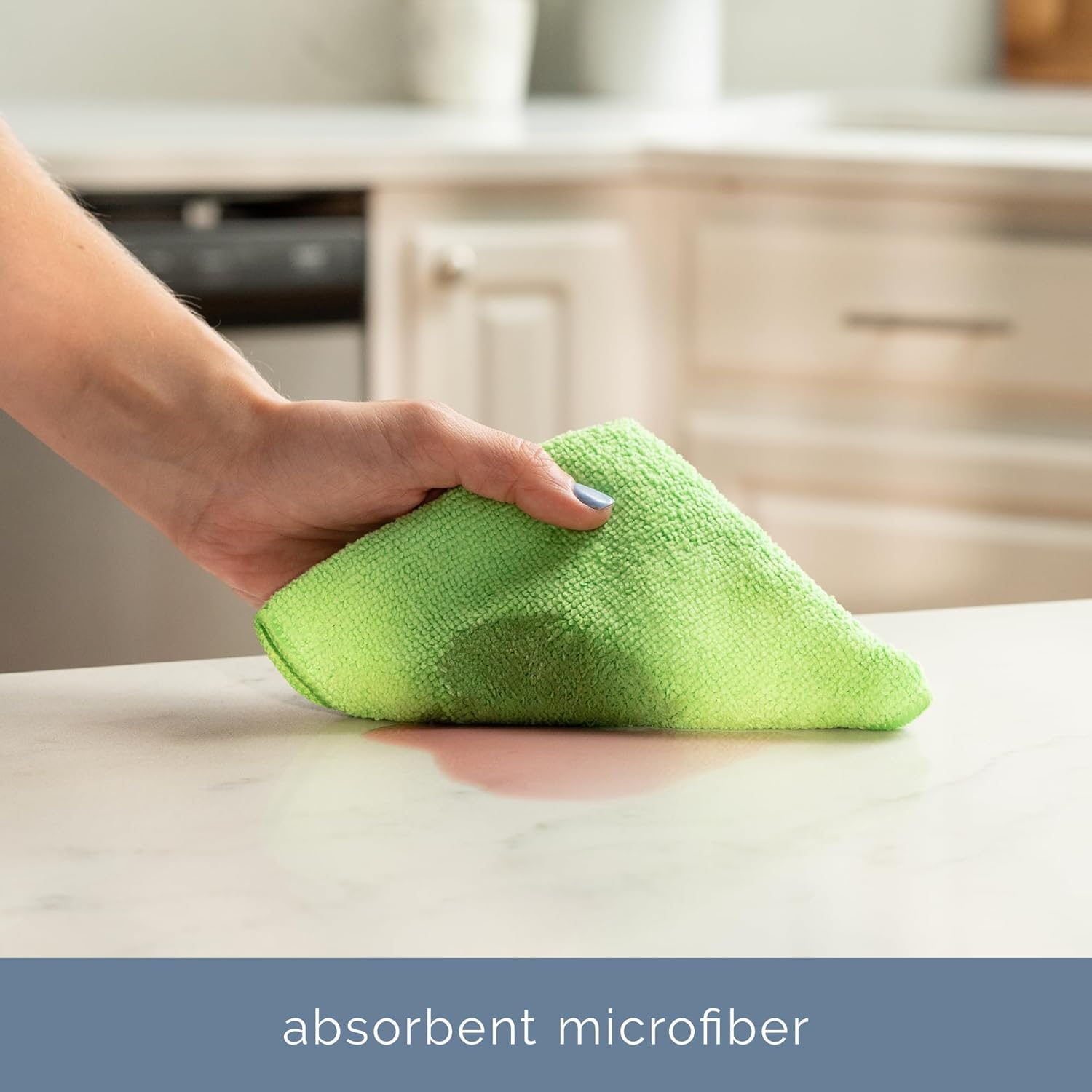
Roll-format cloths are perforated microfiber wound onto a core, sized to tear off like a paper towel. The workflow is identical to what you’d do at the kitchen sink: grab one, wipe, toss if heavily soiled, launder if lightly used. This format removes the decision friction of “is this cloth too dirty to reuse?” The low per-unit cost makes discarding a heavily greased cloth feel economically rational rather than wasteful. Roll-format cloths are best understood as a paper-towel replacement with better cleaning performance, not as a professional-grade tool.
MagicFiber
$9.97
In stock on Amazon
Check price on AmazonBulk Flat-Sheet Packs
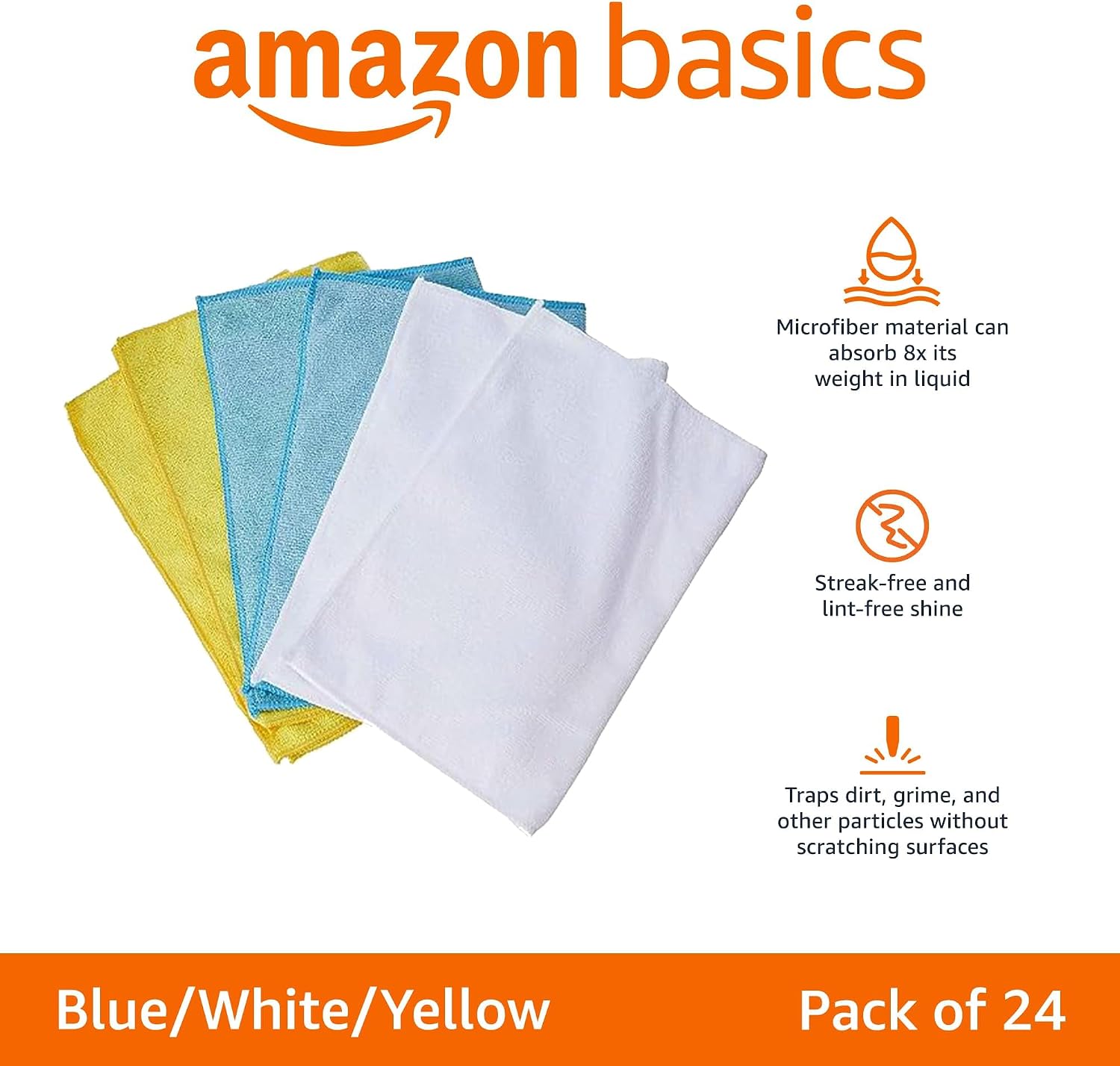
Bulk flat-sheet packs are individual cloths stacked or bagged, typically 16×16 inches, available in white or multi-color. Professional cleaning operations use bulk packs for color-coded room assignment — a best practice documented in the ISSA Cleaning Industry Management Standard (CIMS) for preventing cross-contamination between, for example, bathroom and kitchen surfaces. ISSA’s CIMS documentation specifically identifies microfiber color-coding as a procedural control for infection-risk environments. For facilities managers and janitorial contractors, the color-coded bulk pack is not a preference — it is a protocol with liability implications.

MR.SIGA
$19.99
In stock on Amazon
Check price on AmazonPrecision Lens Cloths
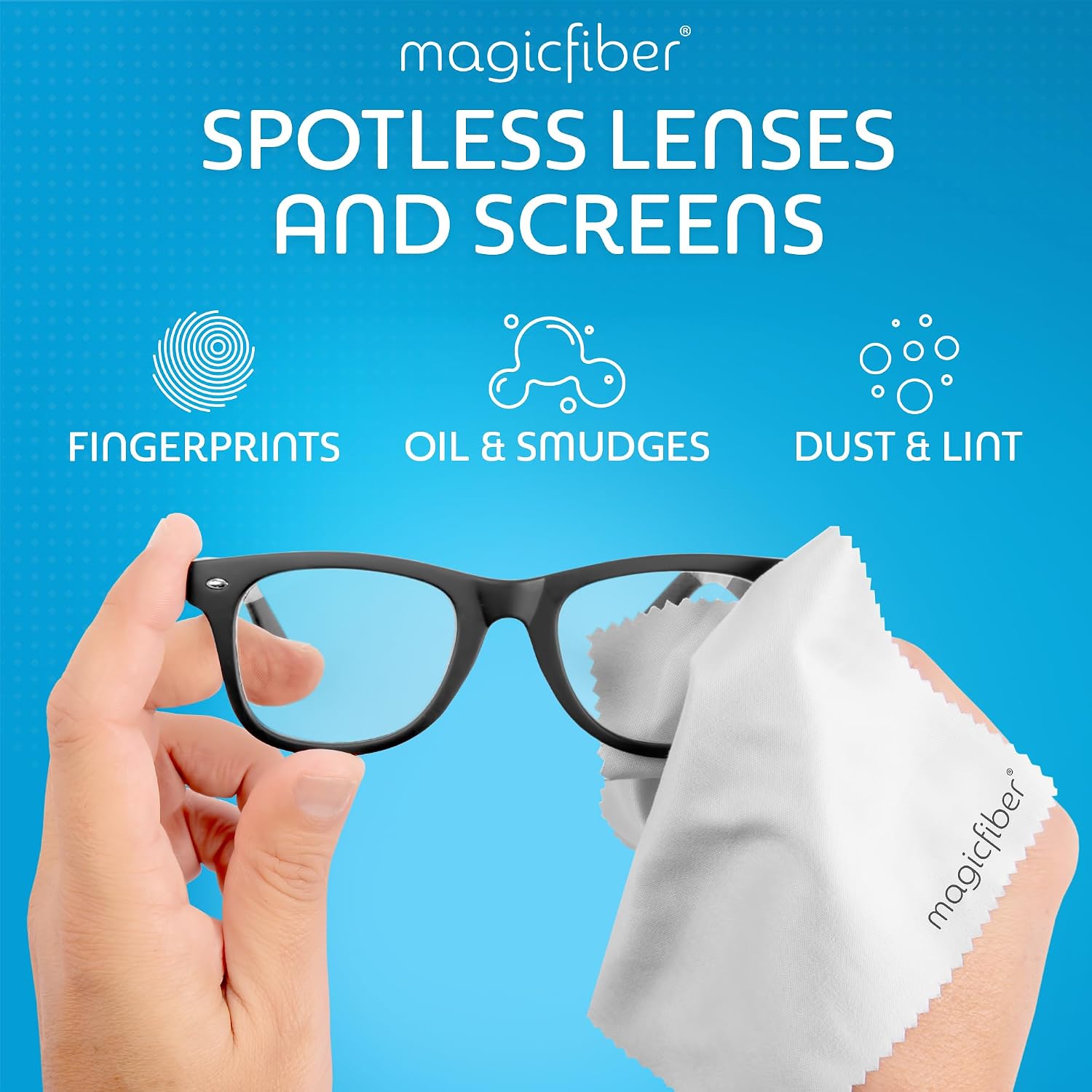
Precision lens cloths are small-format, higher-GSM (grams per square meter — a measure of fabric density and softness), typically made from tightly woven microfiber manufactured to tolerances that bulk cloths are not held to: consistent fiber diameter, no loose fibers, and no fabric finish that could abrade anti-reflective (AR) coatings. Wirecutter’s buyer’s guide to microfiber cloths notes that cloths intended for general household use often have a surface finish or fiber density appropriate for countertops but too aggressive for optical coatings. For regular uncoated glass, the difference is minor. For progressive lenses or AR-coated screens, it is not minor — it is the difference between a clean surface and a scratched one.
S&T
$31.99
In stock on Amazon
Check price on AmazonThe Cost-Per-Use Math — and Where It Actually Favors Each Format
Here’s the arithmetic that matters for operators doing volume work.
By the numbers (2026 market pricing, per published retail listings):
- Roll format: ~$0.08–$0.15 per cloth, treated as semi-disposable
- Bulk flat pack: ~$0.25–$0.40 per cloth, rated for 100+ washes by manufacturer
- Precision lens cloth: ~$1.50–$3.50 per cloth, rated for 100+ washes
For a residential cleaning operator running eight homes per day, the bulk flat-pack math is straightforward: at $0.30 per cloth with 100-wash longevity, your per-use cost drops to roughly $0.003 per use before labor for laundering. Roll-format cloths, even at $0.10 each, are consumed rather than cycled — so at scale, bulk packs win on total cost of ownership. Where roll format wins is zero sorting overhead and no laundry-at-site logistics.
Lens cloths are a different calculation entirely. The rewash cycle on a single precision cloth is effectively unlimited for personal eyewear use. The math strongly favors buying four to six lens cloths once, rewashing them, and avoiding any recurring subscription order — reviewers across multiple platforms flag that subscription models result in accumulating far more cloths than a single user can realistically exhaust.
Consumer Reports’ advisory on cleaning electronics (titled “How to Clean Electronics Safely”) notes that fiber type matters more than brand name for screen surfaces — the concern is abrasion from loose particles trapped in a coarser weave, not chemical transfer. Wirecutter’s microfiber buyer’s guide corroborates this finding for coated optical surfaces specifically.
Where Each Format Falls Short — The Trade-offs You Should Know
Roll Format: Lint and Laundry Logistics
The recurring complaint among roll-format users is lint transfer in the dryer. Roll-format microfiber sheds synthetic fibers when tumble-dried alongside cotton items. Good Housekeeping Institute’s guidance on caring for microfiber cloths (“How to Clean and Care for Microfiber Cloths”) explains why: microfiber is electrostatically prone to attracting and shedding fibers, and the lint trap from a mixed load ends up full of both cotton and synthetic material — which also degrades the microfiber’s charge-based cleaning ability over time. If your operation involves a shared commercial laundry, this is a logistics problem, not just an inconvenience. Washing roll-format cloths separately from all cotton items is the universal solution documented in that guidance.
Roll-format cloths are also cut rather than hemmed at the perforations, leaving raw edges that contribute to shedding. This is a design trade-off inherent to the format, not a quality defect.
MagicFiber
$9.97
In stock on Amazon
Check price on AmazonBulk Flat Packs: White vs. Color Trade-offs
The white-cloth advantage that bulk-pack users consistently describe — soil visibility — is real and functional. A white cloth tells you when it’s saturated; a colored cloth can mask it. For window cleaning and car detailing, where streak-free results depend on knowing exactly how dirty your cloth is, white is genuinely the better specification.
The trade-off is that white cloths in a color-coding system cannot be assigned to a contamination zone (such as toilet exteriors) without defeating the contamination-control protocol entirely. Facilities managers running ISSA CIMS-aligned programs typically maintain white for glass and mirrors and reserve red or blue for restroom duty — not because the color has a cleaning property, but because the visual system is the protocol. The ISSA CIMS standard is the reference document; the color assignments within it are conventions that vary by program, not fixed regulations.
MR.SIGA
$19.99
In stock on Amazon
Check price on AmazonPrecision Lens Cloths: Right Tool, Wrong Surface, Wrong Price
Precision lens cloths earn strong marks for optical surfaces consistently across buyer feedback. Reviewers with anti-reflective coatings and progressive lenses describe years of smearing with standard bulk cloths that precision cloths resolve — the finer, more consistent fiber diameter lifts oil rather than redistributing it across the lens surface.
The trade-off is economic irrationality when the cloth is used off-label. Spending $2–$3 per cloth for kitchen counters is not defensible when a $0.30 bulk cloth produces identical results on a non-coated surface. Precision lens cloths should be treated as dedicated tools for coated surfaces, stored clean, and not pressed into general household service.
S&T
$31.99
In stock on Amazon
Check price on AmazonDecision Rules: Which Format for Which Operation
If you’re replacing paper towels in a residential or light commercial kitchen workflow: Roll-format is the correct call. The tear-and-use workflow matches how people actually behave at a sink, the per-cloth cost makes discard-on-saturation rational, and the format requires no sorting or pre-planning. Wash separately from cotton items to prevent lint transfer.
If you’re running a multi-surface professional cleaning operation and care about contamination control: Bulk flat packs with a documented color-coding protocol are the correct specification. The ISSA Cleaning Industry Management Standard (CIMS) is the reference document — it functions as both a procedural guide and a liability protection framework when pitching commercial accounts. White for glass, red for restrooms, blue for general surfaces is the most common assignment in documented professional programs.
If the surface is optically coated — AR lenses, progressive lenses, OLED screens, or coated camera glass: Use only a precision lens cloth. The cost difference ($1.50–$3.50 vs. $0.30) is irrelevant next to the cost of scratching a $600 pair of progressive lenses or an OLED panel. Buy four to six, rewash without fabric softener, and do not subscribe to a recurring order.
If you’re a detailer or window cleaner: White bulk packs are the functional specification: soil visibility matters, you’re washing frequently anyway, and volume purchasing at $0.30–$0.40 per cloth is economically defensible at the scale you’re working.
Frequently Asked Questions
Can I use a bulk microfiber cloth on my TV or laptop screen safely? Generally no — not without significant caution. Consumer Reports’ “How to Clean Electronics Safely” advisory notes that even soft cloths can trap abrasive particles from previous use, and bulk microfiber often has a coarser weave than precision lens cloths. If the screen is OLED or has an anti-glare coating, use only a dedicated lens cloth that has been shaken out and inspected. A new, freshly laundered bulk cloth on a non-coated matte screen is lower risk, but the precision cloth remains the correct tool.
How many times can microfiber cloths be washed before they stop working? Manufacturer ratings typically cite 100–500 wash cycles depending on construction quality, but the practical reality is gradual degradation, not sudden failure. Good Housekeeping Institute’s microfiber care guidance notes that fabric softener — even residual softener from a mixed load — clogs the fiber splits that create microfiber’s cleaning action. The practical failure mode is a cloth that starts smearing rather than lifting. Wash without fabric softener, avoid high heat, and the cloth’s performance tells you when it’s done.
Why do roll-format cloths leave lint in the dryer with regular clothes? Roll-format microfiber is cut rather than hemmed at the perforations, leaving raw edges that shed synthetic fibers. Microfiber also has strong electrostatic properties that cause it to both attract lint from cotton items and shed its own fibers into the load. Drying separately eliminates both problems. This is the single most consistent maintenance complaint in roll-format use and the most easily solved.
Is there actually a difference between a lens cloth and a standard microfiber cloth for glasses? Yes, and it is traceable to fiber construction. Precision lens cloths use microfiber with a finer and more consistent fiber diameter than general-purpose cloths. Reviewers with AR coatings consistently describe standard bulk cloths producing smears that precision cloths resolve — the smearing is caused by fiber inconsistency distributing oil rather than lifting it. Wirecutter’s microfiber buyer’s guide makes this same distinction. For plain uncoated glass the difference is minor; for any coated lens it is significant.
Should I color-code cloths by room in a professional cleaning program? Yes — for professional operations, color-coding is a procedural control, not a preference. The ISSA Cleaning Industry Management Standard (CIMS) recommends it specifically as a contamination-control measure. The most common convention is red for restrooms, blue for general areas, green for food-contact surfaces, and white for glass and mirrors — but the specific assignments vary by program. What matters is that your team knows the system and follows it consistently. For single-family residential cleaning, color-coding is useful but the contamination risk profile is lower.
Is a subscription order a good deal for precision lens cloths? No. A set of four to six precision lens cloths, properly cared for, can last years of personal use. Subscription models result in accumulating far more cloths than a single user will exhaust. Buy once, rewash without fabric softener or high heat, and cancel any recurring order. The math does not support replenishment purchasing for this format under normal personal-use conditions.