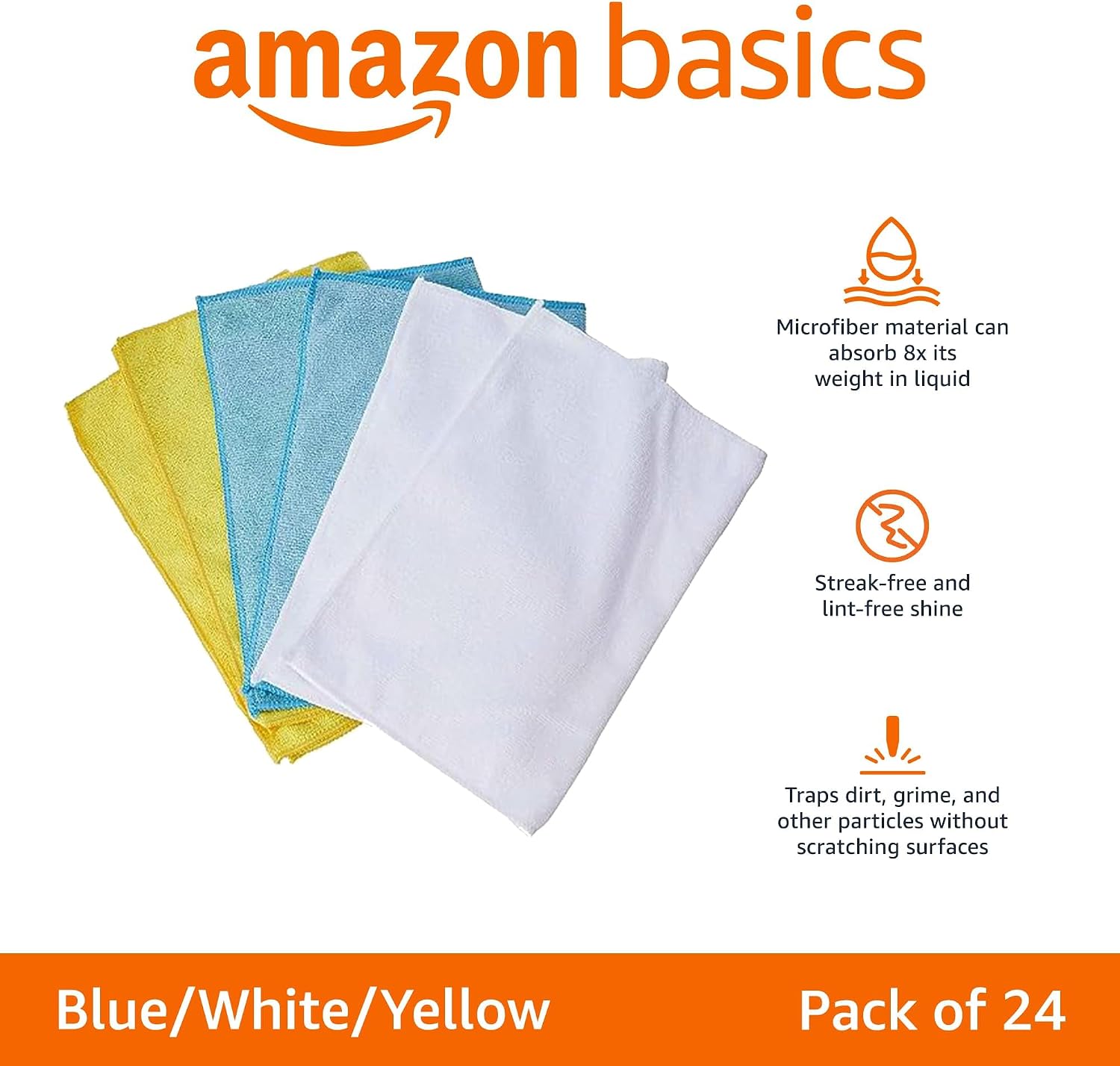
Microfiber cloths are exactly what the name suggests: fabric woven from fibers far thinner than a human hair — typically a blend of polyester and polyamide (nylon) — that grab and trap dirt, dust, and moisture rather than just pushing them around. The two numbers that matter most when you’re buying them in volume are GSM (grams per square meter, a measure of how dense and heavy the fabric is) and wash count (the number of laundering cycles a cloth is rated to survive before it loses meaningful cleaning performance). A 300 GSM cloth and an 800 GSM cloth can look almost identical in a product photo, but they’ll behave completely differently on glass versus a greasy stovetop, and they’ll hold up for very different numbers of jobs. If you’re running a cleaning operation — even a small one — understanding those two numbers is the difference between buying cheap and buying economically. This guide will walk through how to read the specs, what bulk purchasing actually costs per use, and how to match cloth weight to task so you stop throwing money away on the wrong product.
| EDITOR'S PICKS&T INC. 150 Pack Microfiber Cl… | Mid-tierMR.SIGA Microfiber Cleaning Clo… | Budget pickMagicFiber Microfiber Cleaning… | |
|---|---|---|---|
| Pack Count | 150 | 24 | 6 |
| Cloth Size | 11.5" x 11.5" | 12.6" x 12.6" | — |
| Colors | Assorted | Yellow/Green/Pink/Blue | — |
| Reusable | ✓ | — | — |
| Intended Use | Home, Cars | — | Glasses, Lens, Screens |
| Price | $31.99 | $19.99 | $9.97 |
| See on Amazon → | See on Amazon → | See on Amazon → |
GSM Explained: What the Weight Number Actually Tells You
GSM is a standard textile density measurement. The higher the number, the more fiber packed into each square centimeter — and the more absorbent, plush, and durable (up to a point) the cloth will be.
Here’s the practical breakdown that operators and facilities buyers consistently rely on, as summarized across manufacturer specification sheets and industry coverage from Cleanlink:
| GSM Range | Typical Use Case | What You’re Getting |
|---|---|---|
| 200–280 GSM | Glass, mirrors, streak-sensitive surfaces | Thin, low-lint, fast-drying; fewer passes needed |
| 300–400 GSM | General-purpose wiping, counters, appliances | Workhorse range; good balance of absorption and durability |
| 400–600 GSM | Dusting, polishing, damp mopping | Plush pile holds more debris; slower to dry |
| 600–800+ GSM | Detailing, spill absorption, finishing work | High absorption, premium feel; overkill for daily janitorial |
The key insight: GSM is not a quality ranking. A 240 GSM glass cloth used on a window is the right tool; the same cloth used to scrub a bathroom vanity will saturate and smear within minutes. Conversely, using a 600 GSM detailing cloth to wipe glass leaves lint. Task-matching by GSM is what separates operators who burn through product unnecessarily from those who stretch their consumable budget.
The polyester-to-polyamide ratio matters too. A common split is 80% polyester / 20% polyamide. Higher polyamide content increases the cloth’s ability to absorb liquids (polyamide is the “sponge” fiber), while polyester provides the structural scrubbing and durability. Some budget cloths sold in bulk drop to 70/30 or lower polyamide — which shows up in absorption performance, not just longevity. Per Good Housekeeping’s microfiber care guide, checking the fiber split on bulk supplier spec sheets is a fast way to screen out low-end product before you commit to a pallet.
Wash Count: The Hidden Variable in Every Bulk Calculation
Wash count is where most operators get burned, because the number printed on packaging is almost always a best-case figure. Manufacturer ratings for quality commercial microfiber typically range from 300 to 500 wash cycles before fibers begin to break down, lose their electrostatic charge, and stop trapping particulates effectively. Budget cloths — the kind showing up in 144-count packs at warehouse pricing — are often rated at 50–100 cycles, and real-world performance reported by operators in long-run reviews is frequently lower still.
The ISSA’s Cleaning Industry Management Standard documentation on microfiber systems emphasizes that fiber degradation isn’t always visible. A cloth can look intact while its split-fiber structure has degraded enough that it’s no longer grabbing pathogens or fine particles — it’s just moving them. For facilities managers running disinfection protocols, this is a compliance risk, not just a performance inconvenience.
Two washing variables operators often underestimate:
-
Water temperature. Most microfiber manufacturers rate their wash counts at or below 140°F (60°C). Commercial laundry operations running sanitizing cycles at 160°F+ will burn through wash count faster. If your operation requires high-heat laundering for infection control, factor a 30–40% reduction in rated cycle life into your math.
-
Fabric softener and dryer sheets. These are documented microfiber killers. The waxy coating they leave fills the microscopic gaps in the fiber structure that create the cloth’s cleaning action. Per Good Housekeeping’s care guidance, even occasional softener use can permanently reduce a cloth’s effectiveness. In a commercial laundry context, this means keeping microfiber separate from any load that receives softener — a process discipline issue, not just a product one.
The Bulk Buying Math: When Volume Pricing Actually Pencils Out
Here’s where the practitioner-level decision gets concrete. The question isn’t “is bulk cheaper per cloth?” — it almost always is. The question is: cheaper per use, or just cheaper upfront?
By the numbers — illustrative cost-per-use comparison (2026 market pricing):
Option A: 12-pack of 300 GSM commercial cloths at $28 (
$2.33/cloth), rated 300 wash cycles = $0.0078 per use Option B: 144-pack of 280 GSM budget cloths at $45 ($0.31/cloth), rated 75 wash cycles = $0.0041 per use Option C: 24-pack of 400 GSM premium cloths at $72 (~$3.00/cloth), rated 500 wash cycles = $0.006 per use
At face value, Option B wins. But the math changes when you account for three real-world factors:
1. Actual vs. rated wash count. Operators in long-run reviews documented on Cleanfax’s cost-per-use guide consistently report that budget cloths reach functional degradation at 40–60% of their rated cycle count when used in commercial frequency (daily laundering). Adjust Option B’s denominator to 40 real cycles and cost-per-use climbs to $0.0078 — matching Option A before any task-mismatch waste is counted.
2. Labor cost of cloth management. Premium and mid-tier cloths require color-coding by task zone (bathroom, kitchen, glass) to prevent cross-contamination — a best practice whether you’re running EPA-registered disinfectant protocols or not. Thin budget cloths from a mixed bulk buy tend to look identical after laundering, creating sorting friction. Over 50 jobs a month, that friction adds up. It’s not calculable from a spec sheet, but operators who’ve made the switch to mid-tier task-specific sets consistently report fewer lost cloths and faster cart-stocking time.
3. Chemistry interaction. The EPA’s Safer Choice program documentation on cleaning tool systems notes that microfiber’s ability to reduce chemical consumption depends on fiber integrity. A degraded cloth requires more chemistry per pass to achieve the same soil removal — partially eroding the cost savings that made microfiber attractive in the first place. If your business model includes selling clients on reduced chemical use (a growing differentiator in commercial contracts), cloth quality is part of the promise.
Decision rule for operators running 10+ accounts: If you’re laundering in-house and can enforce temperature and softener discipline, the 300–400 GSM mid-tier commercial range — from established suppliers like Rubbermaid Commercial, Contec, or Monarch Brands — consistently produces the lowest verifiable cost-per-use over 12-month contract cycles, based on published spec comparisons and aggregated operator feedback. Save bulk commodity pricing for single-use or low-wash-cycle applications: spill absorption, initial construction cleans, or client-facing “leave-behind” cloths where you’re not expecting laundering returns.
Matching Cloth Spec to Contract Type: An If/Then Framework
If you’re scaling from residential to commercial or building out a new account’s supply spec, here’s a direct decision framework:
If you’re running a medical, food service, or high-pathogen account: Specify cloths with documented 80/20 polyester-polyamide split, minimum 300 GSM, rated 300+ wash cycles, and laundered separately at ≤140°F. The ISSA CIMS documentation recommends color-coded microfiber as a baseline cross-contamination control. Cheapest-per-cloth is the wrong optimization here; replacement cost from a failed inspection or client complaint vastly exceeds any consumable savings.
If you’re running standard commercial office or retail accounts: The 300–350 GSM mid-tier range in a 24–48 count bulk format will deliver the best cost-per-use math. Buy task-specific (glass cloths separate from general-purpose), enforce no-softener laundering, and track when cloths stop performing rather than just replacing on a calendar cycle.
If you’re running residential accounts at volume (10+ homes per week): This is where premium 400–500 GSM cloths in modest per-account quantities often beat bulk economy packs. Clients see the cloth; its appearance signals quality. A worn, pilling budget cloth communicates the opposite of the premium residential positioning most operators in that segment are selling. Account for perception value, not just functional cost-per-use.
If you’re doing one-time or move-out cleans: This is the correct use case for commodity bulk buying. Low wash counts don’t matter; you’re often using a cloth once or twice per engagement. Buy the cheapest GSM-appropriate option, track consumption per job, and price accordingly.
What to Actually Check Before Placing a Bulk Order
A few spec-sheet line items worth verifying with any new supplier, drawn from documentation standards cited by ISSA and Cleanlink’s microfiber contractor resources:
- GSM stated with tolerance (e.g., “300 GSM ±20”) — a wide tolerance range signals inconsistent manufacturing
- Fiber split ratio — if it’s not listed, ask; a supplier who won’t disclose it is selling on price, not performance
- Wash cycle rating and test method — “500 wash cycles” means nothing without knowing whether it was tested at 86°F gentle cycle or 140°F commercial cycle
- Country of manufacture and certifications — OEKO-TEX Standard 100 certification indicates the cloth has been tested for harmful substances; relevant if you’re selling into healthcare or hospitality accounts that ask for it
- Lot consistency — for large bulk orders, request a sample from the actual production lot, not a showcase product
The bottom line: microfiber is one of the few consumable categories where understanding two numbers — GSM and wash count — plus a single ratio (polyester/polyamide split) gives you almost all the information you need to make a defensible bulk purchasing decision. The math reliably favors mid-tier commercial product over commodity bulk for any account you’re servicing repeatedly. Save the pallet pricing for the right use case, and the cost-per-use picture gets cleaner than the surfaces you’re wiping down.