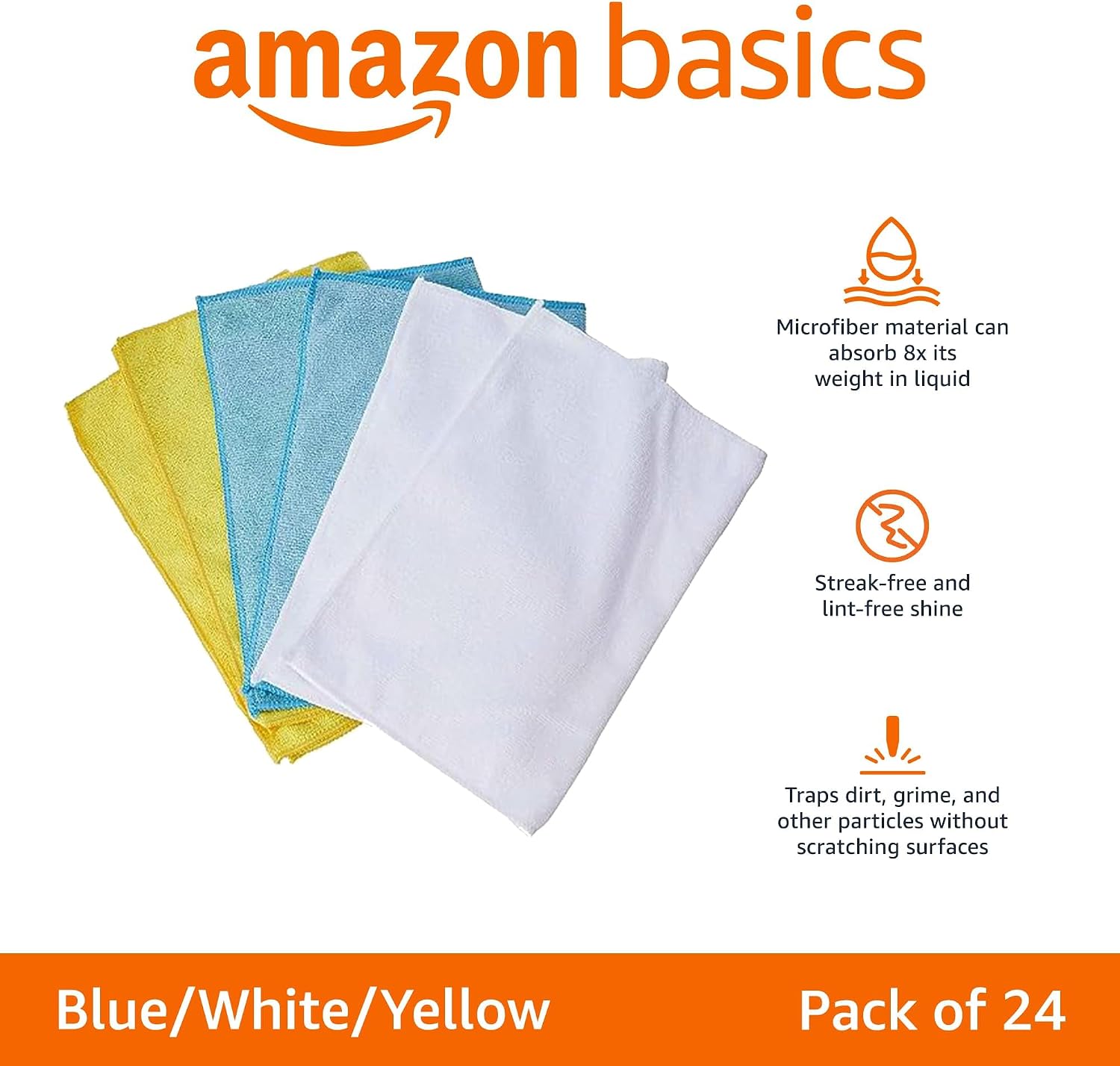
Microfiber cloths — fabric made from ultra-fine synthetic fibers, typically polyester and polyamide split into filaments far thinner than a human hair — are the most misunderstood category in everyday cleaning. They’re not interchangeable. A cloth designed to scrub a stovetop without scratching it has a completely different construction than one built to clean a camera lens or dry a car. The fiber density (measured in GSM, or grams per square meter), the weave pattern, the pile height, and even the cloth’s size all determine whether it cleans brilliantly or leaves behind lint, streaks, or micro-scratches. This guide cuts through the confusion: by the time you finish reading, you’ll know exactly which cloth format belongs in each room, why color-coding is a behavioral system not just an aesthetic choice, and how to avoid the post-purchase mismatch that shows up constantly in owner reviews.
Why Weave and Weight Are the Real Purchase Decision
Most buyers evaluate microfiber cloths by price-per-cloth or pack size. The more useful variables are GSM weight and weave type — because these two specs determine the cloth’s actual job.
GSM (grams per square meter) is the density of the fabric. Lower GSM cloths (roughly 200–280 GSM) are thin, fast-drying, and designed for light-duty wiping and drying surfaces. Higher GSM cloths (300–400+ GSM) have more fiber per square inch, which means more surface contact, more absorption, and better ability to trap and lift soil rather than smear it.
Weave type determines texture:
- Terry weave (looped pile, like a towel) — the most common household format. Good all-purpose cleaner for counters, appliances, and bathroom fixtures. The loops create mechanical scrubbing action.
- Waffle weave — a grid-pattern surface with deeper pockets. Preferred for glass and windows because the structure shears water off the surface rather than redistributing it.
- Flat weave / pearl weave — tighter, smoother surface. Used for delicate surfaces like stainless steel, painted cabinets, and high-gloss furniture where loop texture would leave micro-abrasion marks.
- Optical / suede weave — ultra-fine, nearly velvety texture with the highest fiber split ratio. Purpose-built for screens, lenses, and coated surfaces.
The ISSA Microfiber White Paper notes that split-fiber microfiber — where individual filaments are mechanically or chemically separated during manufacturing — creates the wedge-shaped fiber cross-section that physically dislodges bacteria and soil from surfaces rather than simply pushing it around. Non-split fiber performs significantly worse on contamination reduction, which matters in healthcare and food service contexts but also explains the performance gap between a $1.50 bulk cloth and a $4 premium cloth in owner reviews.
By the numbers:
- 200–280 GSM: drying and light-duty wipe-down
- 300–350 GSM: general-purpose cleaning, most household surfaces
- 380–450 GSM: heavy-duty scrubbing, high-soil environments
- 470+ GSM: premium plush, detail work, glass polishing
Room-by-Room Matching Guide
Kitchen
The kitchen is the highest-demand zone and the area where cross-contamination risk is most consequential. Owners who purchased AIDEA white commercial packs for general kitchen use frequently note in reviews that the single-color format made it behaviorally easy to reuse a cloth that had already touched raw protein surfaces on a cutting board. This isn’t an AIDEA-specific problem — it’s a single-color-pack problem.
What to use: Terry weave, 300–350 GSM, in a dedicated color (green is a common convention for food-prep surfaces per ISSA color-coding guidance). A second color for sink and drain areas prevents the most common cross-contamination pathway. Cloth size of 12x12 or 16x16 inches gives enough surface area to fold into quarters and work four clean faces before reloading.
Tear-away roll format is worth naming here specifically. Reviewers of the Fantasticlean format describe it solving a real friction point: grabbing a single cloth from a folded pile in a cabinet requires two hands and a moment of decision. A roll mounted on a standard paper towel holder eliminates both. Multiple reviewers describe replacing disposable paper towels entirely with this format in kitchen contexts — using one section per task and laundering at week’s end.
What to avoid: High-GSM plush cloths for stovetop grease — the long pile traps grease and is harder to fully clean out in the wash. Flat weave or medium terry handles cooking residue more cleanly.
Bathroom
The critical variable in the bathroom is the color-coding behavior, not the cloth specification itself. MR.SIGA reviewers consistently describe the color-separation system as the primary reason they reorder — they use one color for toilet and surrounding floor, a second for sink and vanity, and a third for mirror and glass. Good Housekeeping Institute’s microfiber guidance confirms this as best practice for reducing fecal coliform cross-contact, which is a real risk in single-cloth bathroom cleaning routines.
What to use: 300–350 GSM terry for surfaces, flat or waffle weave for mirror glass. Red for toilet (universally understood “highest-risk” convention) keeps the behavioral rule intuitive even for household members who didn’t read the color logic.
Format note: Cloths stored in the bathroom need to dry between uses. Thin 12x12 cloths dry faster in a humid environment than thick plush formats, which can hold moisture long enough to develop odor.
Glass, Windows, and Mirrors
This is the zone where the most buyer frustration accumulates, and the cause is almost always a mismatch between cloth type and application. Terry weave cloths leave visible streaks on glass not because they’re defective, but because the looped pile redistributes water laterally rather than shearing it off cleanly. Waffle weave geometry addresses this directly.
Apartment Therapy’s guide to microfiber care notes that fabric softener residue — from either washing the cloth with softener or washing it with softener-treated laundry — coats the split fibers and fills in the wedge-shaped gaps that make microfiber effective. A cloth that was performing well on glass and starts streaking after several washes is almost always a fabric softener contamination issue.
What to use: Waffle weave, 300–350 GSM, used damp (not wet) for initial cleaning pass, followed immediately by a dry flat-weave cloth for the polishing pass. The two-cloth method is the standard professional window cleaning approach in commercial facilities — doing both passes with one cloth is the primary source of DIY streaking.
Electronics and Optical Surfaces (TV, Laptop, Eyeglasses)
Standard household microfiber — even high-quality terry weave — is too coarse for display coatings and optical glass. The fiber diameter in standard cloths, while much finer than cotton, is still large enough to micro-abrade anti-reflective coatings over repeated use. Koala Lens and MagicFiber reviewers consistently note they carry cloths in eyeglass cases, car gloveboxes, laptop bags, and desk drawers simultaneously — which reveals something important about how optical cloths actually function: they’re a personal-carry category, not a storage-closet category.
What to use: Purpose-made optical or suede-weave cloths with a high fiber split ratio. Size matters here — a 6x7 or 6x8 inch cloth is more practical for handheld items than a full-size 16x16 household cloth.
Hard constraint: Never use a cloth that has touched any cleaning product on a screen or lens surface. Chemical residue, even from water-based cleaners, can damage oleophobic coatings. Per Wirecutter’s guidance on screen cleaning, a dry optical cloth handles the vast majority of everyday smudging without any chemical exposure.
Floors and High-Soil Surfaces
Bulk packs in the 100–150 cloth range (like the S&T INC. 150-pack format) are built for volume tasks — but owners who use them for surface drying report disappointment. The trade-off is direct: bulk commercial packs are cleaning-grade, not drying-grade. They typically run 200–280 GSM, which means they move soils off surfaces efficiently but don’t have the fiber density to absorb and hold large volumes of liquid without streaking. If the job is drying a freshly mopped floor, a higher-GSM terry is the right tool. If the job is scrubbing and wiping down 30 restroom counters in a commercial facility, bulk commercial-grade is exactly right for cost-per-use math.
Color-coding for scale: A three-person janitorial crew using red/blue/green/yellow coding across zones uses roughly 6–8 cloths per zone per shift before rotation. Running the math on a 50-cloth per color minimum before the first laundry cycle is the standard ISSA guidance threshold for credible color-coding programs.
Long-Term Durability: What the Evidence Actually Shows
MR.SIGA owners provide the strongest longitudinal evidence in aggregated reviews — multiple reviewers confirm cloths purchased several years prior are still in active daily rotation. This durability pattern is consistent with the construction quality of higher-GSM split-fiber cloths when cared for correctly. The durability cases almost universally involve two practices: washing in warm (not hot) water without fabric softener, and air-drying or tumble-drying on low heat. High heat degrades the polyamide component of the fiber blend and causes the split structure to fuse — permanently reducing cleaning performance.
Frequently Asked Questions
Can I use a general household microfiber cloth to clean my TV screen or laptop? Not reliably. Standard terry-weave household microfiber is coarser than optical-grade suede microfiber and can micro-abrade anti-reflective and oleophobic coatings over time. For screens and lenses, use a cloth specifically rated for optical surfaces — the fiber construction is meaningfully different.
What is the best way to wash microfiber cloths so they last longer? Warm water, no fabric softener, no dryer sheets, and low heat in the dryer (or air dry). Fabric softener coats the split fibers that give microfiber its cleaning action — even one wash with softener-treated laundry can noticeably degrade performance. Per Apartment Therapy’s care guidance, washing microfiber separately is the simplest way to avoid cross-contamination with softener residue.
Why do some microfiber cloths leave streaks on windows even though they are marketed as streak-free? Two causes dominate: wrong weave type (terry spreads water, waffle shears it), and fabric softener residue in the cloth. The two-cloth method — damp pass followed immediately by a dry polishing pass — eliminates most streaking regardless of cloth quality.
How many cloths do I actually need to color-code a three-bedroom home by room? A functional minimum for a three-bedroom home is 4 colors × 4 cloths per color = 16 cloths to allow rotation between laundry cycles. A more comfortable rotation — enough to go a full week between washes — runs 4–6 cloths per zone, or 16–24 cloths total.
Are tear-away microfiber rolls truly reusable or are they closer to disposable? Genuinely reusable — reviewers of tear-away formats like Fantasticlean confirm sections hold up through multiple wash cycles. The format’s value is access friction reduction, not single-use convenience. That said, the sections are smaller than full cloths, so their per-use surface area is lower; they work best for targeted task cleaning rather than full-surface scrubbing.
What is the difference between optical-grade microfiber and standard household microfiber in terms of fiber construction? Both use polyester-polyamide blends, but optical-grade cloths use higher split ratios — meaning each fiber strand is divided into more, finer filaments — and the weave is tighter with a shorter, denser pile. The result is a smoother surface contact that moves debris without abrasion. Standard household microfiber has larger individual filaments that are effective for scrubbing textured surfaces but too aggressive for coated optical glass.
The Decision Rule
If you’re building a cleaning system from scratch — residential or light commercial — the decision tree is straightforward:
- If your primary need is cross-contamination prevention (food prep, healthcare, restrooms): start with MR.SIGA or a comparable color-coded pack before optimizing for weave or weight.
- If your primary need is glass and window performance: go waffle weave, two-cloth method, and wash separately from everything else.
- If your primary need is personal-carry screen and lens care: optical-grade is a separate purchase category — don’t pull from your household stock.
- If your primary need is high-volume commercial surface wiping: bulk commercial-grade packs in 150+ cloth counts make cost-per-use sense; just know they’re cleaning-grade, not drying-grade.
- If you want maximum long-run durability for daily household use: higher-GSM terry from a brand with a documented multi-year owner satisfaction record (MR.SIGA reviewers provide the strongest evidence here) is the better working capital allocation than bulk discount packs that degrade faster.
The single most expensive microfiber mistake isn’t buying the wrong weave — it’s buying one format and expecting it to perform every job well. Specialization is cheap at $8–$15 per pack. The cost of a scratched laptop screen or a cross-contaminated food surface is not.