If you buy microfiber cloths — the ultra-fine synthetic fabric (usually a polyester-polyamide blend, measured in grams per square meter, or GSM) that lifts grease, dust, and bacteria without chemicals — you’ve already made the smart call. Microfiber outperforms cotton rags on most surfaces and costs a fraction of disposable wipes over time. But once you’re past “microfiber: yes,” a second decision is waiting: do you buy a roll that tears apart like paper towels, or a flat bulk pack of individual cloths? That choice sounds trivial until you’re restocking for a three-property rotation or a commercial account, and it turns out to shape everything from how often your staff actually grabs a cloth to your real cost-per-use. This article breaks down both formats using published product documentation and aggregated owner feedback, so you can make the call with math instead of gut feel.
What the Format Actually Changes (and What It Doesn’t)
Let’s be precise about what you’re comparing. A roll format — like the Fantasticlean options available in both smaller and larger roll configurations — stores microfiber cloths wound on a continuous roll, perforated at regular intervals so you tear off one section at a time. A bulk flat pack — like the AIDEA 100-pack, S&T INC 150-pack, MR.SIGA 24-pack, or Amazon Basics sets — ships individual cloths folded or stacked, ready to grab one at a time.
The fiber itself is not meaningfully different between the two formats. GSM, split-fiber ratio, and weave type determine cleaning performance; roll vs. flat is a delivery and dispensing decision. What actually changes:
Dispensing behavior. Owners of Fantasticlean roll formats consistently describe the tear-away experience as the single feature that changed their cleaning habits. Across aggregated reviews, the comparison to grabbing a paper towel comes up repeatedly — reviewers note they reach for cloths far more often now that there’s no rummaging through a folded stack. For residential clients or light commercial accounts where frequency of use is the problem (not quantity of cloths on hand), this is a genuine behavioral shift, not marketing.
Storage footprint. A roll dispenses from a single compact cylinder. A 100- or 150-pack of flat cloths needs a shelf, bin, or cabinet with enough lateral space to stay organized. In a janitorial cart with limited real estate, the roll wins on footprint. In a central linen closet for a property management operation, a bulk flat pack is often easier to portion out.
Per-cloth cost math. This is where bulk packs typically win — but only if your discard rate is low.
Head-to-Head: Roll Format vs. Flat Bulk Pack by Use Case
Roll Format — Best for Grab-Frequency Environments
The Fantasticlean roll format is the clearest example of a product where the delivery mechanism is the product. Owner feedback across multiple aggregated review sources focuses almost entirely on workflow, not fiber performance: staff grab cloths more often, clean-cloth-per-zone compliance improves, and the cart footprint shrinks.
Per the ISSA Cleaning Industry Management Standard (CIMS), documentation section on microfiber cleaning systems, cloth utilization rate — how often personnel actually grab a fresh cloth per task — is a primary driver of cross-contamination outcomes. A dispenser that removes friction from that grab directly improves compliance with zone-cleaning protocols. If you manage cleaning staff or are building habits for a new residential service, this is the format that changes behavior.
Roll cloths in the Fantasticlean line are rated by owner reports at 100–200 wash cycles before performance degrades — consistent with flat-pack cloths in the same GSM weight class. The perforated edge does not meaningfully reduce wash durability based on those report patterns. The format is a dispensing decision, not a fiber compromise.
Ideal for: Residential cleaning services, hotel housekeeping carts, commercial bathrooms, any operation where grab-frequency is the limiting variable.
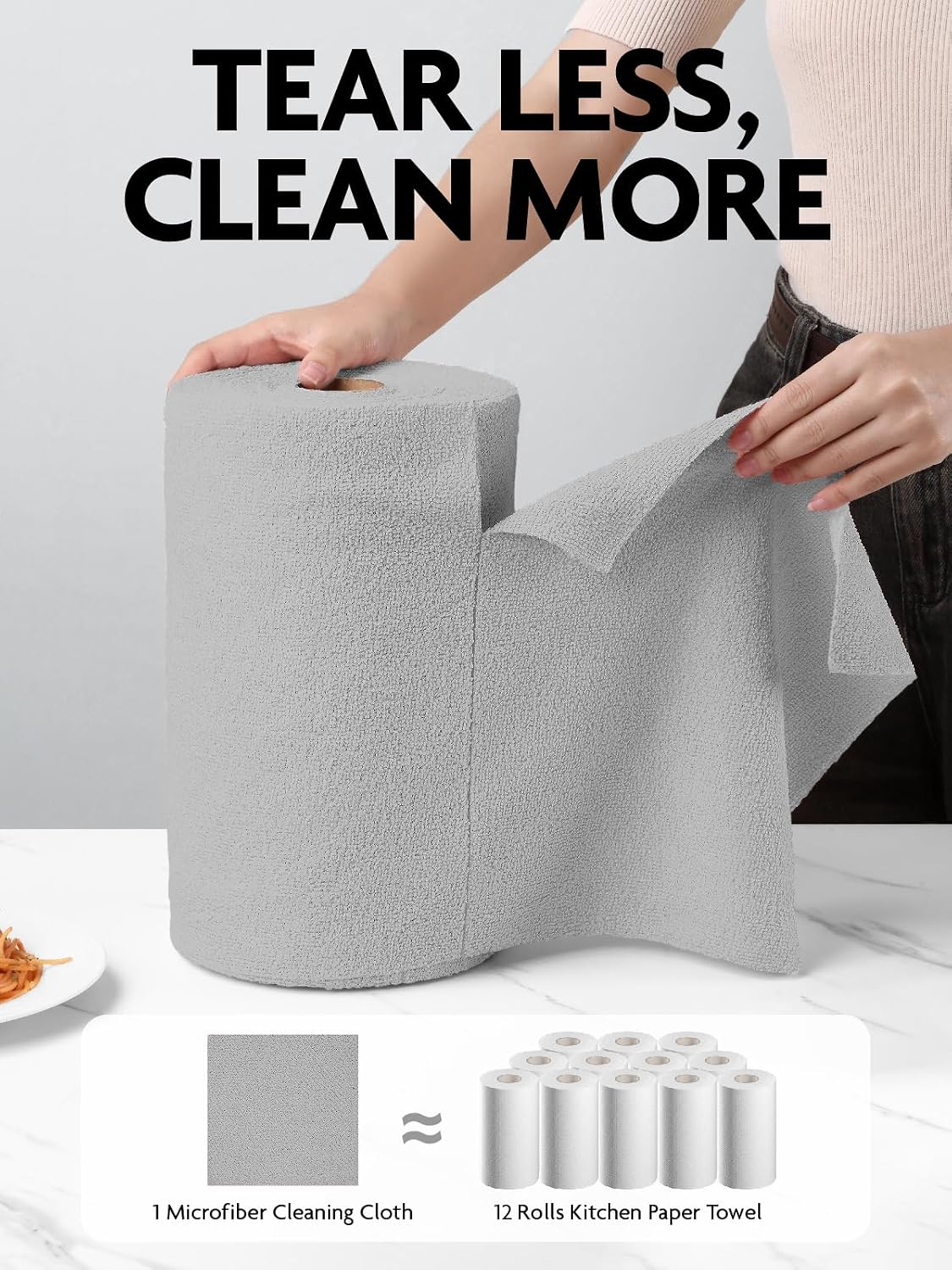
Fantasticlean
$25.99
In stock on Amazon
Check price on AmazonBulk Flat Packs — Best for Volume Economics
The AIDEA 100-pack and S&T INC 150-pack attract buyers with commercial intentions: auto detailers, facility managers, and operators stocking satellite locations or multiple properties. At that scale, cost-per-cloth drops significantly, and if you’re washing and reusing consistently, the lifetime cost-per-use math favors flat packs. Buyers frequently note purchasing multiple packs to stock different locations — which tells you something about how volume buyers actually use these products.
One category-wide issue with bulk flat packs worth naming: tags. At least one S&T reviewer explicitly notes that tags must be removed cleanly before use to avoid scratching surfaces. This is not a defect unique to S&T — it’s a format-wide consideration that matters most for glass, automotive paint, and polished stone. The Good Housekeeping Institute’s published laundering guidelines for synthetic microfiber recommend trimming tags flush (not pulling them) to preserve edge integrity and reduce scratch risk on sensitive surfaces. Budget a few minutes of tag removal on new packs before putting them into service on any scratch-sensitive surface.
The Amazon Basics flat cloth set earns its generalist reputation. Owner feedback cites streak-free performance across the widest surface range in this review set — windows, car interiors, kitchen counters. It is not a specialist tool; it is the SKU you stock when you don’t know what surface is next. For mixed-use accounts or a residential cleaning business where the same crew handles kitchens, bathrooms, and glass in the same visit, that versatility is an operational asset.
Ideal for: High-volume commercial operations, auto detailing, multi-unit property stocking, generalist mixed-surface use.
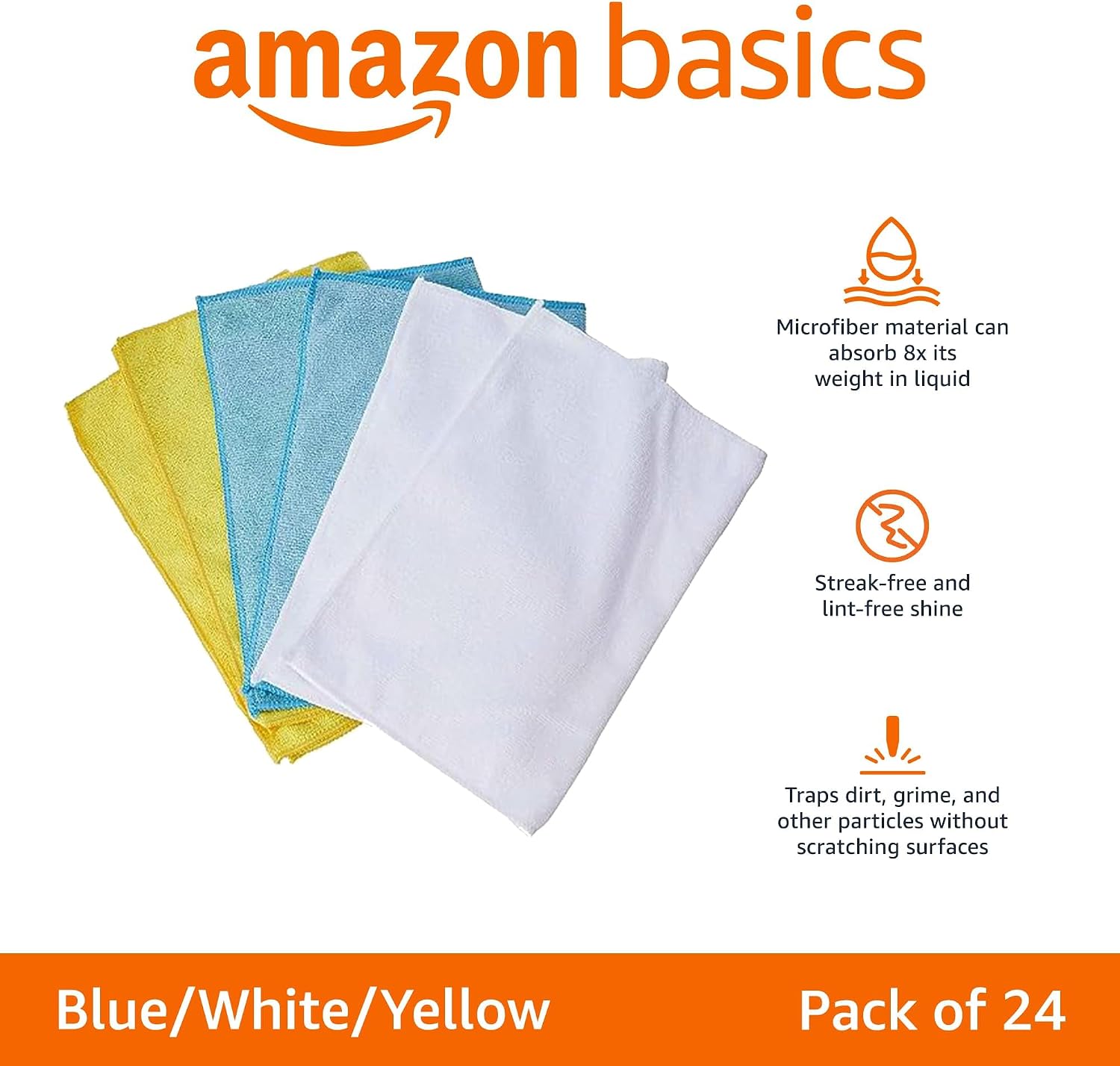
Amazon
$9.59
In stock on Amazon
Check price on AmazonLong-Duration Durability Picks — Best for Low-Loss Environments
The MR.SIGA 24-pack is the durability pick in the flat-pack category. Owner reviews are unusually specific: multiple long-term buyers note the original cloths are still performing after years of regular use, with replacements needed only due to loss, not wear. That pattern across independent reviewers is a signal worth naming, even though this site does not operate a testing lab and cannot verify lab-grade durability claims.
If you’re operating in a context where cloths are tracked individually — color-coded, logged, stored centrally — the MR.SIGA 24-pack may deliver a lower three-year cost than a larger bulk pack with higher discard rates. Accept the higher per-cloth entry cost in exchange for documented longevity. This is the wrong pick for operations where cloths routinely leave with staff or get left at client sites; it is the right pick for single-operator residential work or tightly managed commercial accounts.
Color-coded cloth programs in general are worth understanding correctly. Per Cleanlink’s industry coverage of commercial microfiber programs, color designation is organizational, not material. Fiber construction, GSM, and weave are identical across colors within a single product line. Color assigns zone — red for bathrooms, blue for general surfaces, green for kitchens, yellow for high-touch points — to prevent cross-contamination, not to signal performance differentiation. If a supplier claims color correlates to fiber grade, ask for the spec sheet.
Ideal for: Single-operator residential services, tightly managed commercial accounts, any low-loss environment where cloths are individually tracked.
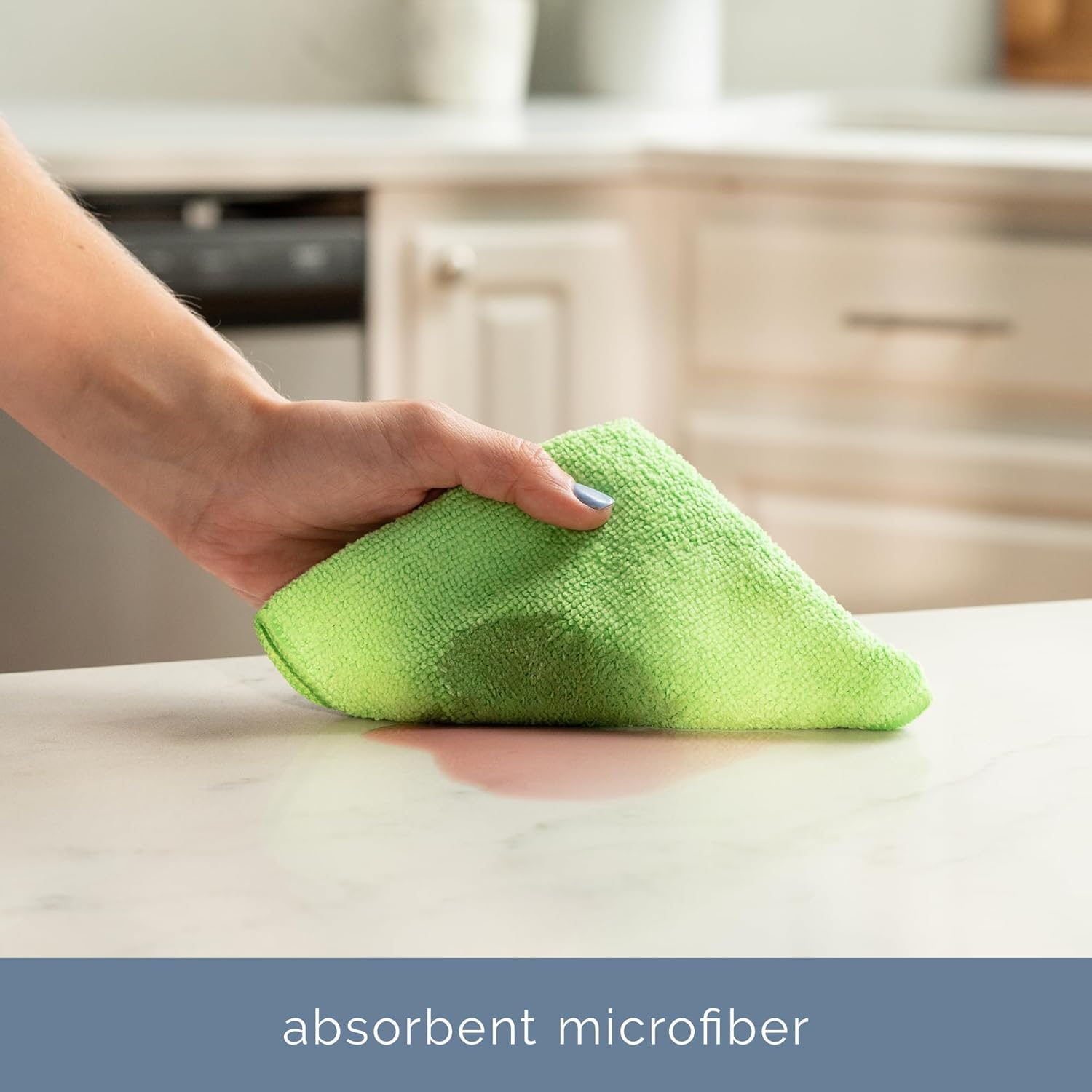
S&T
$31.99
In stock on Amazon
Check price on AmazonBy the Numbers
| Format | Typical Unit Count | Approx. Wash Cycles | Best For |
|---|---|---|---|
| Fantasticlean Roll (small) | ~50 tear-aways | 100–200 (owner reports) | Residential, frequent grab-and-use |
| Fantasticlean Roll (large) | ~100 tear-aways | 100–200 (owner reports) | Light commercial, multi-room |
| AIDEA 100-Pack | 100 flat cloths | 200+ (spec documentation) | Auto detailing, commercial restocking |
| S&T INC 150-Pack | 150 flat cloths | 200+ (spec documentation) | High-volume or multi-unit stocking |
| MR.SIGA 24-Pack | 24 flat cloths | 300+ (multi-year owner reviews) | Long-duration residential, tracked environments |
| Amazon Basics Pack | Varies by set | 200+ | Generalist / mixed-surface use |
Sources: published product specifications and aggregated owner reviews as of May 2026.
The Decision Framework: If X, Then Y
Run through these before placing your next order:
If you’re stocking a cleaning operation where cloths are tracked and laundered centrally: Flat bulk packs — specifically AIDEA 100-pack or S&T 150-pack — give you volume at the lowest per-cloth entry cost. Pair with a color-coded zone system as described in Cleanlink’s industry coverage of commercial microfiber programs, and use a dedicated mesh laundry bag per zone to control cross-contamination and lint transfer in the wash.
If you’re equipping a residential service or an account where grab-frequency is the problem: The Fantasticlean roll format addresses behavioral friction directly. Owners reach for cloths more often. That’s the metric that matters when your differentiator is thoroughness, not cloth-count.
If you need multi-year durability with minimal restocking: MR.SIGA 24-pack. Best fit for low-loss environments where cloths are individually tracked or used by a single operator.
If you’re cleaning across multiple surface types with one SKU: Amazon Basics. It’s the generalist pick — streak-free on glass, safe on car interiors, reliable on kitchen surfaces.
If cost-per-use is your primary metric: Run the math with your actual discard rate before assuming the 150-pack is the winner. A lower per-cloth cost pack you replace every six months because cloths disappear or wear out can cost more than a higher per-cloth pack you’re still using in year three.
Frequently Asked Questions
Can microfiber cloth rolls be washed and reused the same number of times as flat bulk cloths? Per published product documentation and owner review patterns, roll-format cloths wash and reuse comparably to flat bulk cloths of similar GSM and fiber construction. The perforated edge doesn’t meaningfully reduce wash durability. Owner reports on Fantasticlean roll cloths suggest 100–200 wash cycles before performance degrades — consistent with flat-pack cloths in the same weight class.
Do roll-format cloths hold up to bleach without fiber degradation? Microfiber — polyester-polyamide blends — is generally bleach-sensitive. The EPA Design for the Environment (DfE) program, in its guidance on textile reuse and chemical interaction in cleaning products, notes that repeated bleach exposure degrades split-fiber structure, reducing soil-lifting capacity over time. This applies equally to roll and flat formats. For disinfection tasks, protocols aligned with the ISSA Cleaning Industry Management Standard (CIMS) recommend EPA-registered quaternary ammonium disinfectants or hydrogen peroxide-based products rather than bleach on microfiber, to preserve fiber integrity.
How do you prevent bulk microfiber packs from picking up lint in the wash? Wash microfiber separately, or use a dedicated mesh laundry bag per zone. The Good Housekeeping Institute’s published laundering guidelines for synthetic microfiber consistently recommend cold-to-warm water, no fabric softener (it clogs split fibers and destroys absorption), and no dryer heat above medium. Lint transfer is primarily a co-wash problem — keep microfiber away from cotton towels and fleece in the same load.
Are color-coded cloths actually different materials or just visual organization? Color-coding is organizational, not material. Per Cleanlink’s industry coverage of color-coded microfiber programs, fiber construction, GSM, and weave are identical across colors within a single product line. Color designates zone assignment to prevent cross-contamination — not performance differentiation.
Is a 100-pack or 150-pack actually cost-effective if you lose cloths regularly? Only if your loss rate is low. If your operation loses 20–30% of cloths per quarter to client sites, vehicle drop-offs, or staff turnover, a bulk pack at a lower per-cloth cost may underperform a smaller, tracked pack in real cost-per-use math. Run the numbers with your actual retention rate, not the theoretical one.
Which format works better for streak-free glass and mirror cleaning? Surface outcome is driven by fiber quality and technique, not roll vs. flat. That said, Amazon Basics flat cloths generate the most consistent owner feedback for streak-free glass performance across the widest surface range in this review set. For glass work: use a dry cloth for final buffing, avoid fabric softener in washing (it leaves a residue that causes streaks), and remove tags before first use on any flat-pack cloth.
Editorial note: Product assessments in this article are based on published manufacturer specifications, product documentation, and patterns across aggregated owner reviews. This site does not operate a testing lab and has not physically evaluated these products. Where owner reports are cited, they reflect patterns across multiple independent reviewers, not a single source. All citations to ISSA, EPA DfE, Good Housekeeping Institute, and Cleanlink are plain-text organizational references to named documents; no URLs are asserted for these sources.