Walk into any supply closet — residential or commercial — and you’ll find products claiming to “clean,” “disinfect,” “sanitize,” and “eliminate odors” sitting side by side as if those words mean the same thing. They don’t. A disinfectant is a product registered by the U.S. Environmental Protection Agency (EPA) that has been tested to kill a specific list of pathogens at a stated concentration and contact time. A cleaner removes dirt, grease, and grime. An odor eliminator neutralizes odor compounds — it may or may not kill anything. The three products in this article — OdoBan concentrate, Zep (in its Neutral pH and All-Purpose formulations), and Blueland tablets — each occupy a different position in that spectrum. If you’re scaling a cleaning operation or managing facilities, knowing which lane each product is actually in determines whether you’re spending money wisely or just smelling good while leaving pathogens behind.
| EDITOR'S PICKBLUELAND 100% Plastic-Free Dish… | Mid-tierZep Neutral PH Industrial Floor… | Budget pickZep All-Purpose Cleaner and Deg… | |
|---|---|---|---|
| Format | Tablets | Liquid | Liquid |
| Volume | 60 ct | 1 gal | 1 gal |
| Fragrance | Free & Clear | — | — |
| pH | — | Neutral | — |
| Use | Dishwasher | Floor | All-purpose |
| Dilution | — | Concentrated | — |
| Price | $23.99 | $12.98 | $8.78 |
| See on Amazon → | See on Amazon → | See on Amazon → |
The Disinfection Tier: What OdoBan’s EPA Registration Actually Covers
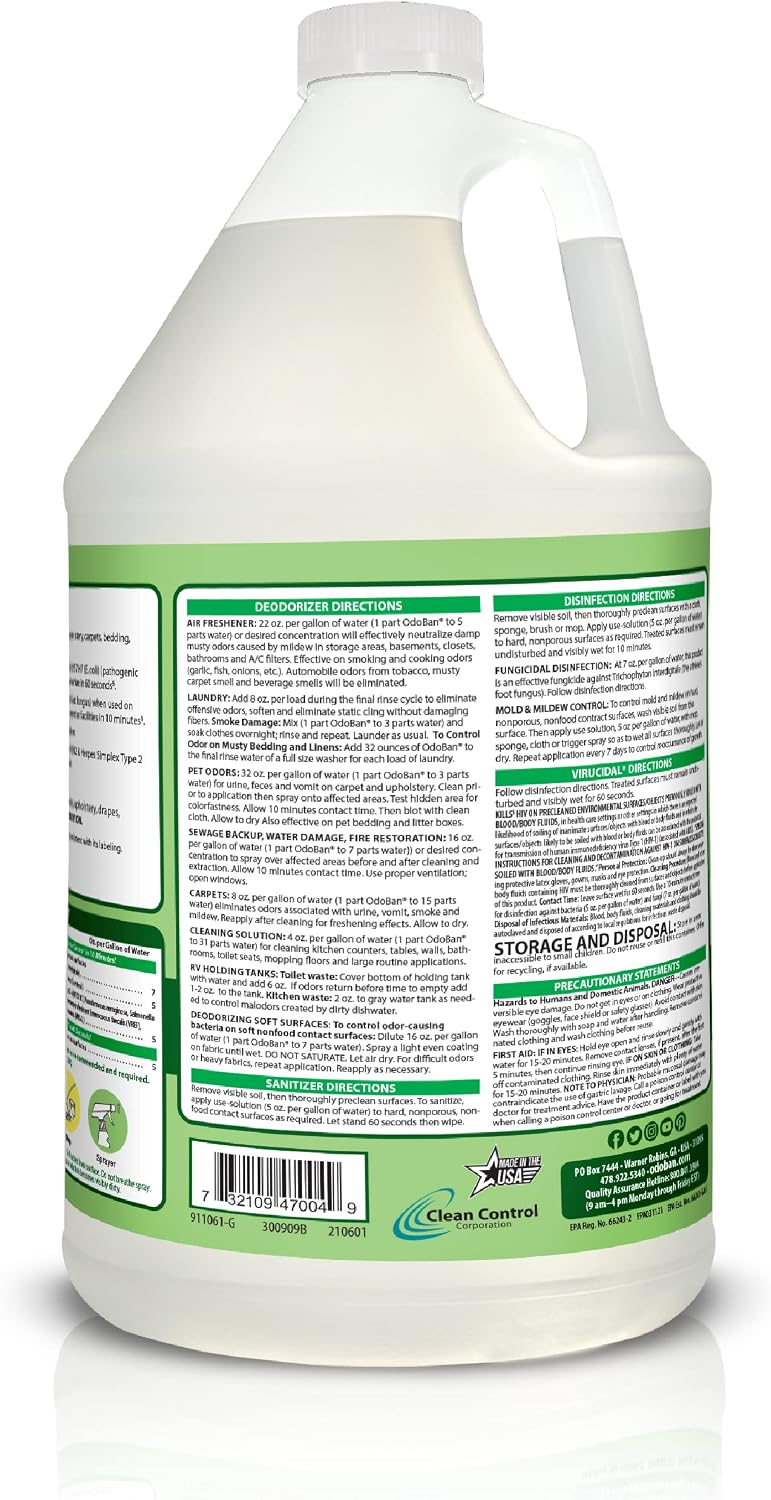
OdoBan is the product in this comparison that reviewers most reliably describe with institutional language — phrases like “destroys smells instead of masking them” and references to professional settings appear repeatedly across aggregated owner feedback. That credibility signal is grounded in something real: OdoBan concentrate carries an EPA registration number, which means it has been formally evaluated as a disinfectant against a specific kill-claim list.
The EPA National Pesticide Information Center document How to Read a Pesticide Label makes clear that the registration number printed on a product label is the mechanism that makes a disinfection claim legally defensible. Without it, a product claiming to “kill 99.9% of germs” is marketing copy, not a regulated statement. OdoBan’s EPA registration covers bacteria including Staphylococcus aureus and Salmonella choleraesuis, and its documented kill claims extend to certain viruses when used at the correct dilution and contact time — typically a several-minute dwell before wiping.
What the registration does not cover: The registration is concentration- and surface-specific. At the diluted ratios appropriate for floor mopping (roughly 4 oz per gallon), OdoBan functions primarily as a cleaner and deodorizer — not a disinfectant. Full disinfection requires using the label-directed concentration, which is significantly stronger. This distinction matters enormously in settings with infection-control requirements — daycares, medical offices, gyms, kennels — because a regulator or client auditing your protocols will ask for the dilution log, not just the product name.
The laundry behavior pattern: Owners of OdoBan frequently report adding the product to laundry loads. OdoBan’s label explicitly permits this use at defined dilutions for fabric deodorizing. It is a genuine multi-use behavior worth building into your cost-per-use calculations, particularly if your operation handles linens, mop heads, or client-supplied textiles.
OdoBan Concentrate: Dilution Ranges by Use Case
| Use Case | Dilution Ratio | Function at That Ratio | Tier |
|---|---|---|---|
| Floor mopping (general) | 4 oz / gallon | Cleaner + deodorizer | Zep — $12.98 |
| Hard surface disinfection | Per EPA label | Disinfectant (label-governed) | BLUELAND — $23.99 |
| Laundry deodorizing | ~¼ cup per load | Odor neutralizer | Zep — $12.98 |
| Pet odor on surfaces | 1–2 oz / gallon | Deodorizer | Zep — $12.98 |
The practical takeaway: if you’re billing a client for disinfection service, pulling OdoBan out of your bucket without confirming you’re hitting the label-directed concentration and contact time is a liability exposure. If you’re billing for cleaning and deodorizing — which is what most residential turnover work actually involves — OdoBan is a genuinely strong performer with an institutional credibility profile that lifestyle brands can’t match.
BLUELAND
$23.99
In stock on Amazon
Check price on AmazonThe Floor-Safety Tier: Who Actually Buys Zep Neutral pH and Why
Zep’s product lineup spans a wide range, but the Neutral pH Floor Cleaner and the All-Purpose formulations serve meaningfully different buyer profiles, and conflating them is a real operational mistake.
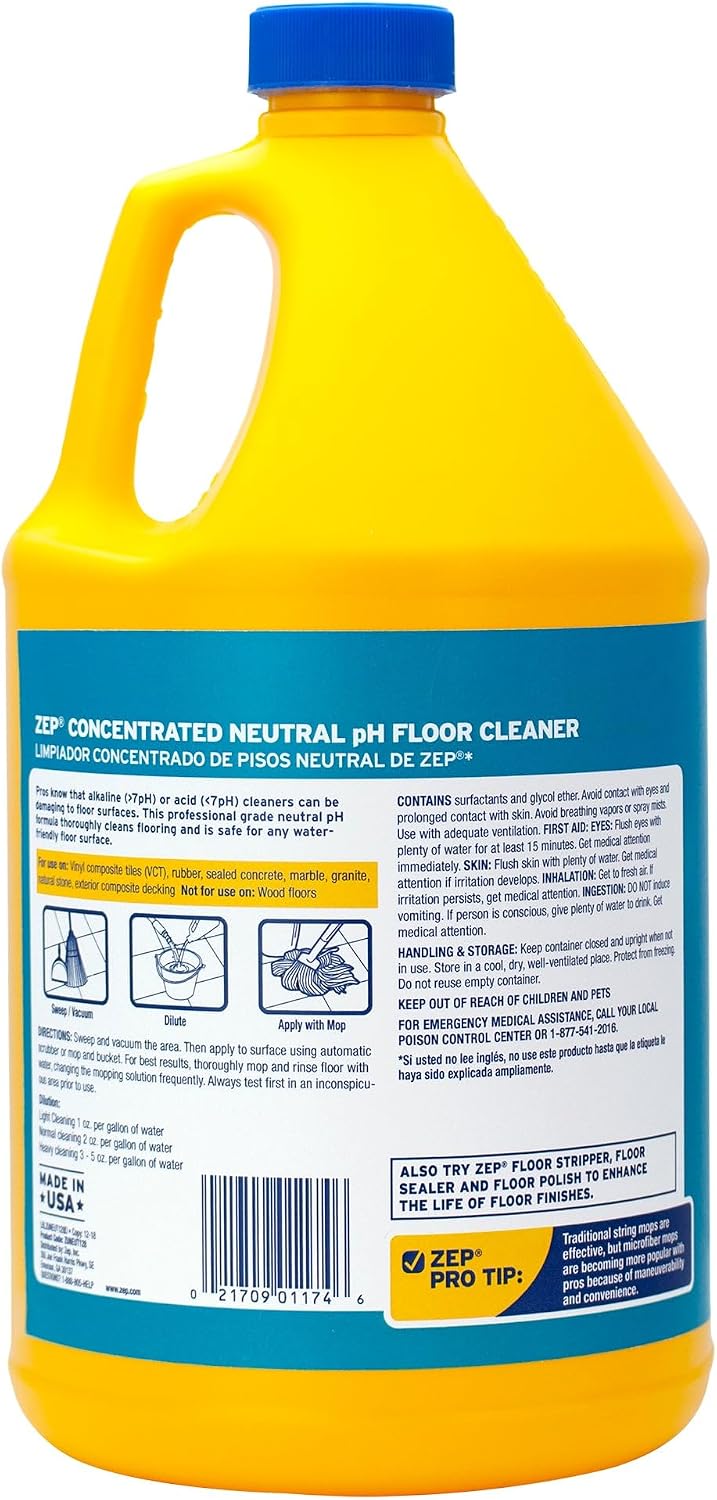
Zep Neutral pH: The Warranty-Protection Buy
The Zep Neutral pH buyer is almost always someone who has just installed or is maintaining luxury vinyl plank (LVP), laminate, or sealed hardwood — floor types whose manufacturer warranties explicitly warn against acidic or alkaline cleaners. A pH-neutral cleaner (pH 6–8) won’t strip finish sealers, won’t cause LVP to swell at seams over repeated mopping, and won’t void warranty claims. Owners in aggregated reviews consistently frame their purchase as a protective decision, not a disinfection decision. They researched pH requirements because their flooring installation instructions told them to.
Good Housekeeping’s 2025 disinfectant cleaner overview notes that pH-neutral formulas sacrifice some cleaning power on heavy grease in exchange for finish safety — that trade-off is inherent and worth naming explicitly: Zep Neutral pH does not carry a disinfection claim. If a client asks whether their LVP floors are being disinfected with a neutral-pH product, the honest answer is no — they’re being cleaned without being damaged.
Zep
$12.98
In stock on Amazon
Check price on AmazonZep All-Purpose: The Daily Workhorse
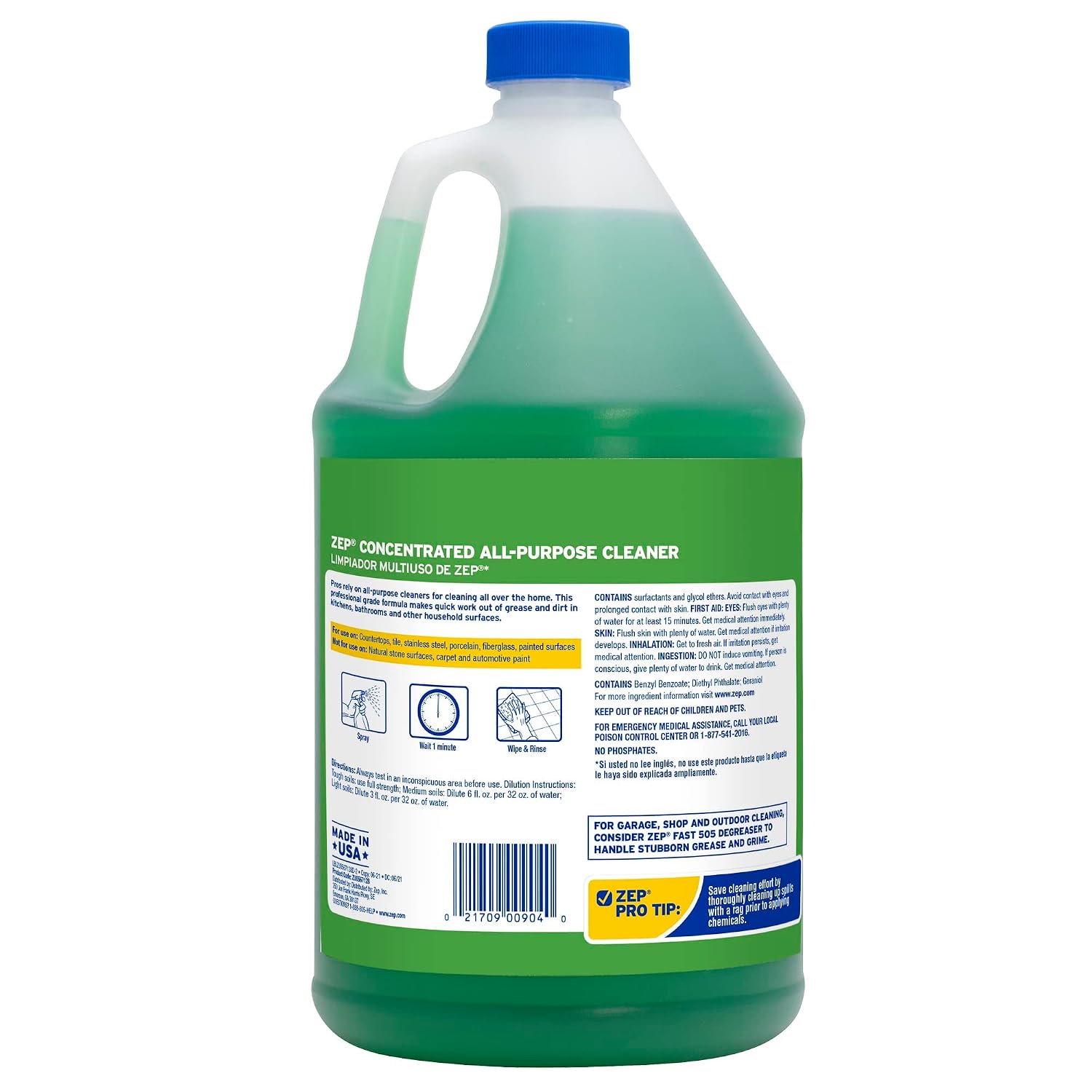
Zep All-Purpose is a different product with a different use case. Professional residential and commercial cleaners who cite it in long-run reviews describe it as a daily workhorse for countertops, walls, and appliances — surfaces where pH-neutrality is less critical but speed and cleaning efficacy matter. The “professional” buyer pattern here is operators who want a reliable multi-surface formula they can reach for without thinking. It’s not glamorous positioning, but reliability is exactly what a cleaner running six jobs a day needs.
The institutional credibility question for Zep: Unlike OdoBan, Zep’s positioning across its product line is more chemistry-first than odor-first. That makes it a natural fit for facilities managers who care about residue, material compatibility, and floor life — and a less natural fit for a kennel operator who needs documented pathogen kill claims. Match the product to the operational requirement, not the brand name.
Zep
$12.98
In stock on Amazon
Check price on AmazonThe Philosophy Tier: Blueland and Why Its Buyers Don’t Care About Disinfection
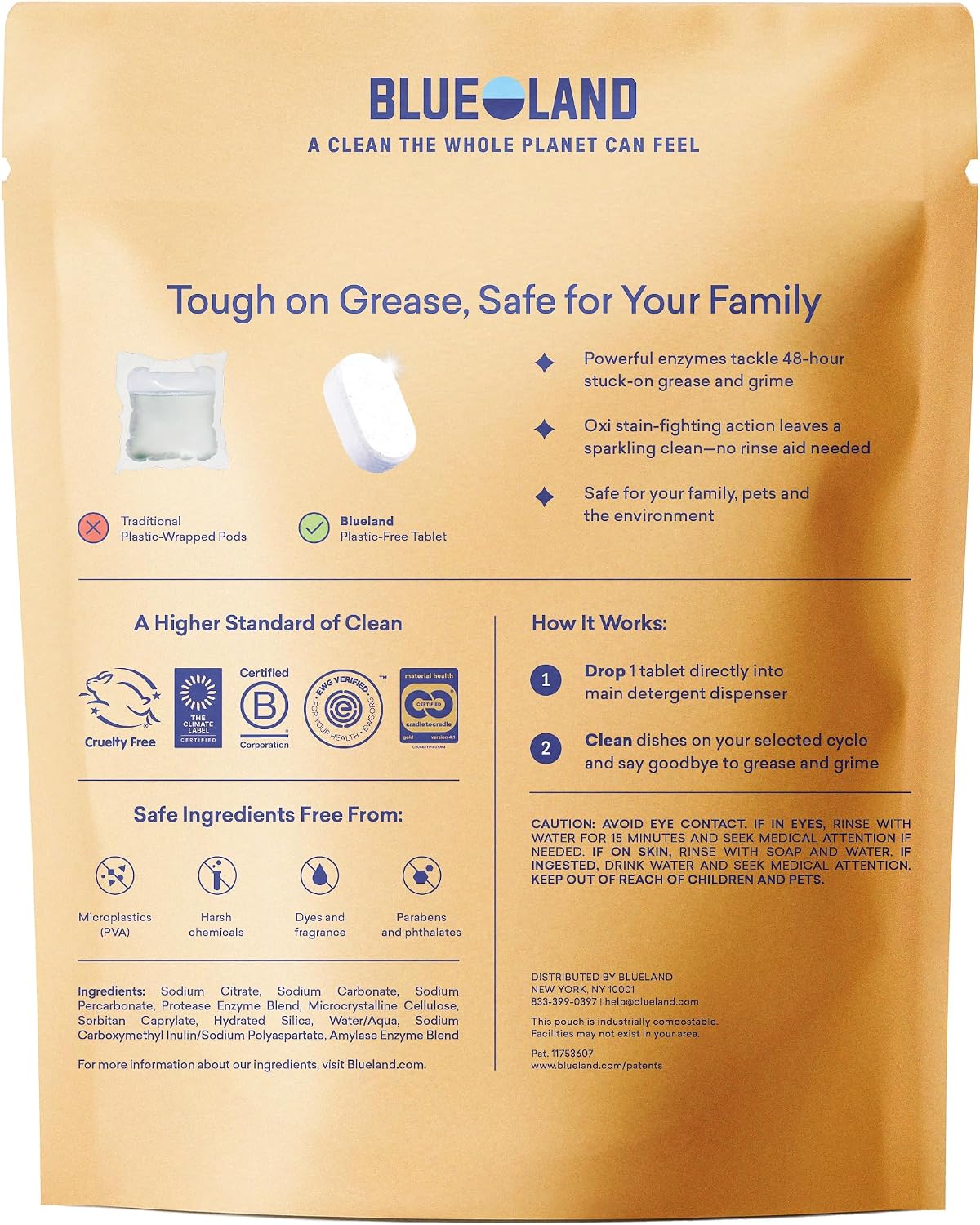
Blueland occupies a fundamentally different lane, and this is the most important framing clarification in this article: Blueland buyers are not purchasing disinfection. Across aggregated reviewer feedback, the stated purchase drivers are plastic packaging elimination, no residual taste on dishes, and environmental values alignment. Disinfection is not mentioned. This is not an oversight — it reflects a cleaning philosophy that prioritizes sustainability and ingredient transparency over pathogen kill claims.
Blueland’s Regulatory Position: Safer Choice, Not Disinfection
The EPA Safer Choice program — described in EPA program documentation as a voluntary certification evaluating the safety and environmental profile of cleaning product ingredients — is the verification framework most aligned with Blueland’s positioning. Safer Choice certification involves third-party reviewed ingredient evaluation. It is not a disinfection claim, and the two programs run on entirely separate regulatory tracks. A product can hold Safer Choice recognition and carry zero pathogen kill claims, which is consistent with Blueland’s product profile.
For whom does Blueland make operational sense? In a residential cleaning context where clients specifically request eco-aligned products and where the cleaning scope is routine soil removal — not infection control — Blueland’s tablet format has real workflow advantages: no liquid to transport, no measuring, near-zero packaging waste, and a strong client-facing story. The dishwasher tablets in particular generate owner feedback focused on hard water performance and residue, which is a legitimate formulation question. Mineral deposits require chelating agents or acidic chemistry to dissolve, and hard-water performance varies by local water chemistry — an important consideration for operators in high-mineral-content water regions.
The hard boundary: In any commercial setting with regulated disinfection requirements — food service, healthcare-adjacent, childcare — Blueland is not a compliant disinfection solution. It is not positioned as one. Using it in those contexts because it is convenient or client-preferred is an operational and liability risk.
Zep
$8.78
In stock on Amazon
Check price on AmazonDecision Framework: Matching Product to Scope
The ISSA Cleaning Industry Management Standard’s Disinfection Protocols Module makes a point that is easy to lose in product marketing: the cleaning step and the disinfection step are separate events. A surface must be cleaned before disinfection chemistry can reach and kill pathogens — biofilm and soil physically block contact. That means product selection should start with the question “what is the actual scope of service this surface requires?” before you open a bottle.
If your scope is infection control with documented kill claims: Use OdoBan at label-directed disinfection concentration with logged contact time. Confirm the current EPA registration covers the pathogens relevant to your setting. For healthcare-adjacent or food-service environments, the CDC Environmental Infection Control Guidelines — Surface Disinfection chapter specifies that hospital-grade disinfectants require specific EPA registration categories; cross-reference those requirements before assuming OdoBan’s general registration suffices for your context.
If your scope is floor maintenance on LVP, laminate, or sealed hardwood: Zep Neutral pH is the appropriate choice. Document the pH neutrality for any client with flooring warranty concerns. Accept that you are cleaning, not disinfecting, and communicate that clearly.
If your scope is general multi-surface cleaning in a commercial residential context: Zep All-Purpose or OdoBan at mopping dilution are both defensible — the choice comes down to whether odor elimination is a service differentiator worth the slight cost premium on OdoBan concentrate.
If your scope is eco-aligned residential service where clients have requested green chemistry: Blueland is a legitimate answer for routine cleaning. Be explicit with clients that it is not a disinfectant and that infection-control services require a different product and protocol.
On cost-per-use math: OdoBan concentrate at 128 oz runs meaningfully further per gallon of working solution than ready-to-use alternatives — the concentrate format is where the economics favor professional operators over consumer buyers. Zep All-Purpose similarly rewards operators who buy in volume. Blueland’s tablet format trades raw cost-per-use efficiency for packaging and logistics advantages that matter more at residential scale than commercial drum scale.
Frequently Asked Questions
Does OdoBan actually kill bacteria and viruses, or just eliminate odors — what does the EPA registration cover? OdoBan concentrate holds an active EPA registration, which means it has been evaluated against specific bacteria and viruses at defined concentrations and contact times. At typical floor-mopping dilutions, it functions as a cleaner and deodorizer. Disinfection claims require using the label-directed concentration — check the current product label for specific pathogens covered, as registration documents are updated periodically.
Is Zep Neutral pH safe for all types of hard flooring including LVP, laminate, and sealed hardwood? Based on published product specifications, Zep Neutral pH is formulated to be safe for finished hard floors including LVP and laminate. Always verify with your flooring manufacturer’s warranty documentation, as some warranties specify approved product categories. Neutral pH (6–8) avoids the seam swelling and finish stripping associated with acidic or alkaline formulas on these surfaces.
Can OdoBan be used safely around pets after it dries? OdoBan’s label indicates the product is safe for use around pets after surfaces are dry and well-ventilated. During application and wet contact time, standard precautions apply — keep animals off treated surfaces until dry. The product’s EPA registration includes use environments such as kennels, which aligns with the documented use cases that appear in aggregated owner feedback.
How do Blueland dishwasher tablets handle hard water and mineral deposits compared to conventional pods? Owner reviews in hard-water regions report variable results. Mineral deposit performance depends on local water hardness (measured in grains per gallon or parts per million) and whether the tablet formulation includes a chelating agent to bind calcium and magnesium ions. Blueland’s ingredient transparency makes it easier to evaluate what’s in the formula, but hard-water performance is a genuine limitation compared to conventional pods that typically include stronger chelating chemistry.
Is adding OdoBan to laundry safe for fabrics and washing machine components? OdoBan’s label explicitly provides guidance for laundry use at defined dilutions for deodorizing — this is a documented, permitted use. The product should not be used at undiluted concentrate strength in a washing machine. Fabric type and machine compatibility should be confirmed against current label language, which supersedes third-party guidance including this article, as formulations change.
What dilution ratio should you use for OdoBan as a floor cleaner versus a pet odor eliminator? Per published dilution guidance, floor cleaning typically calls for approximately 4 oz of concentrate per gallon of water. Pet odor elimination on surfaces generally uses a similar ratio — 1 to 2 oz per gallon for light odors, higher for heavy contamination. Full disinfection requires label-directed concentration, which is significantly stronger than routine cleaning dilutions. Always default to current label language, which supersedes any third-party dilution guidance.