A canister vacuum is a two-piece design: the motor and dustbin ride in a rolling canister on the floor while you hold a lightweight wand and floor head. That separated layout makes them easier to maneuver around furniture than a traditional upright — where the motor rides on the handle — which is why they’ve stayed popular in pet households where you’re chasing hair into corners and under beds. The four models in this comparison — the Bissell Zing, the Eureka WhirlWind, and the Kenmore 200 and 600 Series — all live in the $60–$250 range, which means they’re competing for essentially the same buyer: someone who wants more agility than a stick vacuum and more capacity than a handheld, without the $400-and-up premium of a Miele or a Dyson. If you have one or more heavy-shedding dogs or cats and you’re deciding between these four right now, this article will tell you what owners consistently report, where each machine breaks down, and how to match the decision to your actual situation.
| EDITOR'S PICKKenmore 600 Series Pet Friendly… | Mid-tierKenmore 81214 200 Series Pet Fr… | Budget pickEureka WhirlWind Bagless Canist… | |
|---|---|---|---|
| Bagged? | ✓ | ✓ | ✗ |
| HEPA filter | ✓ | ✓ | — |
| Motors | 2 | 2 | — |
| Capacity | — | — | 2.5L |
| Cord rewind | ✓ | — | — |
| Cleaning tools | 4 | 3 | — |
| Price | $299.99 | $194.99 | $57.99 |
| See on Amazon → | See on Amazon → | See on Amazon → |
What Owners Actually Say: Model by Model
Bissell Zing
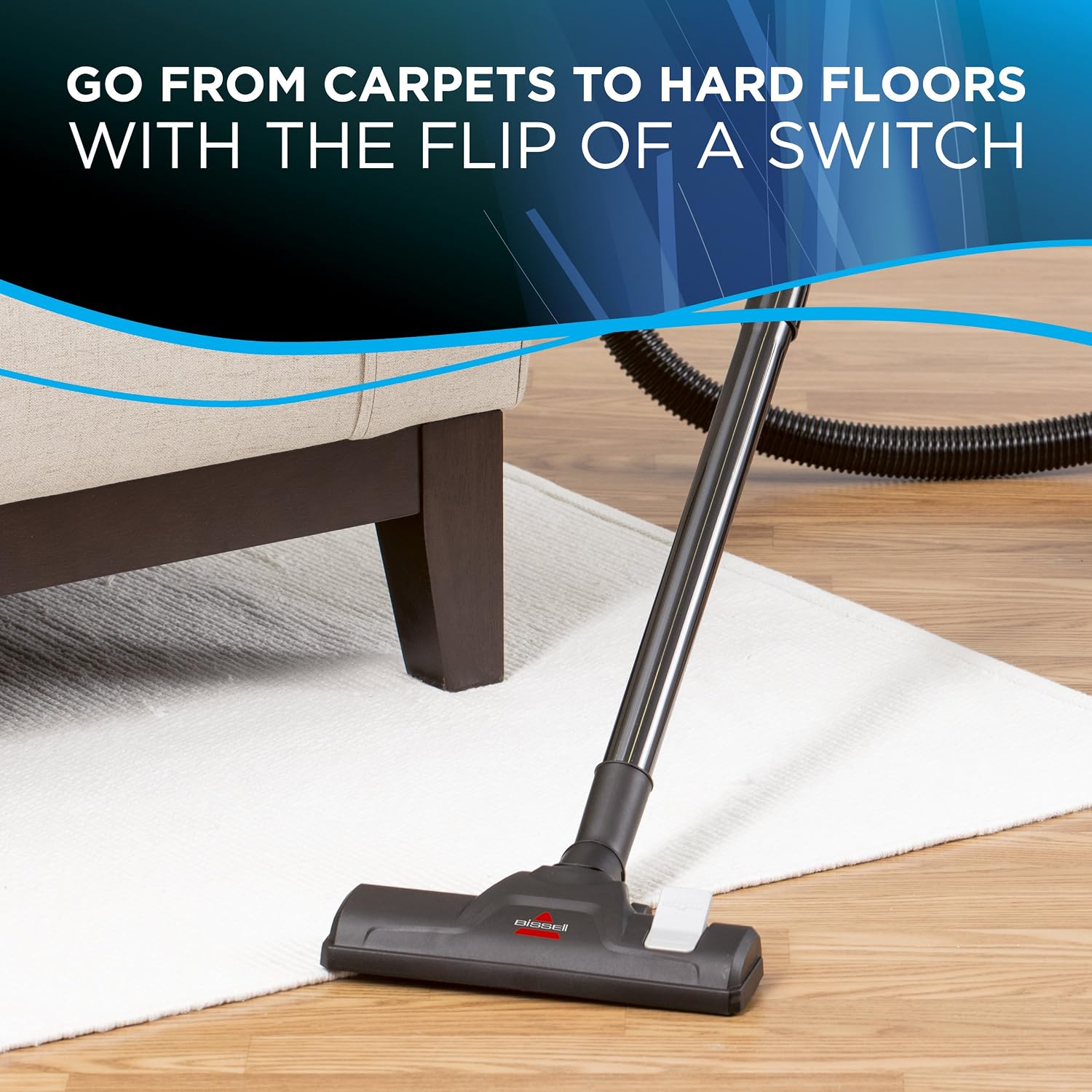
The Bissell Zing is a bagless canister — meaning hair and debris go directly into a removable plastic cup rather than a disposable bag — with a manufacturer-rated 7-amp motor. It is consistently the lightest option in this group, and its under-$80 street price as of mid-2026 makes it the entry point of the comparison.
What separates Zing owner reviews from the rest of the group is the specificity of the use cases people describe. Reviewers at multiple retail aggregators repeatedly mention very large, heavy-shedding breeds — Great Pyrenees, Malamutes, Bernese Mountain Dogs — as the test environment. One frequently cited account describes vacuuming the dogs themselves with the Zing’s hose. That’s not a typical claim at this price tier, and it’s worth taking seriously as a real-world durability signal. The most notable data point in the owner dataset: multiple reviewers report six or more years of weekly use before the motor shows any decline. For a vacuum under $80, that durability arc changes the cost calculus considerably.
The tradeoffs are real, though. As a bagless machine, the Zing’s filtration depends on a foam-and-felt filter assembly that needs regular rinsing. The Good Housekeeping Institute, in its published testing coverage of canister vacuums for pet hair, notes that bagless models generally require more frequent filter maintenance than bagged equivalents to sustain suction over time. Owners confirm this: skip the monthly rinse and you’ll feel the suction drop inside two weeks in a heavy-shed household.
Eureka
$57.99
In stock on Amazon
Check price on AmazonEureka WhirlWind
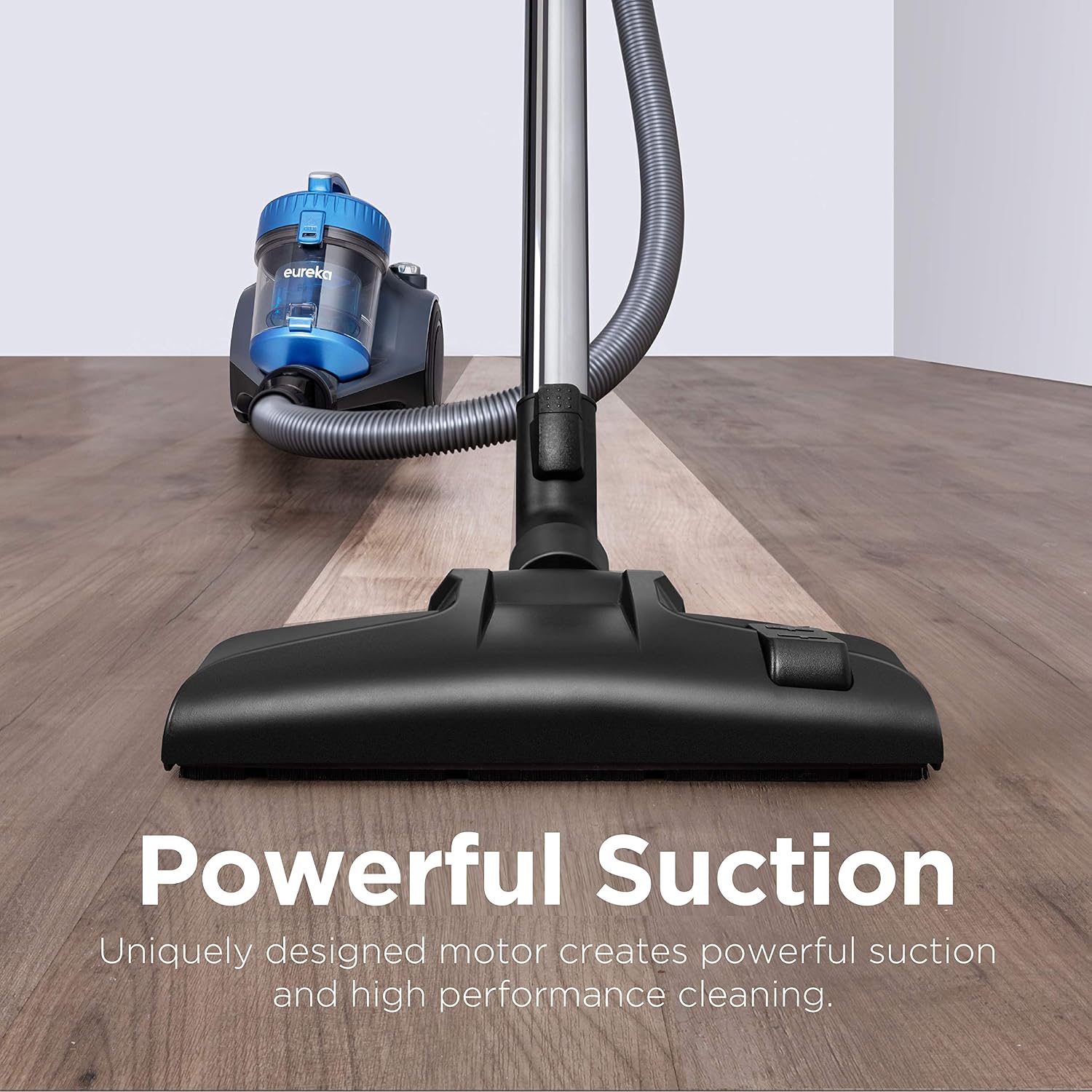
The Eureka WhirlWind is also bagless, with a similarly budget-oriented price point and a design emphasis on lightweight portability. Apartment Therapy, in its published roundup of best vacuums for pet owners in small spaces, flags it as one of the easier canisters to carry between rooms — which aligns with owner feedback. Reviewers consistently praise the fast, no-touch emptying and the fact that it doesn’t feel like a workout to drag through a small apartment.
However, a pattern emerges clearly in the owner dataset that the spec sheet does not communicate: filter clogging accelerates noticeably with heavy pet hair, and the degradation curve is steeper than owners expect. In a one-dog household with a moderate shedder, owners report needing to clean or rinse the filter every two to three weeks. In a multi-pet or heavy-shedder household, that interval shortens to weekly. If you don’t stay on top of it, suction loss is rapid and pronounced. This is not a flaw that disqualifies the machine — it’s a maintenance rhythm you need to budget into your routine. But the WhirlWind’s marketing leans hard on ease-of-use, and the filter maintenance cadence is a real asterisk on that promise.
Eureka
$57.99
In stock on Amazon
Check price on AmazonKenmore 200 Series
The Kenmore 200 Series is a bagged canister — debris is captured in a disposable paper or synthetic bag inside the canister. Bagged designs carry a filtration advantage: the bag itself acts as a secondary filter. Consumer Reports, in its vacuum cleaner ratings and reliability data, consistently documents that well-maintained bagged models sustain suction more predictably over a full bag cycle than bagless competitors, because the filtration surface area is larger and the motor doesn’t have to work against a partially clogged foam filter.
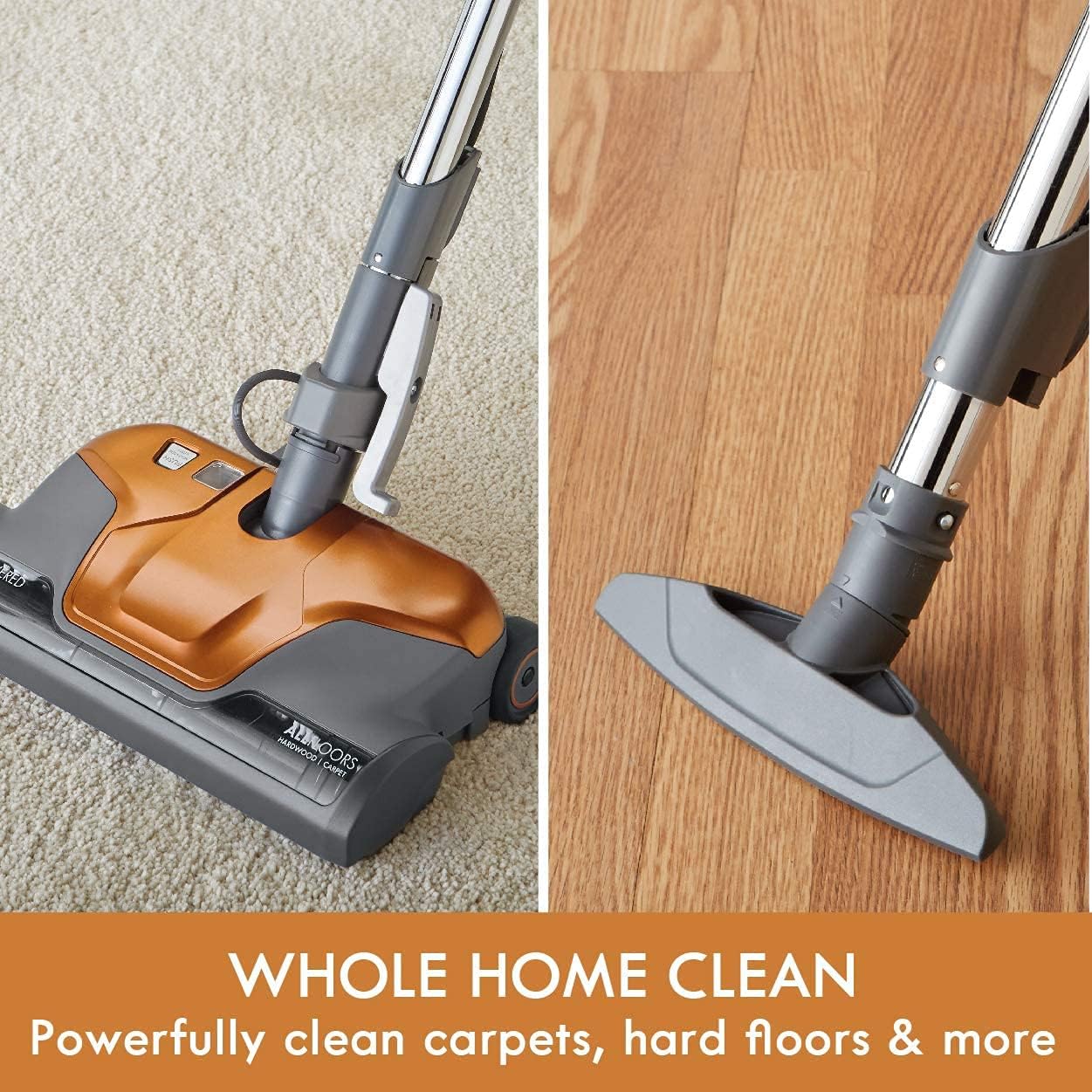
The 200 Series is the entry point into the Kenmore canister line, and owners treat it as a solid baseline performer — reliable, no notable failure patterns in the review dataset, and compatible with standard Kenmore C/Q bags that are widely available. Where owners describe friction is in the value comparison against the 600 Series: the 200 lacks the PowerMate motorized floor brush that the 600 includes, which matters on medium-pile carpet where a spinning brush roll makes a meaningful difference in hair pickup.
Kenmore
$194.99
In stock on Amazon
Check price on AmazonKenmore 600 Series
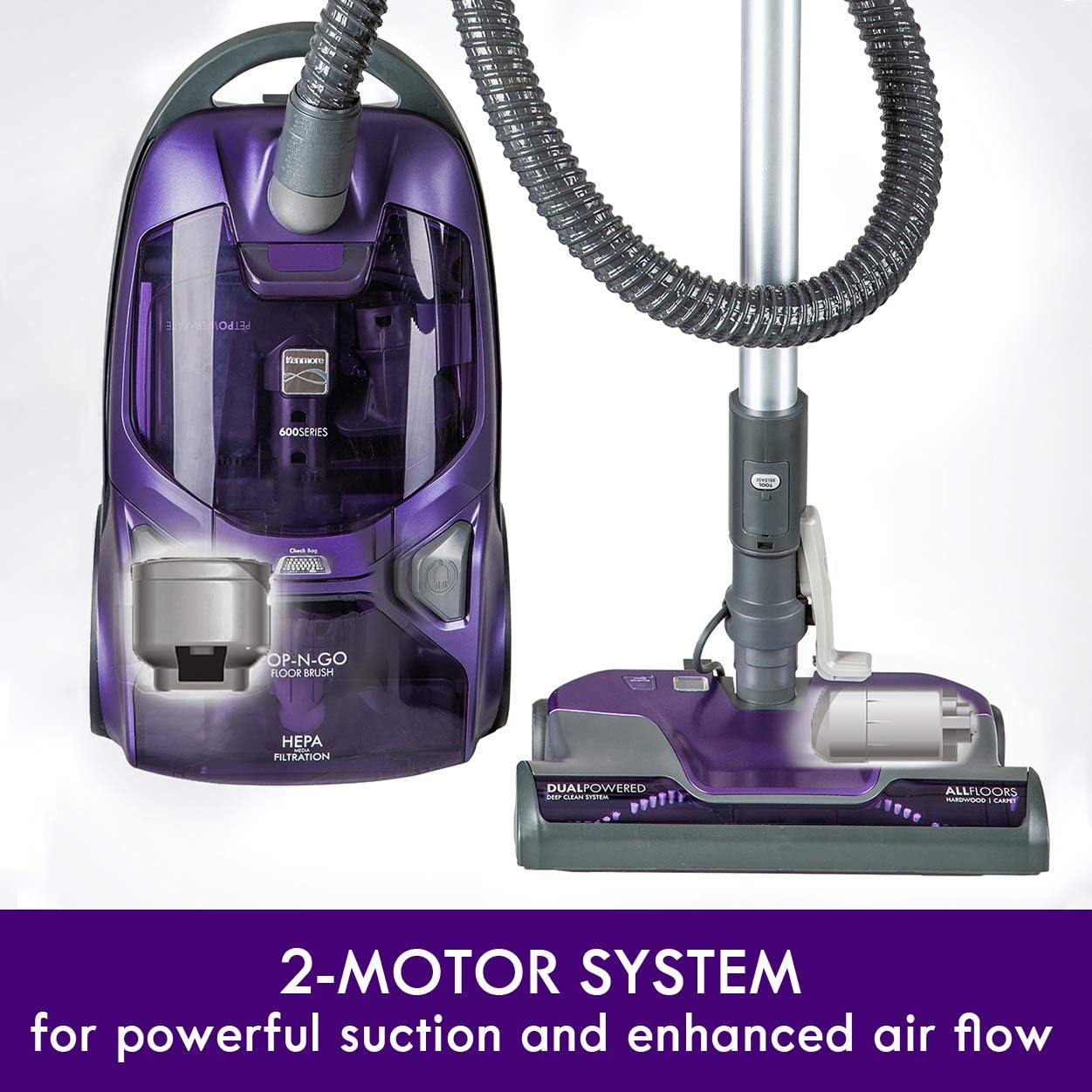
The 600 Series is the premium tier of this comparison — mid-$200s as of mid-2026 — and it adds the Pet PowerMate, a motorized brush-roll attachment powered separately from the main motor. On carpet, the brush roll agitates fibers to bring embedded hair to the surface before suction captures it; on bare floors, you swap to a different attachment. Owners with multiple pets on mixed flooring (hardwood in common areas, carpet in bedrooms) consistently describe this as the configuration that finally handled embedded carpet hair they couldn’t clear with simpler tools.
The full-bag indicator gets genuine praise in owner reviews — not as a gimmick but as a reliable signal that actually prevents the suction-loss spiral that happens when owners run a bagged machine past capacity.
Editorial fairness requires holding both the positives and the negatives at the same time. The most significant signal in this dataset is a cluster of one-star reviews documenting progressive suction failure, with one detailed account describing multiple repair attempts before the three-year mark followed by motor failure. This is the only machine in the group with documented motor failure under what reviewers describe as normal pet-household use. It is not a statistically certain outcome, but it exists, it’s detailed, and it matters — especially given that owners comparing newer Kenmore models to machines they owned five or ten years ago consistently describe a decline in build quality. Wirecutter, in its published coverage of the best canister vacuums, notes that Kenmore’s manufacturing history has shifted over the years in ways that affect part availability and long-term repairability.
The decision frame here: if you’re buying the 600 Series, you’re paying a premium for real performance capability. Treat it as a machine worth protecting with a warranty or protection plan, because the downside scenario when something goes wrong is more expensive than it would be with the Bissell or the Eureka.
Kenmore
$299.99
In stock on Amazon
Check price on AmazonThe Math That Actually Matters
Two-year consumable cost estimate (mid-2026 pricing):
| Model | Type | Avg. filter/bag replacement cost | Est. 2-year consumables |
|---|---|---|---|
| Bissell Zing | Bagless | Foam filter ~$8, replace 1–2×/year | $8–$16 |
| Eureka WhirlWind | Bagless | Filter pack ~$10, replace 2–3×/year | $20–$30 |
| Kenmore 200 Series | Bagged | C/Q bag 3-pack ~$12, 6–8 bags/year | $24–$32 |
| Kenmore 600 Series | Bagged | Same C/Q bags + HEPA filter ~$20/yr | $44–$52 |
Eureka
$57.99
In stock on Amazon
Check price on AmazonKenmore
$194.99
In stock on Amazon
Check price on AmazonKenmore
$299.99
In stock on Amazon
Check price on AmazonBagged models cost more to run than bagless, but the gap at this price tier is modest — roughly $10–$20 per year. That’s not the deciding factor. The deciding factor is whether the suction consistency and filtration performance of the bagged design justify the ongoing supply-chain dependency on bag availability.
Where Canister Vacuums Lose to Uprights — and When That Matters
This is the trade-off that almost every buyer in this category eventually encounters: canister vacuums underperform on deep carpet compared to uprights, and the physics explain why. An upright’s motorized brush roll sits directly on the carpet surface and uses its full motor output to agitate fibers while simultaneously applying suction at the point of contact. A canister’s floor head — unless it has a motorized PowerMate like the Kenmore 600 — relies primarily on suction alone to pull hair from carpet pile. On low-pile or bare floors, that’s fine. On medium or high pile, embedded pet hair is mechanically wrapped around fibers in a way that suction alone won’t fully release.
Consumer Reports’ vacuum cleaner testing methodology consistently shows uprights outperforming non-motorized canisters on embedded carpet hair tests. The Kenmore 600 with its PowerMate narrows that gap, which is why it commands a price premium over the 200 Series. But if your primary surface is medium or high pile and you have a heavy shedder, an upright or a canister with a motorized head is the correct tool. The Zing and the WhirlWind are optimized for hard floors, low-pile carpet, upholstery, and stairs.
Decision Framework: If X, Then Y
If you have one large, heavy-shedding dog on mostly hard floors and you want a proven budget machine with documented long-run durability, the Bissell Zing is the call. The six-year owner data point at this price tier is unusual, and the machine’s simplicity is a feature — fewer parts to fail.
If you have one dog in a small apartment and you prioritize lightweight maneuverability, the Eureka WhirlWind works well as long as you commit to weekly filter cleaning. If maintenance will slide, buy something else.
If you have multiple pets on mixed surfaces and you want reliable, sustained suction with lower ongoing maintenance friction, the Kenmore 200 Series is the bagged baseline that earns its place. Budget for bags and you’re in predictable territory.
If you have multiple pets including on carpeted bedrooms and you want the best hair-on-carpet performance in this price band, the Kenmore 600 Series with PowerMate is worth the premium — but buy the extended warranty and treat the documented motor-failure reviews as a real risk to manage, not an outlier to ignore.
Frequently Asked Questions
Can the Bissell Zing handle a very large, heavy-shedding dog breed used daily? Based on aggregated owner reviews, yes — more confidently than you’d expect at this price. Owners with breeds like Great Pyrenees and Malamutes report sustained performance over multiple years. The maintenance requirement is consistent filter rinsing; skip that and suction degrades quickly regardless of breed.
Does a bagged canister maintain suction better than bagless over time with pet hair? Generally, yes. Consumer Reports’ vacuum cleaner ratings and reliability data support the finding that well-maintained bagged models sustain suction more consistently over their fill cycle. The bag acts as a filtration surface, reducing the load on the motor’s foam filter. The tradeoff is ongoing bag cost and the need to keep bags on hand.
How often does the Eureka WhirlWind filter need cleaning in a one-dog household? Owners in one-dog households with moderate shedders report every two to three weeks. With a heavy shedder, expect weekly. The WhirlWind’s marketing does not communicate this cadence, which is the most consistent gap between promotional messaging and real-world experience in this comparison.
Is the Kenmore 600 Pet PowerMate attachment worth the price difference over the 200 Series? If your household has medium or high pile carpet and multiple pets, yes. The motorized brush roll makes a measurable difference in embedded hair removal that suction-only floor heads can’t replicate. On hard floors only, the 200 Series is the better value.
What is the real cost of replacement bags for the Kenmore models over two years? The Kenmore 200 and 600 Series use standard C/Q bags available in multi-packs; expect $24–$52 over two years depending on model and frequency of use. The Bissell Zing is bagless, so consumable cost is limited to replacement foam filters at roughly $8–$16 over the same period.
Why do canister vacuums underperform on deep carpet compared to uprights? Without a motorized brush roll, canister floor heads rely on suction alone to extract hair that is mechanically embedded in carpet fibers. Uprights combine suction with direct brush-roll agitation at the point of contact, which physically loosens hair before suction captures it. The Kenmore 600 with PowerMate is the only model in this group that partially bridges that gap.