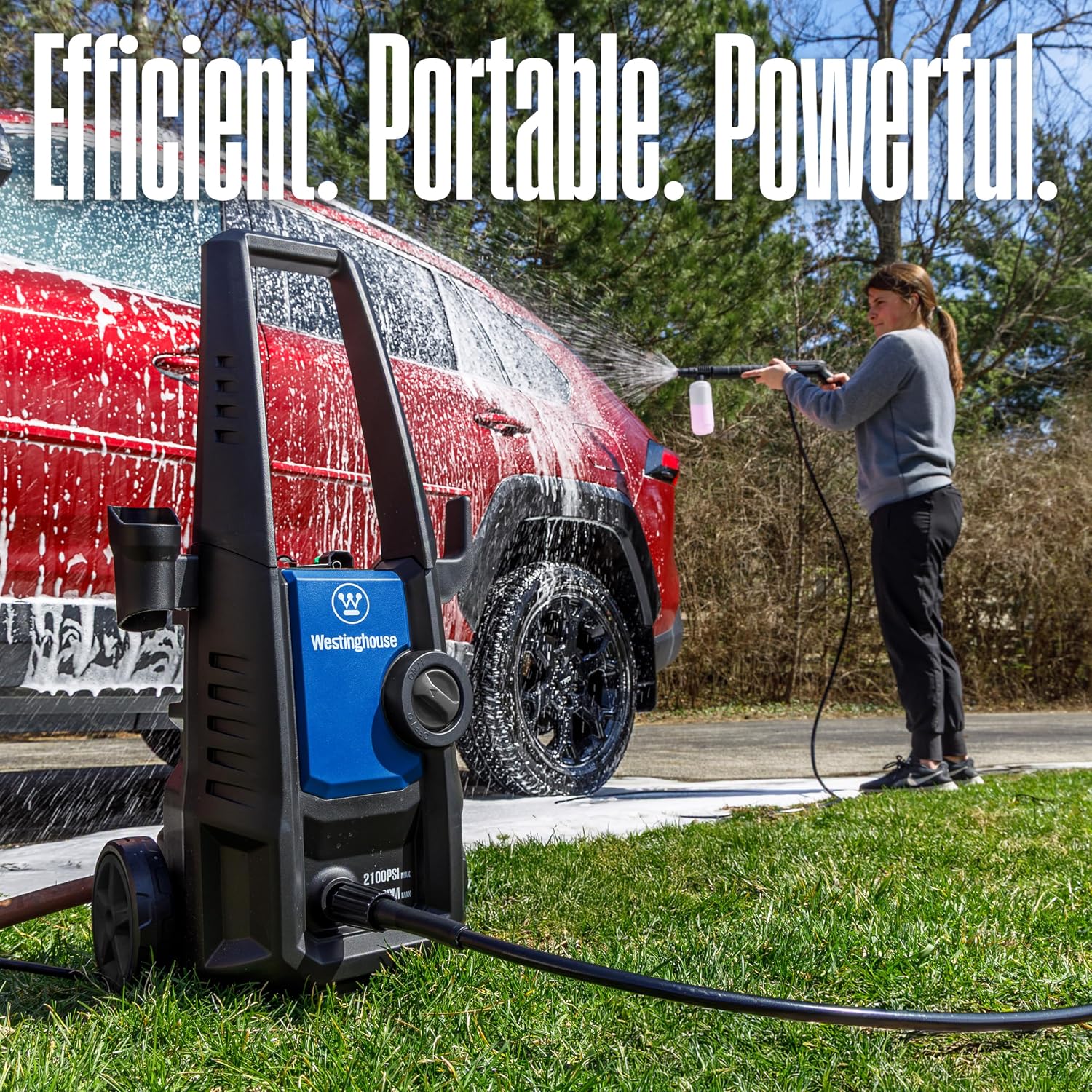
Westinghouse Electric Pressure Washer Lineup: ePX3050, ePX3100, ePX3500, and WPX3000e Compared by Real Owners
A pressure washer is exactly what it sounds like: a machine that pumps water at high pressure — measured in PSI (pounds per square inch) — through a narrow nozzle to blast away dirt, mildew, and grime. Electric models plug into a standard outlet; gas models run on fuel. Westinghouse makes both, but their electric lineup has quietly earned a reputation for punching above its weight class. This article compares four current Westinghouse electric models — the ePX3050, ePX3100, ePX3500, and WPX3000e — using aggregated owner reviews and published spec sheets. By the end, you’ll have a clear decision frame: which model fits which use case, where the real tradeoffs land, and what the one motor-type difference actually means for longevity.
| EDITOR'S PICKWestinghouse WPX3400 Gas Pressu… | Mid-tierSun Joe Pressure Washer | Budget pickWestinghouse ePX3100 Electric P… | |
|---|---|---|---|
| Power source | Gas | Electric | Electric |
| Rated PSI | 3400 | 2030 | — |
| Max PSI | 3400 | 2500 | 2300 |
| Max GPM | 2.6 | — | 1.76 |
| Soap tank | ✓ | — | ✓ |
| Nozzle set | 5 nozzles | — | 5 nozzles |
| Price | $349.00 | $169.00 | $139.00 |
| See on Amazon → | See on Amazon → | See on Amazon → |
The Four Models at a Glance: Where Each One Sits
Before getting into the details, here’s the numeric foundation:
| Model | Max PSI | Max GPM | Motor Type | Foam Cannon Included |
|---|---|---|---|---|
| ePX3050 | 2,100 | 1.76 | Universal | Yes |
| ePX3100 | 2,100 | 1.76 | Universal | No |
| ePX3500 | 2,500 | 1.76 | Universal | No |
| WPX3000e | 3,000 | 1.76 | Induction | No |
Two things jump out immediately. First, GPM (gallons per minute — the volume of water moved) is identical across all four models. That matters because cleaning power is the product of both PSI and GPM; a higher PSI with identical flow means faster cutting force on a given surface, not more total water volume. Second, only the WPX3000e uses an induction motor — a mechanical distinction worth its own section below.
The ePX3050 and ePX3100 are effectively the same machine in terms of core specs; the difference is the foam cannon bundled with the 3050. The ePX3500 steps up PSI by 400. The WPX3000e tops the electric lineup at 3,000 PSI with a fundamentally different motor architecture.
Source: Westinghouse Outdoor Power Equipment — ePX3500 and WPX3000e product specification sheets.
What Owners Actually Say: The Consistent Praise Pattern
Across aggregated owner reviews for all four models, three compliments repeat with enough consistency to be meaningful, not cherry-picked.
Assembly speed. Owners across multiple SKUs describe getting the machine running in under 25 minutes out of the box. One WPX3000e reviewer specifically cites 20 minutes. For anyone who has wrestled a gas pressure washer out of a crate, bled the pump, and spent 45 minutes troubleshooting choke settings, this lands as a genuine differentiator.
Compact storage. Electric pressure washers eliminate the fuel-storage and carburetor-winterization headaches that make gas units annoying for seasonal users. Owners in apartments and smaller homes consistently mention the footprint as a reason for choosing electric.
Performance surprise. This is the most credible praise in the data set, and it comes in a specific form: owners who expected electric to feel underpowered describe being pleasantly surprised. The strongest version of this signal comes from an ePX3500 reviewer who already owned a larger, high-end gas pressure washer and bought the Westinghouse electric anyway for convenience-specific tasks. That reviewer’s choice to maintain both machines — rather than replace the gas unit — is honest signal: electric is genuinely capable for the right jobs, not a compromise.
Comparing the Three Tiers: Budget Entry, Mid-Range Step-Up, and Premium Electric
ePX3050 and ePX3100: The Budget Entry Point
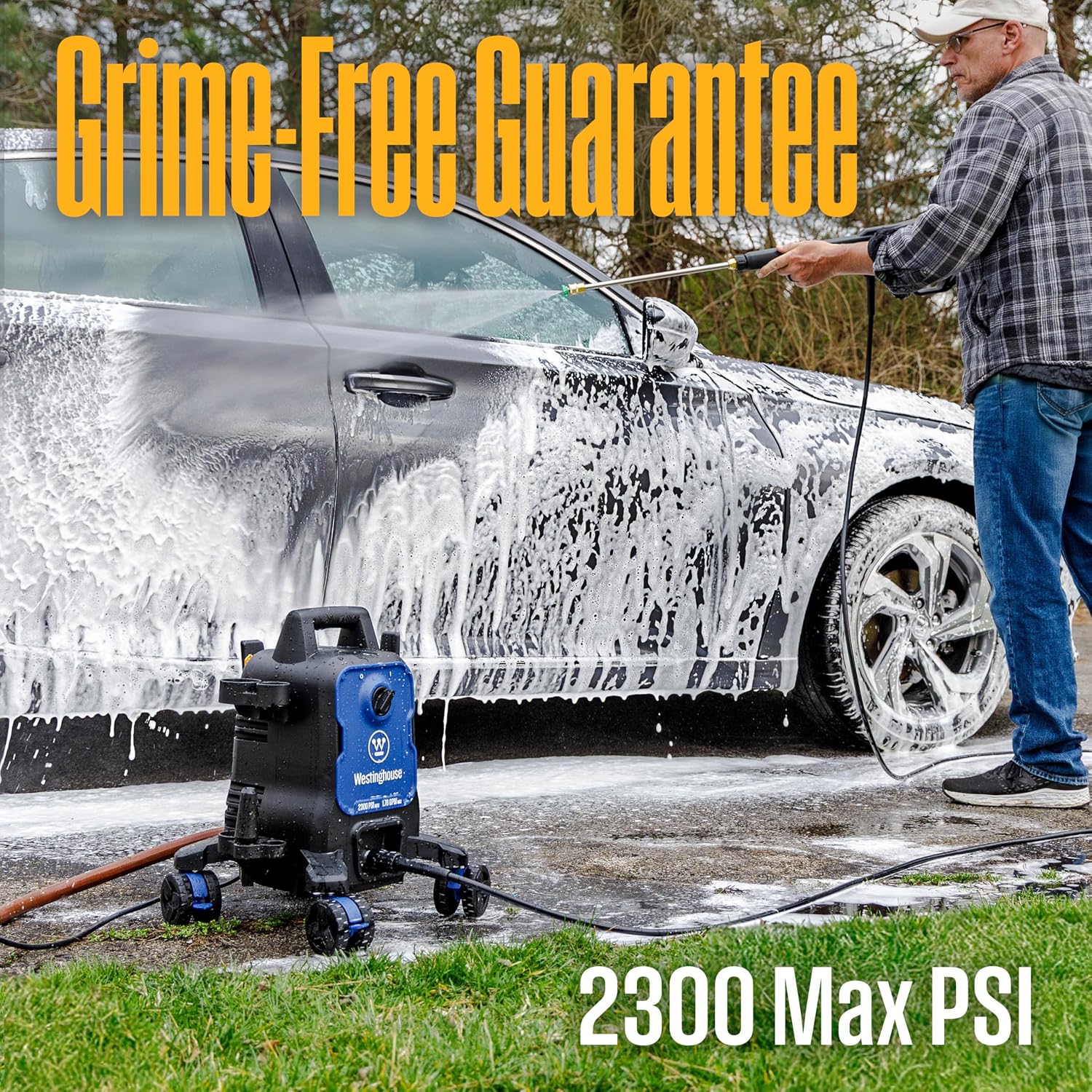
Westinghouse
$139.00
In stock on Amazon
Check price on AmazonThe ePX3050 and ePX3100 share the same 2,100 PSI / 1.76 GPM engine spec and universal motor. The sole functional difference between them is that the ePX3050 bundles a foam cannon. For residential owners doing seasonal driveway cleaning, vehicle washing, and patio furniture refresh, both models deliver genuine capability without paying for headroom they won’t use.
The foam cannon bundled with the ePX3050 is worth examining honestly. A foam cannon mixes soap, water, and air to produce thick, clinging foam — the same pre-soak technique detailers use before contact washing a vehicle. The ePX3050’s bundled unit works as described at high pressure. However, owners using it at low-pressure settings report the trigger sticking open — it doesn’t release cleanly when you let go. The same reviewers note the issue self-corrects when switching back to high pressure.
This is specific and useful information, not a vague quality complaint. If foam washing vehicles at low pressure in careful, controlled passes is a primary use case, the trigger behavior is a real annoyance. Aftermarket foam cannons compatible with standard 1/4-inch quick-connect fittings are widely available if you want to specify your own and sidestep the issue entirely. For buyers who only use foam as a quick pre-rinse before switching to a standard nozzle, the bundled cannon will likely serve without friction.
Decision rule for this tier: If your use is seasonal, residential, and vehicle-forward, the ePX3100 (or ePX3050 if you specifically want a bundled foam cannon) is the correct entry point. You are not leaving meaningful performance on the table for those tasks.
Westinghouse
$139.00
In stock on Amazon
Check price on AmazonePX3500: The Mid-Range Step-Up
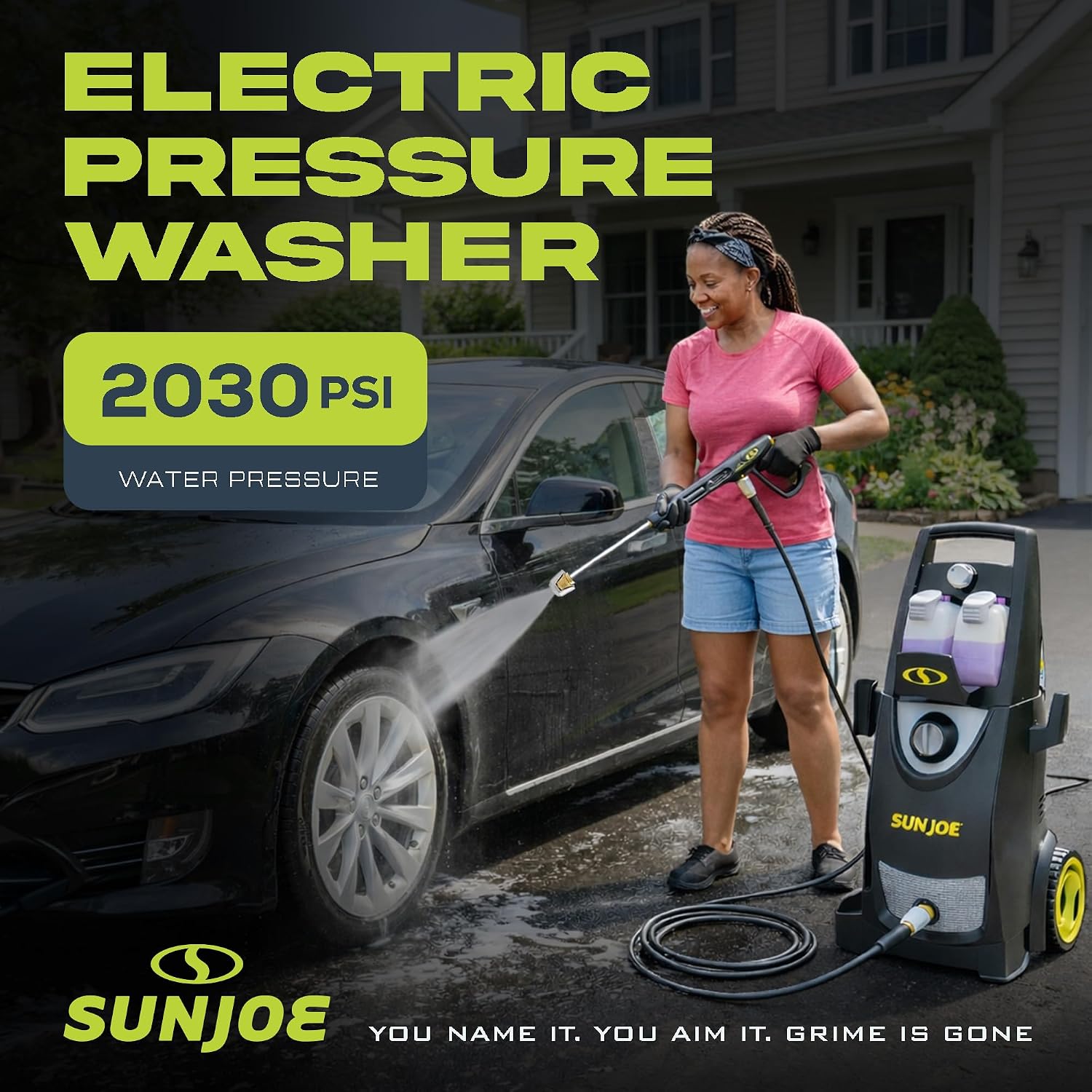
Sun
$169.00
In stock on Amazon
Check price on AmazonThe ePX3500 adds 400 PSI over the entry models — reaching 2,500 PSI — while keeping the same 1.76 GPM flow rate and universal motor architecture. That PSI increment is not dramatic on paper, but owner feedback suggests it registers on real surfaces. Set-in oil spots on a working driveway, older deck staining, and mildew on shaded concrete are the specific contexts where owners note the extra pressure paying off.
The ePX3500 sits in a useful middle position: it handles a wider range of residential tasks than the entry models without the WPX3000e price premium or the motor-type premium that only pays off under high-frequency use. For owners who clean a concrete driveway with regular vehicle traffic, prep a deck or fence for staining every two to three years, or tackle moderate mildew removal, the ePX3500 is the model most reviewers in that use-case profile would buy again.
One honest constraint: like all universal motor machines in this lineup, the ePX3500 is not designed for sustained commercial-frequency use. Wirecutter’s pressure washer category coverage (Wirecutter — Best Pressure Washers, electric category) notes that brush wear in universal motor architectures is rarely a practical problem for seasonal residential users within a normal ownership window, but becomes relevant for owners running machines multiple times per week over years.
Decision rule for this tier: If your driveway sees heavy traffic, you have a deck or fence project queued, or your cleaning sessions push past what the 2,100 PSI entry models handle in a single pass, the ePX3500 is the practical upgrade without overpaying for commercial-grade motor architecture.
Sun
$169.00
In stock on Amazon
Check price on AmazonWPX3000e: The Premium Electric
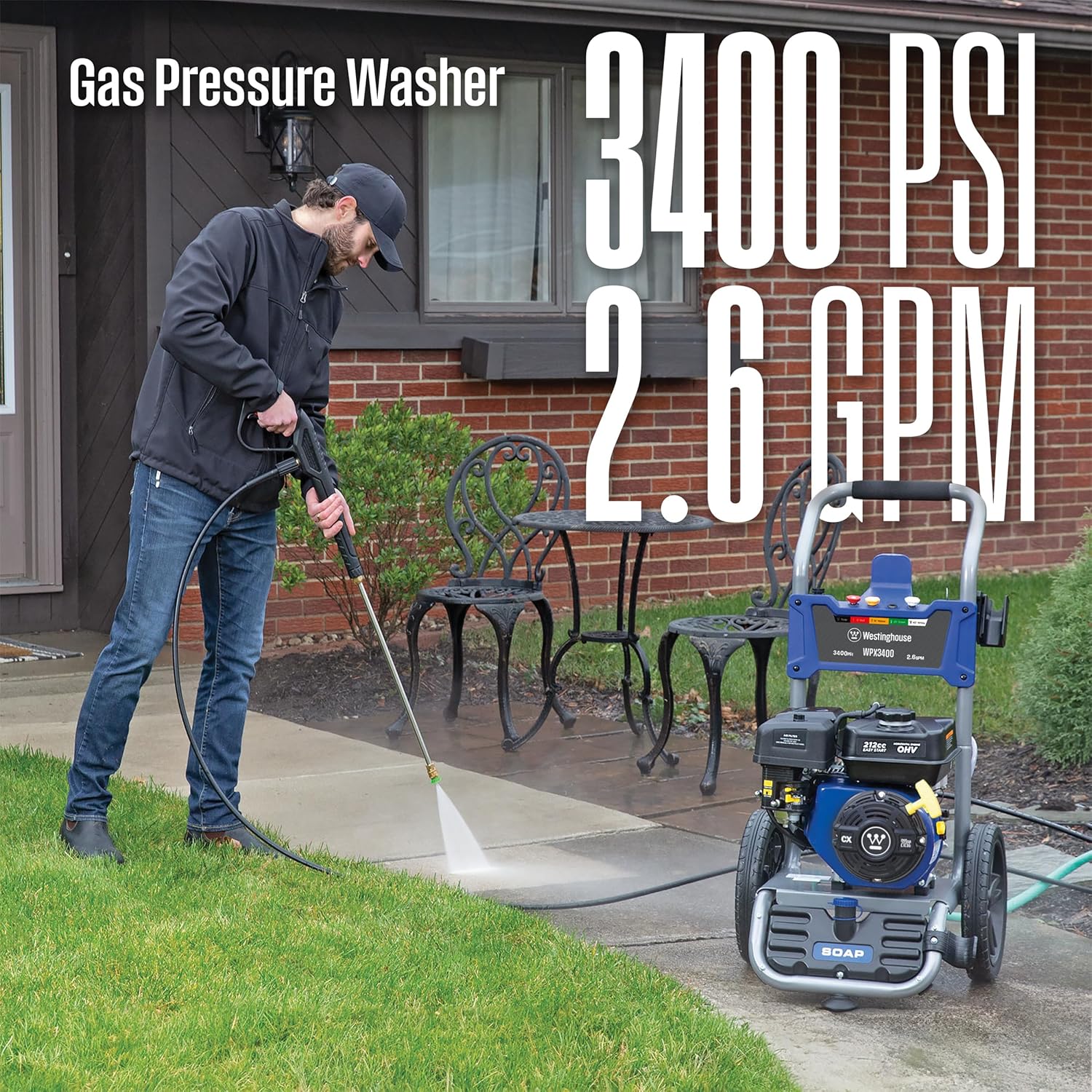
Westinghouse
$349.00
In stock on Amazon
Check price on AmazonThe WPX3000e is a different machine in one important respect: it runs an induction motor rather than the universal motors in the ePX series. At 3,000 PSI — 500 above the ePX3500 — it also tops the Westinghouse electric lineup on raw pressure. Both distinctions matter, and the motor question deserves a direct explanation.
Universal motors (ePX series) are brushed motors — a physical contact mechanism between rotating and stationary parts. They’re lighter, cheaper to manufacture, and capable of high RPM. The tradeoff is brush wear over time. For seasonal residential use, this rarely manifests as a practical problem within a 3–5 year window.
Induction motors (WPX3000e) are brushless by design. No contact wear means theoretically longer service life under sustained use. Induction motors also tend to run quieter and cooler at equivalent load.
Consumer Reports’ electric pressure washer reliability coverage (Consumer Reports — Electric Pressure Washer Ratings and Reliability Overview) identifies motor architecture and thermal management as the two variables most correlated with longer service life in this category. The WPX3000e’s induction motor addresses the first variable directly. Thermal performance over sustained high-frequency use is the open variable for this specific model, as no multi-year owner testimony has yet accumulated in the review record.
The honest framing: if you’re making a purchase decision based on 5-year durability assumptions, you’re extrapolating from motor-type engineering logic — which is well-established — rather than from WPX3000e-specific long-run evidence. That is a reasonable extrapolation, but worth naming as such.
The 3,000 PSI ceiling also represents real capability for heavy residential work. On a stained concrete driveway with older oil spots, owner feedback suggests the WPX3000e clears in a single pass what the ePX3500 requires multiple passes to address. On large surface areas — long driveways, multi-section decks — that time difference accumulates.
Decision rule for this tier: If you’re running the machine more than once a week, managing a small commercial property, or planning to grow into light contract work, the WPX3000e’s induction motor and 3,000 PSI ceiling make it the defensible long-term purchase. For residential owners doing 10–15 sessions per year, the ePX3500 is likely sufficient and the motor-type premium is difficult to justify on frequency alone.
Westinghouse
$349.00
In stock on Amazon
Check price on AmazonWhen Electric Is Genuinely Insufficient
The gas WPX3400, rated at 3,400 PSI and higher GPM than any electric model in this lineup, exists in Westinghouse’s own catalog as a useful calibration point. Owner review patterns for that unit cluster around tasks where PSI alone isn’t the limiting factor — it’s sustained high-volume flow across very large surface areas, or paint stripping on aged surfaces, where the gas unit moves ahead of any electric option.
For the Westinghouse electric lineup, the practical ceiling is: aggressive surface cleaning on residential concrete, vehicle washing, deck and fence prep for staining, and moderate mildew removal. The WPX3000e at 3,000 PSI will address a stained driveway — it will take longer than a 3,400 PSI gas unit on a very large surface, and a heavily oxidized or deeply stained surface may need multiple passes. That’s a time cost, not a capability failure.
Paint stripping is firmly in gas territory. Not because electric can’t produce enough PSI in principle, but because effective stripping requires sustained high pressure at the right nozzle angle for extended passes — a use pattern that thermal limits on consumer electric pumps and motors are not optimized for. The ISSA Surface Cleaning Equipment Standards Reference notes that paint and coating removal applications are typically specified for commercial-grade equipment rated well above the consumer electric category’s upper band. The Westinghouse electric lineup is not that equipment.
Frequently Asked Questions
What is the practical cleaning difference between 2,100 PSI and 3,000 PSI on a residential concrete driveway?
On light dirt and seasonal grime, both perform comparably with different time investment. The 2,100 PSI entry models clean a standard two-car driveway — they just require slower or multiple passes on set-in stains. The WPX3000e clears the same stains faster and handles older oil spots more effectively in a single pass. If your driveway is lightly used and cleaned annually, the entry models are sufficient. If it’s a working driveway with regular vehicle traffic and oil drips, the PSI advantage is real and time-saving.
Does the onboard soap tank work well, or do serious users replace it with a foam cannon?
Owners treating the onboard tank as a detergent delivery system for general cleaning report it works adequately. Detailers and vehicle-care users who want thick, clinging foam for pre-soak typically upgrade to a dedicated foam cannon. Note the low-pressure trigger sticking issue on the ePX3050’s bundled unit before assuming it covers all foam-washing scenarios.
Are replacement hoses readily available if the stock hose degrades?
Replacement hoses with standard 1/4-inch quick-connect fittings are widely available from third-party suppliers and fit the Westinghouse electric lineup. Owners are not dependent on OEM sourcing.
How does hose stiffness in cold weather affect usability?
Cold-weather hose stiffness is a category-wide issue with standard PVC pressure washer hoses, not a brand-specific defect. Westinghouse hoses use comparable materials and will exhibit similar stiffness below 40°F. Polyurethane or hybrid hose replacements remain flexible at lower temperatures and are compatible with the Westinghouse quick-connect system.
Is the induction motor on the WPX3000e meaningfully more durable?
Based on established motor-type engineering and Consumer Reports’ reliability category data, yes — in sustained, high-frequency use. For seasonal residential use under 20 sessions per year, the practical durability gap is unlikely to manifest within a typical ownership window. The induction motor case strengthens significantly for commercial or semi-commercial use patterns.
Can these electric models handle paint stripping?
Not reliably. Paint stripping falls outside the design envelope for consumer electric pressure washers. Gas or commercial electric units at higher sustained PSI and GPM are the appropriate category for that application, per the ISSA Surface Cleaning Equipment Standards Reference.